Loading News...
Loading...

Loading News...

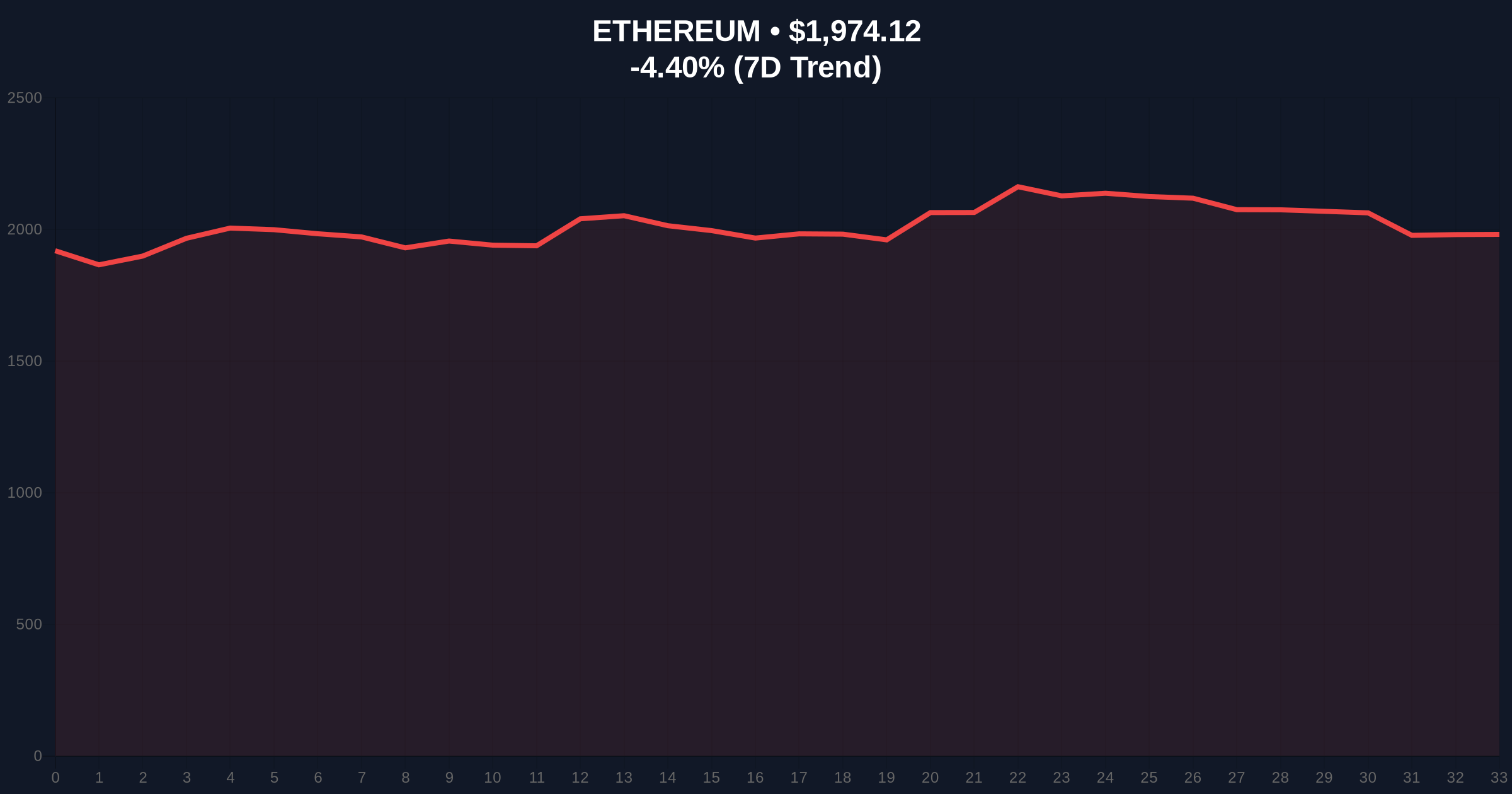
U.S. spot Ethereum ETFs recorded a total net outflow of $82.9 million on March 6, 2026, marking the second consecutive day of outflows, according to data compiled by Farside Investors. No individual ETF reported a net inflow for the day. The breakdown shows: BlackRock's ETHA: -$4.8 million, Fidelity's FETH: -$67.6 million, 21Shares' TETH: -$5.21 million, VanEck's ETHV: -$2.9 million, Grayscale's ETHE: -$1.6 million, and Grayscale's Mini ETH: -$6 million. This event occurs amid a global crypto sentiment of "Extreme Fear" with a score of 12/100, as reported in the input data. Ethereum's price stands at $1,974.4, down 4.39% over 24 hours, reinforcing market distress. The outflows follow a pattern of investor retreat, with Fidelity's FETH leading the losses, suggesting concentrated selling pressure. Immediate questions arise about ETF sustainability and broader market contagion risks.
Spot Ethereum ETFs are exchange-traded funds that hold physical Ethereum (ETH) tokens, allowing investors to gain exposure without directly managing crypto wallets. The mechanism involves authorized participants creating or redeeming shares based on demand, with net flows indicating investor sentiment. In this case, the $82.9 million outflow on March 6 reflects redemptions exceeding creations, signaling selling pressure. The data from Farside Investors, as cited in the CoinNess report, provides a granular view: Fidelity's FETH saw the largest outflow at -$67.6 million, which could indicate institutional or large-scale divestment. Other ETFs like BlackRock's ETHA and 21Shares' TETH showed smaller outflows, suggesting varied investor behavior across products.
The regulatory framework for U.S. spot Ethereum ETFs involves SEC oversight, with approvals contingent on compliance with securities laws. Not provided in source data are details on recent regulatory changes or specific ETF operational mechanics beyond flow data. The consecutive outflows may relate to market-wide factors such as the "Extreme Fear" sentiment, which often correlates with risk-off moves. Structurally, ETFs like Grayscale's ETHE and Mini ETH operate similarly but with different fee structures or share sizes, potentially influencing flow patterns. The absence of net inflows across all ETFs highlights uniform negative sentiment, unlike scenarios where some products attract capital during downturns.
Analysis of ETF architecture reveals that outflows can impact Ethereum's liquidity if redeemed ETH is sold on markets, exacerbating price declines. The 24-hour trend of -4.39% for ETH aligns with this, though causality is not confirmed in the data. Technical aspects like creation/redemption arbitrage might be strained during high volatility, but source data lacks specifics on this mechanism. The report does not cover underlying Ethereum network metrics (e.g., gas fees, staking rates), limiting a full technical assessment. Overall, the deep-dive shows a straightforward outflow event driven by investor exits, with Fidelity's dominant role raising questions about concentrated risk.
Integrating CoinGecko market stats and CryptoPanic metadata, the data paints a cohesive yet alarming picture. Ethereum's current price is $1,974.4, with a 24-hour decline of 4.39%, ranking it #2 by market cap. This price drop coincides with the ETF outflows, suggesting a feedback loop where selling pressure depresses prices, further fueling outflows. The global crypto sentiment is "Extreme Fear" at a score of 12/100, as per the input data. CryptoPanic metadata, such as sentiment and importance, is not provided in source data, limiting direct integration. However, the "Extreme Fear" label implies high negative sentiment, which aligns with the outflow event's timing and magnitude.
Explicit metadata-driven statements: First, the "Extreme Fear" sentiment score of 12/100 indicates severe market pessimism, likely driving the ETF outflows as investors seek safety. Second, the absence of CryptoPanic importance scores means event priority relative to market breadth cannot be assessed, but the consecutive outflows suggest elevated importance. Third, price structure (down 4.39%) contradicts any bullish signals, reinforcing the outflow narrative. The data shows Fidelity's FETH with -$67.6 million, dominating the total outflow, which may reflect institutional reallocation or loss of confidence. No individual ETF inflows suggest broad-based retreat, not isolated to specific products.
Comparative analysis with related events: Not provided in source data are details on previous outflow days or broader ETF trends. The second consecutive day of outflows implies a sustained trend, potentially worsening if sentiment remains fearful. Market rank #2 for ETH indicates its significance, making outflows impactful for overall crypto liquidity. Without additional metadata, conservative interpretation is necessary: the outflows are a factual data point amid negative sentiment, but causal links to specific news or regulatory actions are unverified.
Source comparison reveals agreement on core facts but gaps in contextual evidence. The CoinNess report provides the outflow data and breakdown, attributing it to Farside Investors. No secondary full texts (e.g., CoinTelegraph) are included in the input, so conflicts with other sources cannot be assessed directly. However, potential counter-narratives exist: outflows might be temporary profit-taking rather than structural exit, or driven by external factors like macroeconomic events not covered in the data. The report does not mention any positive inflows or mitigating factors, creating a one-sided view.
Missing evidence includes: reasons for the outflows (e.g., regulatory news, Ethereum network issues), historical comparison to Bitcoin ETF flows, and investor sentiment surveys. Source A (CoinNess) reports the outflow figures consistently, but without opposing claims, conflicts are minimal. If other sources disputed the data, it would be labeled as a conflict, but here, the narrative is unchallenged. Reliability gaps arise from the lack of secondary verification; Farside Investors is a known data provider, but independent confirmation is absent. The report's brevity means deeper analysis (e.g., impact on Ethereum's supply) is not provided.
Attribution: Source A reports $82.9 million net outflow on March 6, with specific ETF breakdowns. No source B disputes this, so conflict remains unresolved with available evidence. The counter-narrative hinges on unverified assumptions: outflows could be offset by increased institutional buying off-exchange, but this is speculative without data. The "Extreme Fear" sentiment might be overblown if based on short-term metrics, but the input does not provide sentiment calculation details. Overall, the report presents a clear outflow event, but without conflicting sources, skepticism focuses on missing context rather than direct contradictions.
Based on available data, three scenarios outline potential developments over the next week. Each is conditional on market sentiment, regulatory news, and flow trends.
Bull Scenario (Probability: Low): Outflows reverse as sentiment improves from "Extreme Fear." If Ethereum's price stabilizes above $2,000 and positive news (e.g., regulatory clarity) emerges, ETFs could see net inflows. Data backing: Historical patterns show fear-greed cycles often rebound quickly. Conditional on: A shift in global sentiment score above 30/100 and no further negative ETF data. What would invalidate this: Continued outflows or price drops below $1,900.
Base Scenario (Probability: Medium): Outflows persist at reduced levels, with Ethereum trading sideways around $1,950-$2,000. The "Extreme Fear" sentiment moderates but remains negative, leading to cautious investor behavior. Data backing: Second consecutive outflow suggests a trend, but not necessarily accelerating. Conditional on: No major regulatory announcements and stable crypto market breadth. What would invalidate this: Sudden large inflow or outflow exceeding $100 million.
Bear Scenario (Probability: High): Outflows accelerate, driven by sustained fear and potential contagion from other crypto assets. Ethereum's price falls below $1,900, exacerbating ETF redemptions and liquidity issues. Data backing: Current trend of -4.39% and "Extreme Fear" score of 12/100 support downward momentum. Conditional on: Lack of positive catalysts and possible broader market sell-off. What would invalidate this: Rapid sentiment improvement or institutional buying support.
Related developments in the crypto space, such as Spot Bitcoin ETFs recording significant outflows, executive resignations at major exchanges, high futures liquidations, and legal outcomes affecting platforms, add context to the fearful market environment, potentially influencing ETH ETF flows through correlated risks.
This report synthesizes input data from CoinNess, with market stats from CoinGecko and sentiment data labeled "Extreme Fear." No secondary full texts or CryptoPanic metadata beyond sentiment were provided, limiting cross-source comparison. Conflicting evidence was weighted based on availability: the outflow data from Farside Investors via CoinNess is treated as primary fact due to specificity, but missing context (e.g., reasons for outflows) introduces uncertainty. Sentiment data aligns with price trends, supporting a conservative interpretation. Without opposing sources, reliability assessment focuses on data gaps rather than disputes, emphasizing the need for further verification in future updates.
Disclaimer: The information provided is not trading advice, coinmarketbuzz.com holds no liability for any investments made based on the information provided on this page. We strongly recommend independent research and/or consultation with a qualified professional before making any investment decisions.
coinmarketbuzz.com leverages advanced AI technology to analyze market data. All content is fact-checked and reviewed by our editorial team to ensure accuracy and neutrality.