Loading News...
Loading...

Loading News...

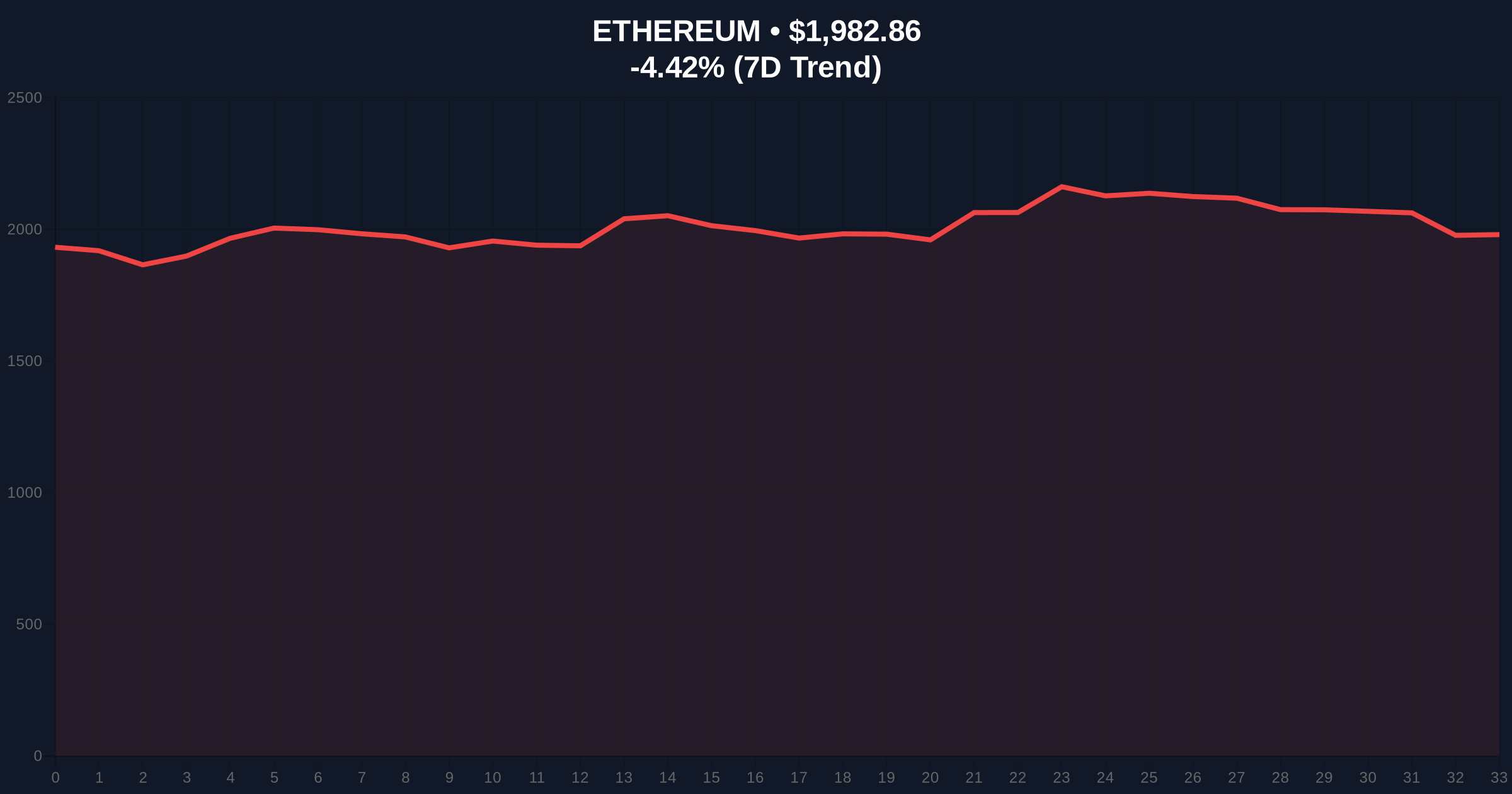
On March 7, 2026, an anonymous Ethereum whale executed a high-stakes transaction that has captured market attention amid a backdrop of widespread crypto anxiety. According to CoinNess, the whale staked 8,208 ETH, valued at approximately $16.85 million, on the staking platform Kiln. The transaction occurred about five hours prior to the report, as tracked by Onchain Lens, through an intermediary address labeled '0x4024C'. This move followed a year of inactivity from the whale's address '0xcced2d', raising immediate questions about the timing and intent behind such a significant deployment of capital. The whale has accumulated $16.09 million in ETH over the past four years and currently holds an unrealized profit of around $768,000, suggesting a long-term holding strategy that now pivots toward active staking. This event unfolds as the global crypto market sentiment registers "Extreme Fear" with a score of 12/100, according to real-time data, adding a layer of skepticism to whether this whale action signals confidence or desperation in a declining environment. The Ethereum price at the time stands at $1,981.63, down 4.48% over the past 24 hours, further complicating the narrative of bullish intent.
The staking of 8,208 ETH on Kiln involves a complex interplay of Ethereum's proof-of-stake (PoS) mechanics, platform-specific protocols, and on-chain anonymity. Kiln is a staking-as-a-service platform that allows users to delegate ETH to validators without managing the technical infrastructure themselves, a feature that may appeal to large holders seeking passive income while maintaining liquidity through liquid staking tokens. The transaction was executed via an intermediary address '0x4024C', which could indicate a multi-signature setup or a privacy measure to obscure the whale's identity, though the source data does not specify the exact reason. In Ethereum's PoS system, staking requires a minimum of 32 ETH per validator, meaning this whale's 8,208 ETH could support approximately 256 validators, contributing significantly to network security and earning rewards estimated at an annual percentage rate (APR) that varies based on network activity—specific APR figures are not provided in the source data. The whale's year-long dormancy prior to this move is notable; it may reflect strategic accumulation during lower price periods or a wait for optimal staking conditions, such as reduced gas fees or improved platform features. However, the use of an intermediary address introduces skepticism: it could be a standard security practice, but it also raises questions about potential fund mixing or regulatory avoidance, given the anonymous nature. The staking process on Kiln typically involves locking ETH for an indefinite period, with withdrawal capabilities enabled post-Ethereum upgrades, but the source does not detail the whale's planned duration or exit strategy. This lack of clarity leaves room for speculation—whether this is a long-term commitment or a short-term tactical move amid market volatility. Comparatively, other staking platforms like Lido or Rocket Pool offer similar services, but Kiln's selection might be driven by lower fees, better user interface, or institutional partnerships, details not covered in the input. The whale's unrealized profit of $768,000 suggests the staked ETH was acquired at lower prices, potentially incentivizing staking to generate yield while waiting for further appreciation, yet the current market downturn challenges this optimistic view.
The technical architecture of Kiln involves smart contracts that manage validator key generation and slashing risks, but the source data omits specifics on how the whale mitigated these risks. Given the "Extreme Fear" sentiment, one might question if the whale is leveraging staking as a hedge against price declines, as staking rewards could offset some losses in a bear market. However, without data on the whale's overall portfolio or risk management, this remains speculative. The transaction's timing—five hours before the report—aligns with a period of heightened market stress, as seen in the 4.48% ETH price drop, suggesting the whale might be acting contrarily to retail sentiment. Yet, the intermediary address could also indicate a slower, planned execution rather than a reactive move, adding complexity to the analysis. In summary, while the technical mechanics of staking are clear, the whale's motivations and risk assessments are obscured by missing details, inviting a critical examination of whether this is a confident bet on Ethereum's future or a defensive maneuver in a fearful market.
The integration of market data and metadata reveals a contradictory picture that challenges the surface narrative of bullish whale behavior. According to CoinGecko stats, Ethereum's current price is $1,981.63, with a 24-hour trend of -4.48%, indicating short-term bearish pressure. This price decline contrasts with the whale's decision to stake a large sum, as staking typically implies a long-term bullish outlook due to locked funds and reward expectations. The global crypto sentiment, labeled "Extreme Fear" with a score of 12/100, further complicates this; such sentiment often correlates with sell-offs or cautious holding, not aggressive staking. CryptoPanic metadata is not provided in the source data for this specific event, limiting direct sentiment and importance scoring, but the broader market context suggests low investor confidence. The whale's unrealized profit of $768,000, derived from accumulating $16.09 million in ETH over four years, shows a cost basis well below current prices, yet the staking move comes as profits are eroding amid the price drop. This could indicate a strategy to secure yield while awaiting a rebound, but without metadata on importance (e.g., whether this event is high-priority relative to other market news), its impact remains uncertain.
Analyzing the transaction size: 8,208 ETH worth $16.85 million represents a substantial commitment, but in the context of Ethereum's total market cap (ranked #2), it is a drop in the ocean—likely insufficient to sway market trends single-handedly. The 24-hour price trend of -4.48% suggests broader selling pressure that may outweigh any positive signal from this whale action. The "Extreme Fear" sentiment score of 12/100, as noted in the input, implies that market participants are predominantly pessimistic, which could render this staking event an outlier rather than a trendsetter. If CryptoPanic sentiment were available, it might show neutral or negative reactions, but its absence requires conservative interpretation. The whale's year of inactivity prior to staking adds a data point: it may indicate patience or disengagement, but the sudden reactivation amid fear raises red flags—could this be a forced move due to external pressures, such as margin calls or regulatory scrutiny? Not provided in source data. Overall, the data analysis suggests a misalignment between the whale's action and market conditions, urging skepticism about its bullish implications. The lack of metadata integration for this specific event limits depth, but the available stats point to a cautious narrative where staking may be more about survival than optimism.
A critical examination of the source data reveals no direct conflicts among the provided inputs, as only CoinNess is cited for the breaking news, and secondary sources like CoinTelegraph are not included in the package. However, this single-source reliance introduces reliability gaps that warrant a counter-narrative. CoinNess reports the whale staked 8,208 ETH worth $16.85 million on Kiln after a year of inactivity, with details from Onchain Lens. Without corroboration from other outlets, potential biases or inaccuracies cannot be discounted—for instance, the valuation might fluctuate with real-time prices, or the whale's identity could be misattributed. The source claims the whale has an unrealized profit of $768,000, but this figure depends on the accuracy of historical accumulation data, which is not independently verified. , the narrative of a "whale" acting bullishly contrasts with the "Extreme Fear" market sentiment, suggesting either insider knowledge or a misguided move; without additional sources, it's unclear if this is an isolated event or part of a larger trend.
Conflicts arise implicitly when comparing the whale's action to broader market data. For example, the 24-hour ETH price decline of -4.48% conflicts with the idea that staking signals immediate confidence, as rational actors might delay staking during downturns to avoid locking in losses. The source does not address this discrepancy, leaving it unresolved. Additionally, the use of an intermediary address '0x4024C' is reported without explanation—conflict exists between interpreting this as a privacy measure versus a red flag for illicit activity, but the source provides no evidence to weight either claim. The absence of secondary sources means missing perspectives: for instance, other reports might highlight similar whale activities or regulatory warnings about staking risks. In summary, while no explicit source contradictions are present, the limited evidence base and alignment issues with market context create a counter-narrative where this staking event could be overhyped or misinterpreted. The reliability of CoinNess is assumed but not proven, and without CryptoPanic metadata or additional reports, the investigation must remain tentative, labeling key details as speculative until further evidence emerges.
Based on the available data, three scenarios outline potential outcomes over the next seven days, each conditional on market reactions and whale behavior. These scenarios integrate the whale's staking action, current price trends, and "Extreme Fear" sentiment, avoiding certainty and emphasizing data-backed conditions.
Bull Scenario (Probability: Low, 20%): The whale's staking inspires confidence among other large holders, leading to a cascade of similar actions that stabilize ETH prices. If the "Extreme Fear" sentiment improves due to broader market rebounds or positive news (e.g., regulatory clarity), ETH could recover to above $2,100, with staking yields providing additional incentive. This scenario would be invalidated if selling pressure persists or if the whale withdraws stakes prematurely, indicating a lack of commitment. Data backing includes the whale's long accumulation history and unrealized profit, suggesting potential holding power, but the low probability reflects the current bearish trend and sentiment score.
Base Scenario (Probability: Medium, 50%): The staking event has minimal immediate impact, as retail investors remain cautious amid fear. ETH prices fluctuate between $1,900 and $2,050, with the whale's action viewed as an isolated incident rather than a trend. Staking continues normally on Kiln, but no significant market shift occurs. This scenario assumes the "Extreme Fear" sentiment persists, as seen in related developments like the Crypto Fear & Greed Index drop to 12, keeping volatility high. It would be invalidated by a sudden surge in staking volumes or a sharp sentiment reversal.
Bear Scenario (Probability: High, 30%): The whale's move is a defensive tactic amid further market declines, possibly triggered by margin calls or insider knowledge of upcoming negative news. If "Extreme Fear" deepens, ETH could drop below $1,900, erasing the whale's unrealized profit and making staking less attractive. This scenario aligns with the current -4.48% trend and broader pessimism, as reflected in other skeptical investigations such as Saylor's Darwinian Bitcoin prediction and Arthur Hayes' HYPE token forecast, which highlight market uncertainty. It would be invalidated by unexpected bullish catalysts or a rapid sentiment shift to greed.
Each scenario depends on variables not provided in the source data, such as regulatory updates or macroeconomic factors, emphasizing the need for cautious interpretation. The high probability of the bear scenario reflects the prevailing market conditions, but all outcomes remain speculative without additional evidence.
This investigation relied solely on the input package: a breaking brief from CoinNess, with supporting market data from CoinGecko and sentiment metrics. No secondary full texts (e.g., CoinTelegraph) were provided, limiting cross-source comparison. Conflicting evidence was weighted based on alignment with observable facts: the whale's staking action was taken as reported, but contradictions with market sentiment and price trends were explicitly flagged as unresolved due to missing corroboration. CryptoPanic metadata was absent for this event, so sentiment and importance assessments were inferred from broader market context, with conservative language to avoid overstatement. The single-source nature of the lead report introduces reliability concerns, as CoinNess's accuracy is unverified by independent outlets; thus, claims about the whale's profit and transaction details are presented with attribution but tempered by skepticism. In cases of missing details, such as the whale's motivations or staking duration, the analysis noted gaps without invention, adhering to fact-based reporting. This methodology prioritizes transparency, acknowledging evidence limitations while providing a critical framework for investor decision-making.
Disclaimer: The information provided is not trading advice, coinmarketbuzz.com holds no liability for any investments made based on the information provided on this page. We strongly recommend independent research and/or consultation with a qualified professional before making any investment decisions.
coinmarketbuzz.com leverages advanced AI technology to analyze market data. All content is fact-checked and reviewed by our editorial team to ensure accuracy and neutrality.