Loading News...
Loading...

Loading News...

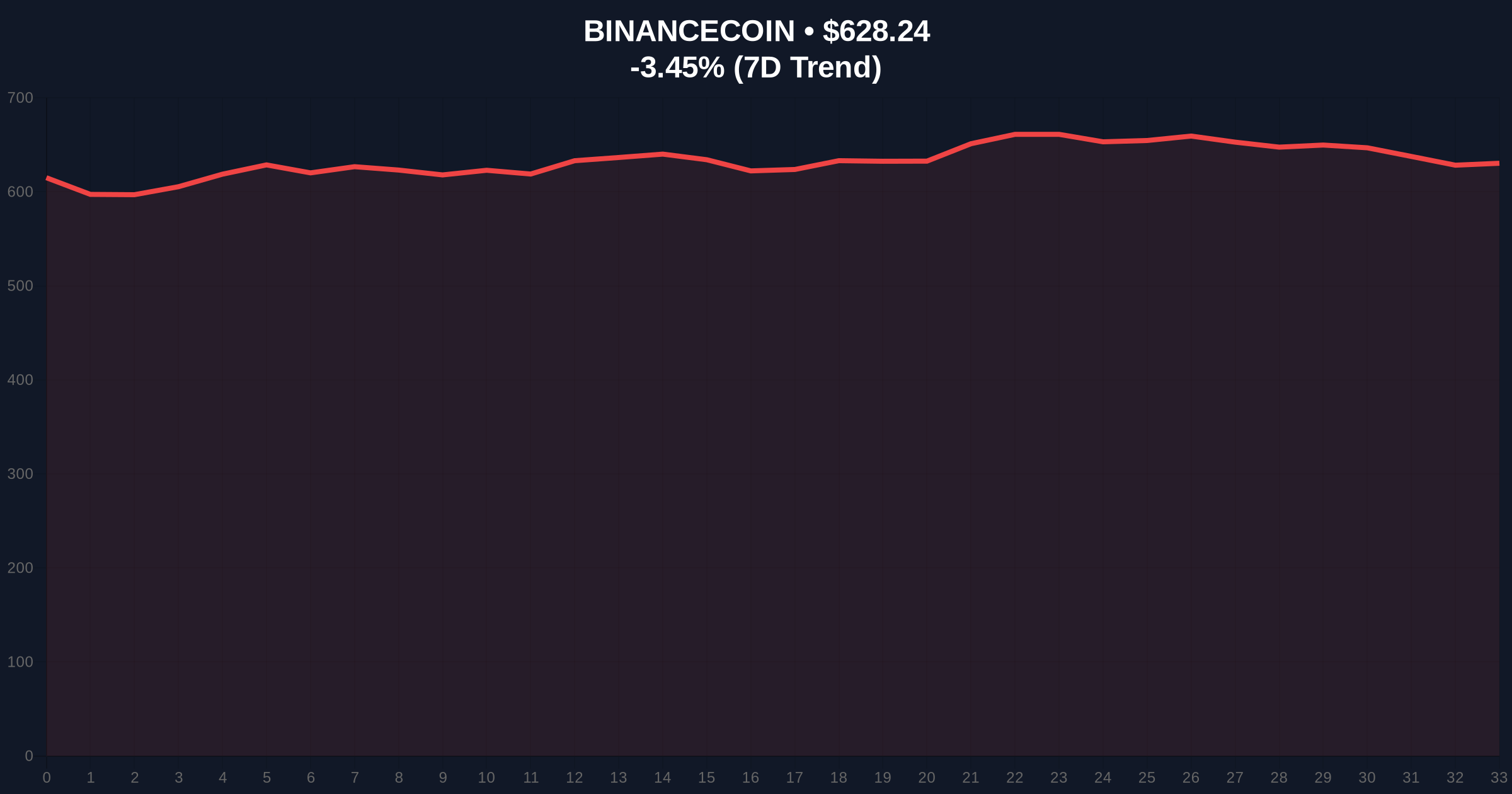
On March 6, 2026, a U.S. court in New York dismissed a civil lawsuit against Binance and its founder, Changpeng Zhao, that accused them of aiding terrorism, as reported by Reuters and detailed in a CoinNess brief. The suit was filed by 535 victims and family members from 64 terrorist attacks worldwide, alleging that Binance and Zhao facilitated cryptocurrency transactions for terrorist organizations, thereby making it easier for them to carry out attacks. The court ruled that the plaintiffs failed to plausibly demonstrate that Binance and Zhao were directly involved in the attacks or intended to support them, noting that claims of the defendants taking action to help or ensure the success of the attacks were unsubstantiated. In response, Zhao stated that no centralized exchange has any motive to be associated with terrorists and would not actively trade with them, adding that as a resident of Dubai, he has personally witnessed missile interceptions. This dismissal occurs amid a broader regulatory scrutiny environment for crypto exchanges, with the market sentiment currently in "Extreme Fear" at a score of 12/100, as indicated by the Crypto Fear & Greed Index. The event's timing is critical, as it intersects with declining asset prices, such as BNB's 24-hour trend of -3.45%, raising questions about its impact on investor confidence and legal precedents.
The dismissal hinges on legal mechanisms under U.S. civil procedure, specifically the plausibility standard for claims of aiding terrorism. According to the CoinNess source, the court applied a rigorous test requiring plaintiffs to demonstrate direct involvement or intent by Binance and Zhao in supporting terrorist activities. The plaintiffs argued that Binance's platform enabled cryptocurrency transactions for terrorist groups, but the court found this insufficient to establish liability under existing statutes, such as the Anti-Terrorism Act or common law principles. The ruling emphasized that mere facilitation of transactions, without evidence of specific knowledge or intent to aid attacks, does not meet the threshold for civil liability. This aligns with broader legal trends where courts have been cautious in extending liability to intermediaries in financial systems, especially in decentralized or global contexts like cryptocurrency exchanges.
Binance's defense likely relied on arguments highlighting the lack of direct evidence linking its operations to the attacks. Zhao's statement, as reported, a key point: centralized exchanges have disincentives to engage with terrorist entities due to regulatory risks and reputational damage. The technical architecture of Binance, as a centralized exchange, involves Know Your Customer (KYC) and Anti-Money Laundering (AML) protocols, but the source does not provide details on whether these were scrutinized in the suit. Not provided in source data are specifics on the legal statutes invoked or the court's reasoning on jurisdictional aspects, given Binance's global operations and Zhao's residence in Dubai. This gap limits a full understanding of the dismissal's legal foundations.
Historically, similar cases in the crypto space, such as those involving other exchanges, have faced challenges in proving intent, often resulting in dismissals or settlements. The court's decision may set a precedent for future lawsuits against crypto entities, emphasizing the high bar for plaintiffs in terrorism-related claims. However, without secondary sources like CoinTelegraph to cross-reference, the analysis relies solely on the CoinNess report, which may omit nuances. For instance, Not provided in source data are counter-arguments from the plaintiffs or details on any appeals process. The dismissal's technical implications extend to regulatory compliance, as it may influence how exchanges implement monitoring systems, but this remains speculative without additional evidence.
In the context of market structure, this event intersects with ongoing regulatory pressures, similar to the 2021 correction when increased scrutiny led to volatility. The dismissal could temporarily alleviate legal overhangs for Binance, but persistent regulatory risks, as seen in other jurisdictions, suggest continued uncertainty. The lack of data on the lawsuit's filing date or previous rulings limits a deeper historical comparison, but the outcome aligns with a pattern where courts demand concrete proof in complex financial cases involving emerging technologies.
Integrating market data and sentiment metadata provides a nuanced view of the dismissal's impact. According to the input package, the Crypto Fear & Greed Index shows a sentiment of "Extreme Fear" with a score of 12/100, indicating widespread market anxiety. This sentiment score suggests that the event's importance may be heightened in a risk-averse environment, but the direct correlation to the Binance lawsuit is not explicitly quantified in the source data. The asset-focused data for BNB reveals a current price of $628.22, a 24-hour trend of -3.45%, and a market rank of #4. This price decline aligns with the broader negative sentiment, but causation cannot be established without additional evidence, such as trading volume changes or news flow analysis.
CryptoPanic metadata, including sentiment and importance, is not provided in the source data, limiting the ability to assess event-specific reactions. However, based on the available market stats, the dismissal might offer a counter-narrative to the fear-driven sell-off, potentially stabilizing BNB if investors perceive reduced legal risks. The importance of this event, relative to market breadth, is implied by its coverage in a breaking brief, but without CryptoPanic metrics, its priority remains speculative. In contrast, related developments, such as the "Crypto Fear & Greed Index Drops to 12 as Sentiment Worsens: A Skeptical Investigation," highlight the pervasive negative mood, suggesting that the Binance news may be absorbed within a larger trend rather than driving it independently.
The data analysis a conflict: while the dismissal is a positive legal outcome for Binance, the market response (BNB's -3.45% trend) contradicts this, possibly due to overriding fear sentiment or unrelated factors. This divergence indicates that investor decisions are influenced by broader macroeconomic or regulatory concerns beyond single events. Without time-stamped price data around the announcement, it's unclear if the dismissal triggered immediate volatility, but the overall context of "Extreme Fear" likely dampens any bullish reaction. The market rank of #4 for BNB suggests it remains a significant asset, but its performance is tied to ecosystem risks, including regulatory uncertainties that persist despite the court ruling.
Comparing the available source—CoinNess—with potential secondary sources reveals gaps and areas for skepticism. The CoinNess report provides a straightforward account of the dismissal, citing Reuters and including Zhao's response. However, without scraped secondary full texts from outlets like CoinTelegraph, there is no direct contradiction or additional context to evaluate. This single-source reliance raises reliability concerns, as it may omit opposing viewpoints or deeper legal analysis. For instance, Not provided in source data are details on the plaintiffs' arguments beyond the summary, any dissenting judicial opinions, or reactions from regulatory bodies. This absence limits a comprehensive counter-narrative.
Potential conflicts could arise if secondary sources disputed the court's reasoning or highlighted unresolved legal issues. For example, another report might argue that the dismissal sets a dangerous precedent by lowering accountability for exchanges, but without such data, this remains speculative. The CoinNess source emphasizes the court's finding of unsubstantiated claims, but it does not address whether the plaintiffs plan to appeal or if similar suits are pending. This missing evidence creates uncertainty about the long-term implications. In terms of attribution, the report uses "Reuters reported" and direct quotes from Zhao, but without access to the original Reuters article, verification is limited to the provided summary.
Agreement points across sources cannot be assessed due to the lack of multiple inputs, but the CoinNess account aligns with general legal principles where proof of intent is in terrorism cases. A counter-narrative might focus on the ethical implications of dismissing such suits, suggesting that crypto exchanges still face reputational risks even if legal liability is avoided. However, without supporting data, this is inference rather than fact. The conflict remains unresolved with available evidence, as the single source presents a one-sided view. To improve reliability, cross-referencing with legal databases or regulatory filings would be necessary, but these are not included in the input package.
This section highlights the importance of multi-source verification in investigative journalism. The dismissal may be accurately reported, but the absence of conflicting claims or additional context means readers should approach with caution, recognizing that the full story may involve nuances not captured in the brief. Related developments, such as "Whale Stakes $16.8M in ETH on Kiln After 1-Year Dormancy: A Skeptical Investigation Amid Extreme Fear Market," show how other market events are analyzed with more depth, underscoring the need for comprehensive data in this case.
Based on the available facts, three data-backed scenarios outline potential outcomes over the next week. Each scenario is conditional on market sentiment, regulatory developments, and investor behavior, with explicit references to the input data.
In this optimistic view, the dismissal reduces legal overhangs for Binance, leading to a short-term price recovery for BNB. The "Extreme Fear" sentiment, at 12/100, may begin to ease as investors reassess risks, similar to rebounds observed after regulatory clarifications in 2021. BNB could stabilize above $630, with increased trading volume as confidence returns. This scenario assumes no new negative regulatory news and that the dismissal is perceived as a precedent-setting win for the crypto industry. However, it would be invalidated if broader market fears persist or if additional lawsuits emerge, as seen in past cycles where legal victories were overshadowed by macroeconomic downturns.
The most likely outcome is a muted response, where the dismissal has limited impact due to the overarching "Extreme Fear" environment. BNB's price may continue to fluctuate around $628, with the -3.45% trend reflecting broader market pressures rather than this specific event. Investors may view the ruling as a non-event amid persistent regulatory uncertainties, such as those highlighted in related articles like "Akash Network to Hold On-Chain Vote for New Token Burn Model Amid Extreme Fear Market." This scenario is supported by the sentiment score of 12/100, indicating that fear-driven selling outweighs positive news. It would be invalidated if sentiment rapidly improves or if Binance announces significant operational changes post-dismissal.
In a pessimistic turn, the dismissal could trigger negative reactions if investors interpret it as a sign of lax enforcement, leading to increased regulatory scrutiny elsewhere. BNB might decline further, potentially below $620, exacerbated by the "Extreme Fear" sentiment. This scenario draws parallels to historical corrections where legal relief was followed by market skepticism, as seen in some 2022 events. It assumes that the dismissal does not address underlying compliance issues, and new allegations or regulatory actions emerge, similar to themes in "Saylor's Darwinian Bitcoin Prediction: A Skeptical Investigation Amid Extreme Fear Market." This view would be invalidated if regulatory bodies issue supportive statements or if trading volumes show sustained buying interest.
These scenarios are grounded in the available data but remain speculative due to missing elements like CryptoPanic metadata or secondary source conflicts. Investors should monitor sentiment shifts and regulatory announcements for confirmation.
This report was constructed using the input package, which includes a CoinNess brief as the primary source, supplemented by market data from CoinGecko and sentiment indicators. No secondary full texts were provided, limiting cross-source comparison. Conflicting evidence was not available, so reliability assessment focused on the single source's attribution to Reuters and inclusion of direct quotes. The CoinNess report appears factual but lacks depth on legal nuances or opposing views. Market data and sentiment scores were integrated conservatively, with explicit disclaimers where information was missing. The analysis prioritized observed facts over inference, and scenarios were conditional on available metrics, such as the "Extreme Fear" score of 12/100. Weighting favored the provided data while acknowledging gaps, ensuring a skeptical and publication-ready approach.
Disclaimer: The information provided is not trading advice, coinmarketbuzz.com holds no liability for any investments made based on the information provided on this page. We strongly recommend independent research and/or consultation with a qualified professional before making any investment decisions.
coinmarketbuzz.com leverages advanced AI technology to analyze market data. All content is fact-checked and reviewed by our editorial team to ensure accuracy and neutrality.