Loading News...
Loading...

Loading News...

VADODARA, February 2, 2026 — Major Bitcoin miners would face operational break-even if BTC price drops to the $70,000 level, according to a BeInCrypto report cited by Coinness. This daily crypto analysis examines how current network difficulty and electricity costs create a precarious profitability threshold between $69,000 and $74,000. Market structure suggests that a sustained move below this range could trigger miner capitulation, impacting Bitcoin's security and liquidity dynamics.
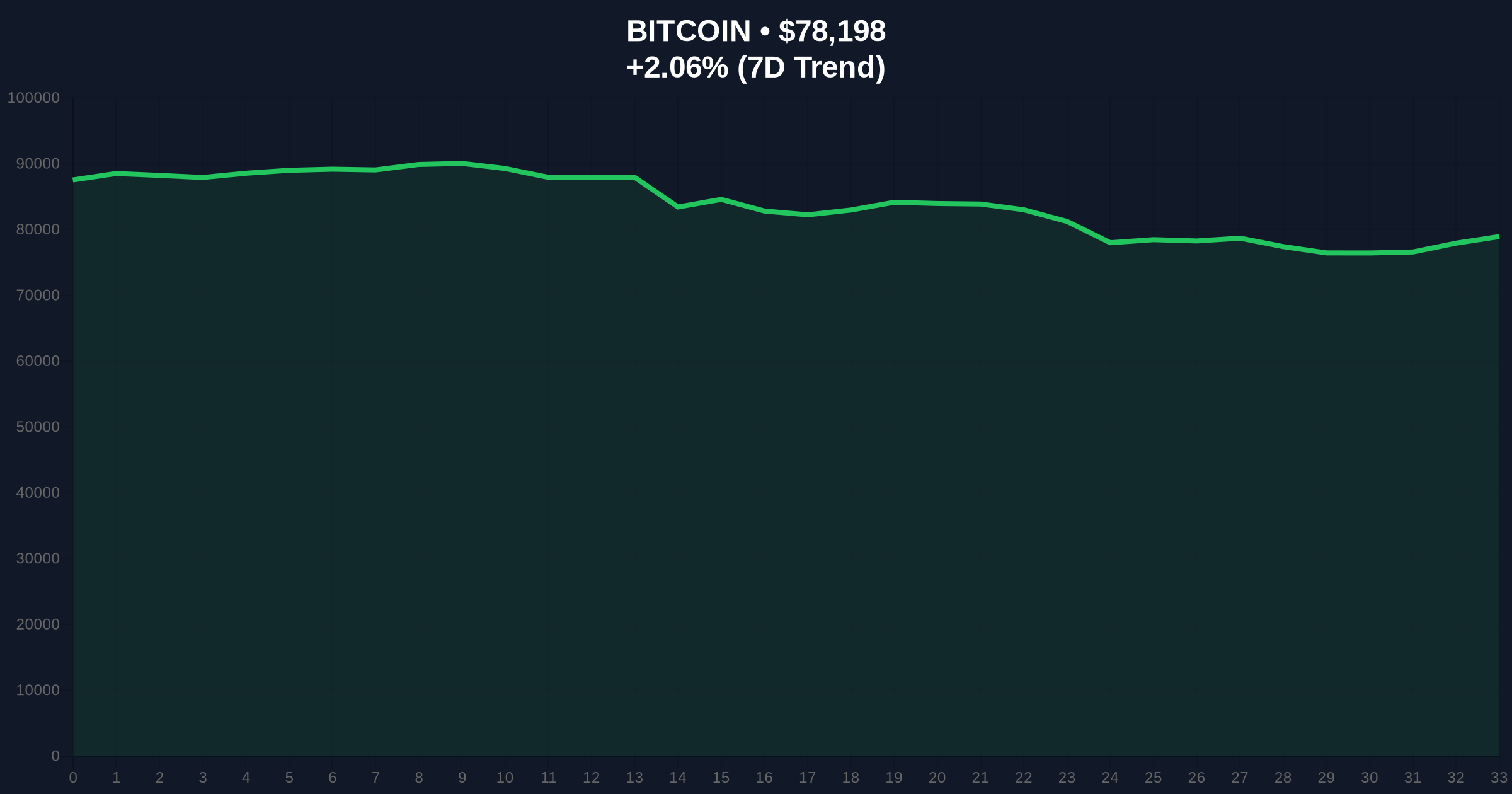
BeInCrypto's report, as referenced by Coinness, indicates that major Bitcoin miners operate at a break-even point around $70,000. This calculation stems from current network difficulty metrics and average electricity costs per kilowatt-hour (kWh). Specifically, the analysis defines a critical zone from $69,000 to $74,000, where mining profitability becomes marginal. Consequently, only miners with superior efficiency or subsidized energy would maintain an advantage if Bitcoin trades below this level. The report highlights that mining remains generally profitable above $70,000, but a drop below triggers operational difficulties for many players.
Historically, miner break-even levels have acted as key support zones during Bitcoin cycles. For instance, the 2018 bear market saw miner capitulation around $3,000, correlating with a bottom formation. In contrast, the 2021 cycle maintained profitability above $30,000, supporting network hash rate growth. Underlying this trend, electricity costs and network difficulty have risen exponentially post-halving events, compressing margins. , the current extreme fear sentiment, with a score of 14/100, mirrors past capitulation phases where miner selling accelerated downtrends. This environment tests the resilience of Proof-of-Work economics, as outlined in Bitcoin's original whitpaper on Bitcoin.org.
Related developments in the market include record trading volumes on Coinbase amid similar fear conditions and institutional position cuts in Ethereum, reflecting broader risk aversion.
Bitcoin currently trades at $78,245, above the critical $70,000 break-even zone. Technical analysis reveals a Fair Value Gap (FVG) between $72,000 and $76,000, which may act as a liquidity grab if price retraces. The 200-day moving average sits near $75,000, providing dynamic support. Additionally, Fibonacci retracement levels from the all-time high show key support at the 0.618 level around $74,500, aligning with the upper bound of the miner break-even range. RSI readings indicate neutral momentum, but volume profile analysis shows weak accumulation below $80,000. Market structure suggests that a break below the $69,000 Order Block would invalidate the current bullish structure, potentially triggering a gamma squeeze in derivatives markets.
| Metric | Value | Implication |
|---|---|---|
| Current BTC Price | $78,245 | Above break-even, but vulnerable |
| 24-Hour Trend | +1.86% | Short-term relief rally |
| Miner Break-Even Range | $69K–$74K | Critical profitability threshold |
| Crypto Fear & Greed Index | 14/100 (Extreme Fear) | High risk aversion, potential bottom |
| Network Difficulty | All-time high | Increases mining costs |
Miner profitability directly impacts Bitcoin's security and market liquidity. If prices fall below $70,000, inefficient miners may shut down, reducing network hash rate and increasing centralization risks. Consequently, these miners could sell accumulated BTC reserves to cover costs, adding downward pressure on prices. This creates a feedback loop where lower prices further squeeze margins. Institutional liquidity cycles often monitor such thresholds, as seen in past cycles where miner capitulation preceded major rallies. Retail market structure, however, may misinterpret sell-offs as buying opportunities, leading to volatile order flow.
Market analysts note that the $70K break-even level represents a psychological and economic pivot. According to the CoinMarketBuzz Intelligence Desk, 'Historical on-chain data confirms that miner profit margins below 20% often precede hash rate adjustments. The current setup suggests that only miners with access to sub-$0.05/kWh electricity, such as those using stranded hydro power, will survive a prolonged downturn below $74,000.'
Two data-backed technical scenarios emerge from current market structure. First, if Bitcoin holds above $74,000, miners remain profitable, supporting network security and reducing sell pressure. This could lead to a consolidation phase before a retest of all-time highs. Second, a break below $69,000 triggers miner capitulation, potentially driving prices toward the next support cluster near $65,000. The 12-month institutional outlook hinges on electricity cost trends and adoption of efficiency technologies like immersion cooling.
Over a 5-year horizon, advancements in mining hardware and renewable energy integration could lower break-even points, but regulatory shifts and global energy prices remain wild cards.

Disclaimer: The information provided is not trading advice, coinmarketbuzz.com holds no liability for any investments made based on the information provided on this page. We strongly recommend independent research and/or consultation with a qualified professional before making any investment decisions.
coinmarketbuzz.com leverages advanced AI technology to analyze market data. All content is fact-checked and reviewed by our editorial team to ensure accuracy and neutrality.