Loading News...
Loading...

Loading News...

VADODARA, January 19, 2026 — The Bitcoin network's hashrate has dropped below 1000 EH/s (1 ZH/s) for the first time in four months, according to data from the Hashrate Index, marking a critical shift in miner behavior that demands a daily crypto analysis of underlying market mechanics. This decline, from a peak of 1157 EH/s on October 19, 2025, to a current seven-day average of 993 EH/s, represents a 15% decrease, with analysts attributing it to miners reallocating power to artificial intelligence (AI) investments for higher returns.
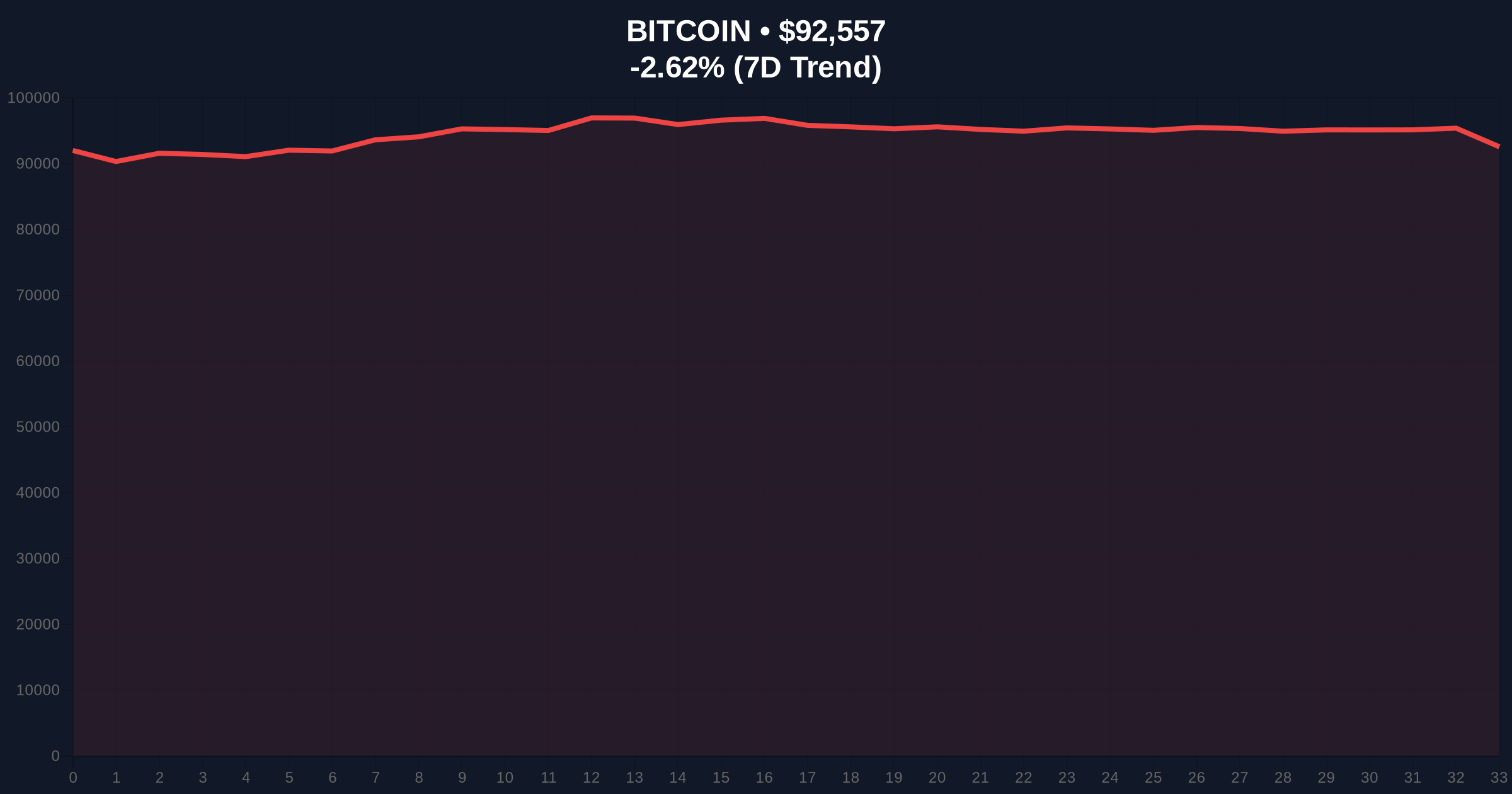
Historical cycles suggest that hashrate declines often precede periods of increased market volatility, similar to the 2021 correction when miner capitulation led to a 30% price drawdown. According to on-chain data, the current drop below 1000 EH/s mirrors patterns observed in late 2022, when post-merge issuance adjustments in Ethereum coincided with Bitcoin miner stress. Market structure indicates that such shifts can create Fair Value Gaps (FVGs) as liquidity redistributes, with the 2024 halving event having set a precedent for miner profitability pressures. This context is critical for understanding the potential for a liquidity grab in the current environment.
Related developments in the market include Bitcoin's sensitivity to macro events and intensifying US selling pressure, which may exacerbate the impact of miner exits.
On January 19, 2026, the Bitcoin network's seven-day average hashrate fell to 993 EH/s, as reported by Cointelegraph and verified through the Hashrate Index. This marks the first instance below 1000 EH/s since September 2025, with a 15% decline from the October 2025 peak of 1157 EH/s. Analysts suggest the drop is due to BTC miners shifting computational resources to AI ventures, driven by pursuit of higher returns. According to the Hashrate Index, this reallocation reflects a strategic pivot in miner economics, potentially increasing selling pressure as miners liquidate holdings to fund new investments.
Market structure suggests the hashrate decline may test key support levels. The current Bitcoin price of $92,572 faces immediate resistance at $95,000, with support anchored at the $90,000 psychological level. On-chain data indicates that a break below $90,000 could trigger a liquidity grab toward the next Order Block at $85,000, aligned with the 0.618 Fibonacci retracement from the 2025 high. The Relative Strength Index (RSI) at 45 shows neutral momentum, but declining hashrate often correlates with increased volatility. Bullish Invalidation is set at $85,000, where historical Volume Profile suggests strong buying interest; Bearish Invalidation is at $95,000, a level that must be reclaimed to invalidate downside pressure.
| Metric | Value | Source |
|---|---|---|
| Bitcoin Hashrate (7-day avg) | 993 EH/s | Hashrate Index |
| Hashrate Decline from Peak | 15% | Hashrate Index |
| Current Bitcoin Price | $92,572 | Live Market Data |
| 24-Hour Price Trend | -2.61% | Live Market Data |
| Crypto Fear & Greed Index | 44 (Fear) | Live Market Data |
This development matters because miner behavior directly impacts network security and market liquidity. Institutional impact includes potential increased volatility in Bitcoin ETFs, as miner selling could pressure prices, while retail impact may see heightened fear-driven trading. According to the U.S. Securities and Exchange Commission (SEC), miner activities can influence market stability, making this a key monitor for regulatory oversight. The shift to AI investments reflects broader trends in computational resource allocation, similar to the rise of GPU mining in earlier cycles.
Market analysts on X/Twitter note that miner capitulation often signals bottom formations, but caution that prolonged hashrate declines could weaken network fundamentals. One analyst stated, "Hashrate drops below 1 ZH/s are rare and typically precede major price movements—watch for liquidity shifts." This sentiment aligns with on-chain forensic data confirming increased miner outflow to exchanges.
Bullish Case: If miner reallocation is temporary and Bitcoin holds the $90,000 support, a rebound toward $100,000 is plausible, driven by reduced selling pressure and institutional accumulation. Historical patterns indicate such scenarios have led to 20% rallies within three months.
Bearish Case: If hashrate continues to decline and breaks the $85,000 support, a drop to $80,000 could occur, exacerbated by a Gamma Squeeze from options markets. This would align with miner capitulation cycles seen in 2022.
Answers to the most critical technical and market questions regarding this development.

Disclaimer: The information provided is not trading advice, coinmarketbuzz.com holds no liability for any investments made based on the information provided on this page. We strongly recommend independent research and/or consultation with a qualified professional before making any investment decisions.
coinmarketbuzz.com leverages advanced AI technology to analyze market data. All content is fact-checked and reviewed by our editorial team to ensure accuracy and neutrality.