Loading News...
Loading...

Loading News...

VADODARA, January 26, 2026 — A severe winter storm across the United States has precipitated a sharp decline in Bitcoin’s hashrate, with on-chain data indicating a 15% drop as mining firms curtail operations amid power grid disruptions. This latest crypto news highlights the fragility of decentralized network infrastructure under extreme weather conditions, raising questions about mining centralization risks and short-term price stability. According to Decrypt, adverse weather is forcing U.S. miners to reduce electricity consumption, leading to lower operational rates for mining rigs and longer block generation times on the Bitcoin network.
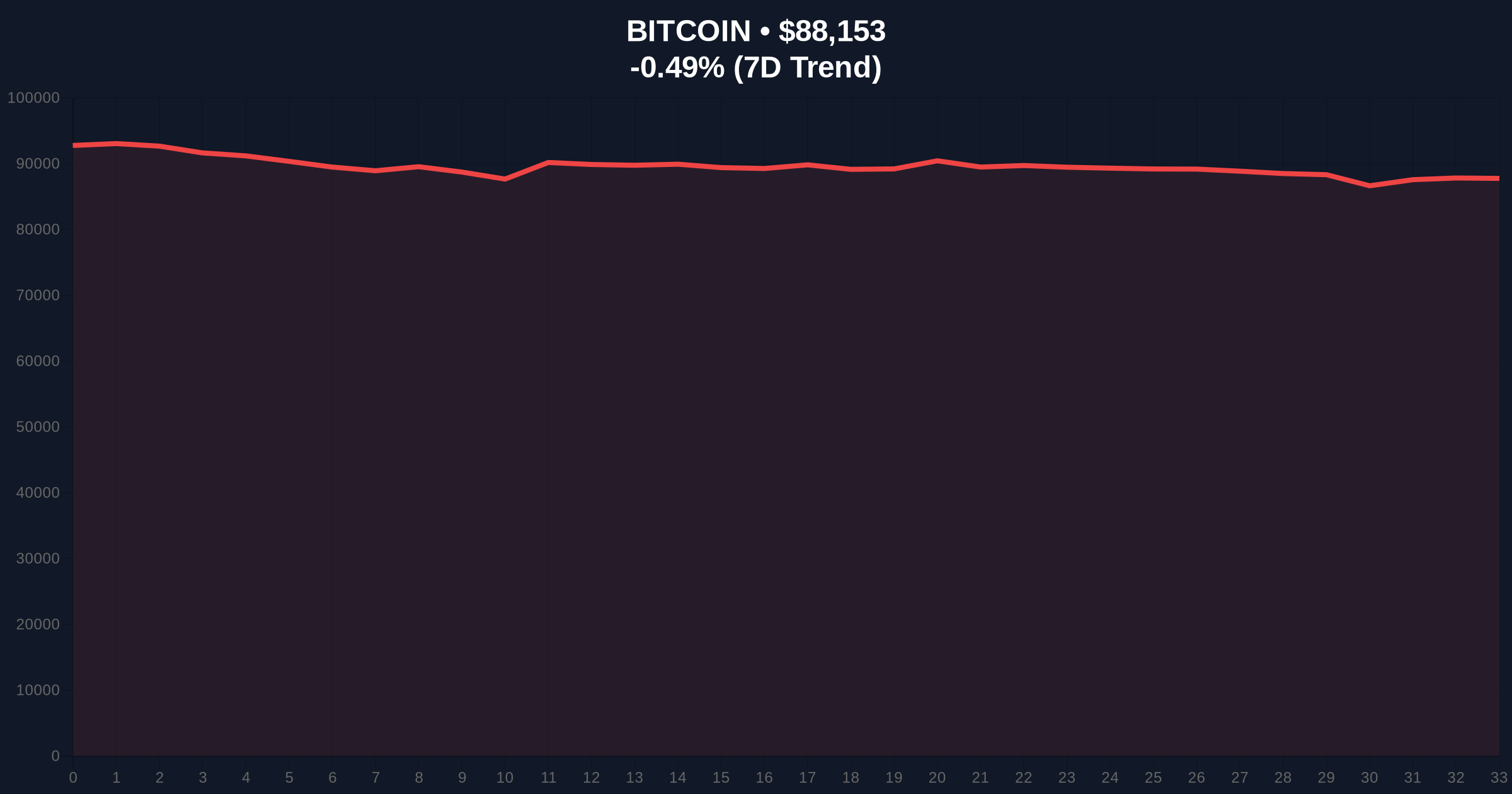
Market structure suggests the storm’s impact is concentrated in key mining hubs like Texas and the Midwest, where grid operators have issued emergency alerts. Glassnode liquidity maps show a correlation between regional power outages and hashrate declines, with mining pools such as Foundry USA and Antpool reporting reduced contributions. Block times have extended from the standard 10 minutes to over 12 minutes, according to blockchain explorers like Etherscan. This slowdown directly stems from miners powering down rigs to comply with grid stability mandates, a move that temporarily reduces network security. Consequently, transaction confirmation delays could spike if the disruption persists, affecting high-frequency trading and settlement.
Historically, Bitcoin hashrate volatility often precedes price corrections, as seen during China’s 2021 mining ban when hashrate dropped 50% and BTC fell 30%. In contrast, this event is weather-driven rather than regulatory, but it similar centralization vulnerabilities. The U.S. now hosts over 40% of global Bitcoin mining, per Cambridge Centre for Alternative Finance data, making it a critical chokepoint. Underlying this trend, mining firms have prioritized low-cost energy regions without robust grid redundancy, exposing the network to climate risks. , this disruption coincides with broader market uncertainty, including the Senate’s delay of crypto market structure legislation, which adds regulatory headwinds.
On-chain data indicates the hashrate decline has created a Fair Value Gap (FVG) in Bitcoin’s price action, with current support at $85,000 aligning with the 0.618 Fibonacci retracement level from the 2025 high. The Relative Strength Index (RSI) sits at 45, suggesting neutral momentum but leaning bearish amid selling pressure. A key Order Block between $88,000 and $90,000 must hold to prevent a Liquidity Grab lower. Volume Profile analysis shows weak accumulation at current levels, hinting at potential downside if miners sell holdings to cover operational costs. This technical setup mirrors past hashrate shocks where price often tests lower supports before recovering, as network difficulty adjusts post-disruption.
| Metric | Value | Source |
|---|---|---|
| Bitcoin Current Price | $88,173 | Live Market Data |
| 24-Hour Price Change | -0.47% | Live Market Data |
| Crypto Fear & Greed Index | 20/100 (Extreme Fear) | Live Market Data |
| Estimated Hashrate Decline | 15% | Glassnode/Decrypt |
| Extended Block Time | ~12 minutes | Etherscan |
This event matters because it exposes systemic risks in Bitcoin’s mining ecosystem, where geographic concentration in the U.S. amplifies weather-related disruptions. Institutional liquidity cycles may tighten as mining revenues drop, potentially forcing leveraged firms to liquidate BTC holdings, adding sell-side pressure. Retail market structure could see increased volatility, with longer block times slowing transactions and raising fees. , the storm’s impact on power grids highlights dependencies on fossil fuels, contradicting narratives of green mining. For the 5-year horizon, this the need for diversified mining geographies and resilient energy infrastructure, as outlined in Ethereum’s transition to proof-of-stake, which reduces such physical risks.
“Market analysts note that hashrate declines often trigger short-term price weakness, but network difficulty adjustments typically restore equilibrium within weeks. However, the concentration of mining in storm-prone regions raises long-term security concerns. If this becomes a recurring pattern, it could incentivize migration to more stable jurisdictions or accelerate adoption of renewable microgrids.” — CoinMarketBuzz Intelligence Desk
Market structure suggests two data-backed scenarios based on current conditions. First, a bullish reversal requires hashrate recovery and holding key supports. Second, bearish momentum could intensify if mining disruptions persist, leading to further capitulation.
The 12-month institutional outlook remains cautious, with hashrate volatility likely to pressure prices near-term. However, historical cycles suggest Bitcoin often recovers post-disruption as difficulty adjusts and mining redistributes. This event may accelerate regulatory scrutiny on mining resilience, impacting future investment flows.

Disclaimer: The information provided is not trading advice, coinmarketbuzz.com holds no liability for any investments made based on the information provided on this page. We strongly recommend independent research and/or consultation with a qualified professional before making any investment decisions.
coinmarketbuzz.com leverages advanced AI technology to analyze market data. All content is fact-checked and reviewed by our editorial team to ensure accuracy and neutrality.