Loading News...
Loading...

Loading News...

VADODARA, February 9, 2026 — Bitcoin confronts a critical inflection point this week. Market structure suggests a potential retest of the $60,000 level. This daily crypto analysis dissects five converging factors driving volatility. According to Cointelegraph, traders predict this move could liquidate short positions. The U.S. Consumer Price Index (CPI) release, Dollar Index (DXY) weakness, Japanese election fallout, and miner outflows amplify pressure.
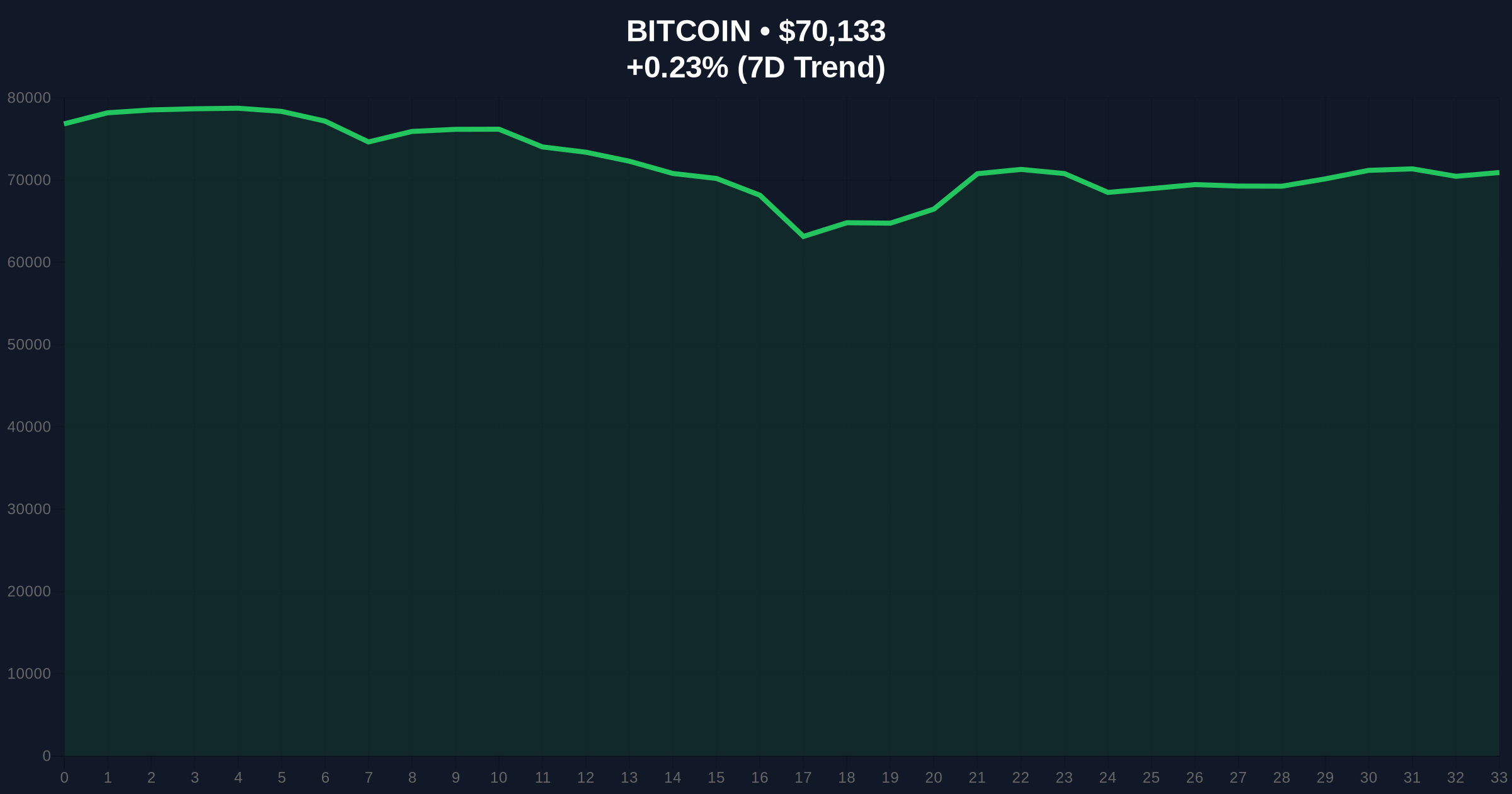
Cointelegraph outlines five key market drivers. First, many traders anticipate a $60,000 retest. They suggest the current rally aims to liquidate short positions. Second, the U.S. releases January CPI data this week. This inflation metric directly impacts Federal Reserve policy expectations. Third, the DXY failed to reclaim the 98 level. Historically, DXY weakness correlates with Bitcoin strength. Fourth, Japan's general election results may weaken the yen. Consequently, selling pressure could spill into crypto markets. Fifth, large-scale BTC transfers from miners to exchanges followed recent price drops. On-chain data indicates these movements often precede volatility.
Historically, Bitcoin faces heightened volatility during CPI releases. The Federal Reserve uses this data to guide interest rate decisions. In contrast, DXY levels below 98 have previously triggered bull runs. For instance, the 2021 cycle saw DXY dips precede major rallies. Underlying this trend, miner outflows signal distribution phases. Similar patterns emerged before the 2022 bear market. , global events like Japan's election impact currency flows. A weaker yen may force institutional rebalancing. Related developments include exchange delistings amid extreme fear and regulatory scrutiny in South Korea. These factors compound market uncertainty.
Market structure shows Bitcoin trading at $70,157. The 24-hour trend is a marginal 0.27%. Key support resides at the $60,000 psychological level. Resistance forms near the $75,000 Fibonacci 0.618 retracement from all-time highs. The Relative Strength Index (RSI) likely hovers in neutral territory. A break below $60,000 would invalidate the current consolidation. Conversely, reclaiming $75,000 could signal renewed bullish momentum. Volume profile analysis reveals thinning liquidity around current levels. This creates a Fair Value Gap (FVG) between $65,000 and $70,000. Order blocks from previous rallies now act as dynamic support.
| Metric | Value | Implication |
|---|---|---|
| Bitcoin Price | $70,157 | Near critical support test |
| 24h Change | 0.27% | Sideways consolidation |
| Fear & Greed Index | 14/100 (Extreme Fear) | Contrarian buy signal potential |
| Key Support Level | $60,000 | Bullish invalidation point |
| DXY Level | Below 98 | Historically bullish for BTC |
This convergence matters for institutional and retail portfolios. CPI data influences global liquidity cycles. A hot print could strengthen the dollar, pressuring risk assets. DXY failure at 98 suggests underlying dollar weakness. This may funnel capital into alternative stores of value. Miner outflows indicate potential selling pressure. Large transfers to exchanges increase available supply. According to Ethereum.org's documentation on network security, miner behavior often mirrors broader market sentiment. Japan's election adds geopolitical risk. A weaker yen might trigger cross-asset rebalancing. Retail market structure remains fragile amid Extreme Fear.
Market structure suggests the $60,000 level is a liquidity grab. Short-term volatility will hinge on CPI and miner holdings. Historical cycles show such convergences often resolve with sharp moves. The 12-month outlook remains data-dependent.
— CoinMarketBuzz Intelligence Desk
Two data-backed scenarios emerge. First, bullish momentum requires holding key supports. Second, bearish pressure may intensify if macro data disappoints.
The 12-month institutional outlook hinges on macro clarity. Federal Reserve policy, detailed on FederalReserve.gov, will dictate liquidity flows. Miner capitulation could signal a cycle bottom. Conversely, sustained outflows may prolong consolidation. The 5-year horizon favors structural adoption, but short-term pain remains likely.

Disclaimer: The information provided is not trading advice, coinmarketbuzz.com holds no liability for any investments made based on the information provided on this page. We strongly recommend independent research and/or consultation with a qualified professional before making any investment decisions.
coinmarketbuzz.com leverages advanced AI technology to analyze market data. All content is fact-checked and reviewed by our editorial team to ensure accuracy and neutrality.