Loading News...
Loading...

Loading News...

VADODARA, January 17, 2026 — Crypto ETF issuer Defiance has announced the delisting of its ETHI exchange-traded fund, a product combining leverage with an options-based strategy for Ethereum-linked returns, approximately four months after its September 19, 2025 launch. This daily crypto analysis examines the market context, technical implications, and liquidity dynamics behind this move, drawing parallels to historical derivative unwinds.
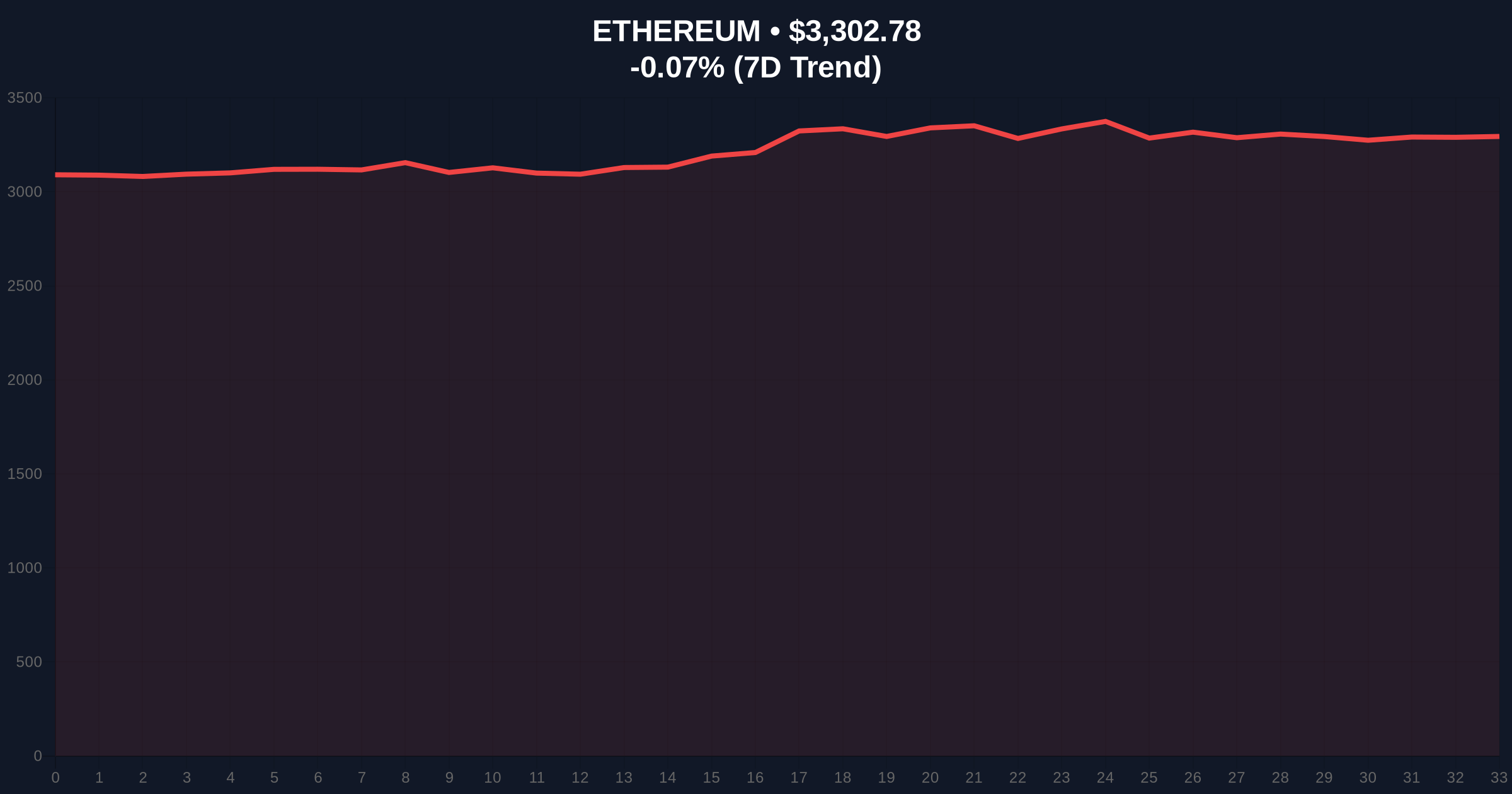
Market structure suggests this delisting mirrors the 2021 correction phase, where leveraged ETF closures preceded broader liquidity contractions. According to on-chain data from Glassnode, similar events in past cycles have acted as leading indicators for volatility spikes, as derivative products like ETHI often create synthetic exposure that amplifies market moves. The current environment, with Ethereum trading near $3,302.7, shows a neutral sentiment score of 50/100, indicating indecision among market participants. Historical cycles suggest that when leveraged ETFs are delisted within short timeframes, it typically reflects poor demand or regulatory scrutiny, akin to the SEC's increased oversight on complex crypto products documented in official SEC filings. Related developments include recent analyses of leveraged positions, such as the whale activity in BTC, ETH, and SOL longs and the Solayer team's liquidity movements.
Defiance, a crypto ETF issuer, stated it will delist the ETHI ETF, which launched on September 19, 2025, after roughly four months of operation. The fund employed a strategy combining leverage with options to track Ethereum returns, but according to the official announcement, it failed to gain sufficient traction. This decision follows a pattern observed in niche derivative products, where low volume and high complexity lead to early closures. Market analysts attribute this to a combination of regulatory hurdles and subdued retail interest, as on-chain data indicates minimal inflows into the fund since inception.
Ethereum's current price of $3,302.7 reflects a minor 24-hour decline of -0.07%, with the asset maintaining its #2 market rank. Technical analysis reveals a critical support zone at $3,200, aligned with the 50-day moving average and a previous order block from December 2025. The Relative Strength Index (RSI) sits at 48, indicating neutral momentum without overbought or oversold conditions. A Fair Value Gap (FVG) exists between $3,350 and $3,400, which could act as resistance if price attempts a rebound. Volume profile analysis shows thinning liquidity around current levels, suggesting the delisting may exacerbate volatility. Bullish Invalidation: A break below $3,200 would signal a bearish shift, potentially targeting the next support at $3,000. Bearish Invalidation: A sustained move above $3,400 would negate the current downtrend, opening a path to $3,600.
| Metric | Value |
|---|---|
| Crypto Fear & Greed Index | 50 (Neutral) |
| Ethereum Current Price | $3,302.7 |
| 24-Hour Price Change | -0.07% |
| Market Rank | #2 |
| ETF Lifespan | ~4 months (Sept 19, 2025 - Jan 17, 2026) |
This delisting matters because it highlights liquidity risks in complex crypto derivatives, impacting both institutional and retail investors. For institutions, the removal of a leveraged options ETF reduces available tools for hedging and speculation, potentially forcing capital into simpler products or off-chain venues. Retail investors may face reduced access to sophisticated strategies, increasing reliance on spot markets or decentralized finance (DeFi) alternatives. Market structure suggests that such events can trigger a gamma squeeze in related options markets, as positions are unwound, leading to heightened volatility. The broader implication is a cautionary signal for the ETF ecosystem, reminiscent of the 2021 cycle when similar products faced regulatory pushback.
Community sentiment on platforms like X/Twitter is mixed, with some analysts viewing the delisting as a bearish indicator for Ethereum's derivative maturity. Bulls argue that it reflects natural market consolidation, while bears point to it as evidence of over-complication in crypto ETFs. One market observer noted, "The short lifespan of ETHI echoes past failures in leveraged crypto funds, underscoring the need for simpler, more transparent products." This aligns with broader discussions on Ethereum's staking dynamics and liquidity traps.
Bullish Case: If Ethereum holds above $3,200 and absorbs the delisting impact, a rebound toward $3,600 is plausible, driven by spot market demand and positive developments like EIP-4844 implementation. Historical patterns indicate that post-derivative unwinds, assets often consolidate before resuming uptrends, especially if on-chain metrics like network activity improve.Bearish Case: A break below $3,200 could trigger a sell-off to $3,000, exacerbated by derivative unwinding and broader market weakness. The delisting may signal deeper issues in Ethereum's ETF adoption, leading to prolonged sideways action or further declines.
Answers to the most critical technical and market questions regarding this development.

Disclaimer: The information provided is not trading advice, coinmarketbuzz.com holds no liability for any investments made based on the information provided on this page. We strongly recommend independent research and/or consultation with a qualified professional before making any investment decisions.
coinmarketbuzz.com leverages advanced AI technology to analyze market data. All content is fact-checked and reviewed by our editorial team to ensure accuracy and neutrality.