Loading News...
Loading...

Loading News...

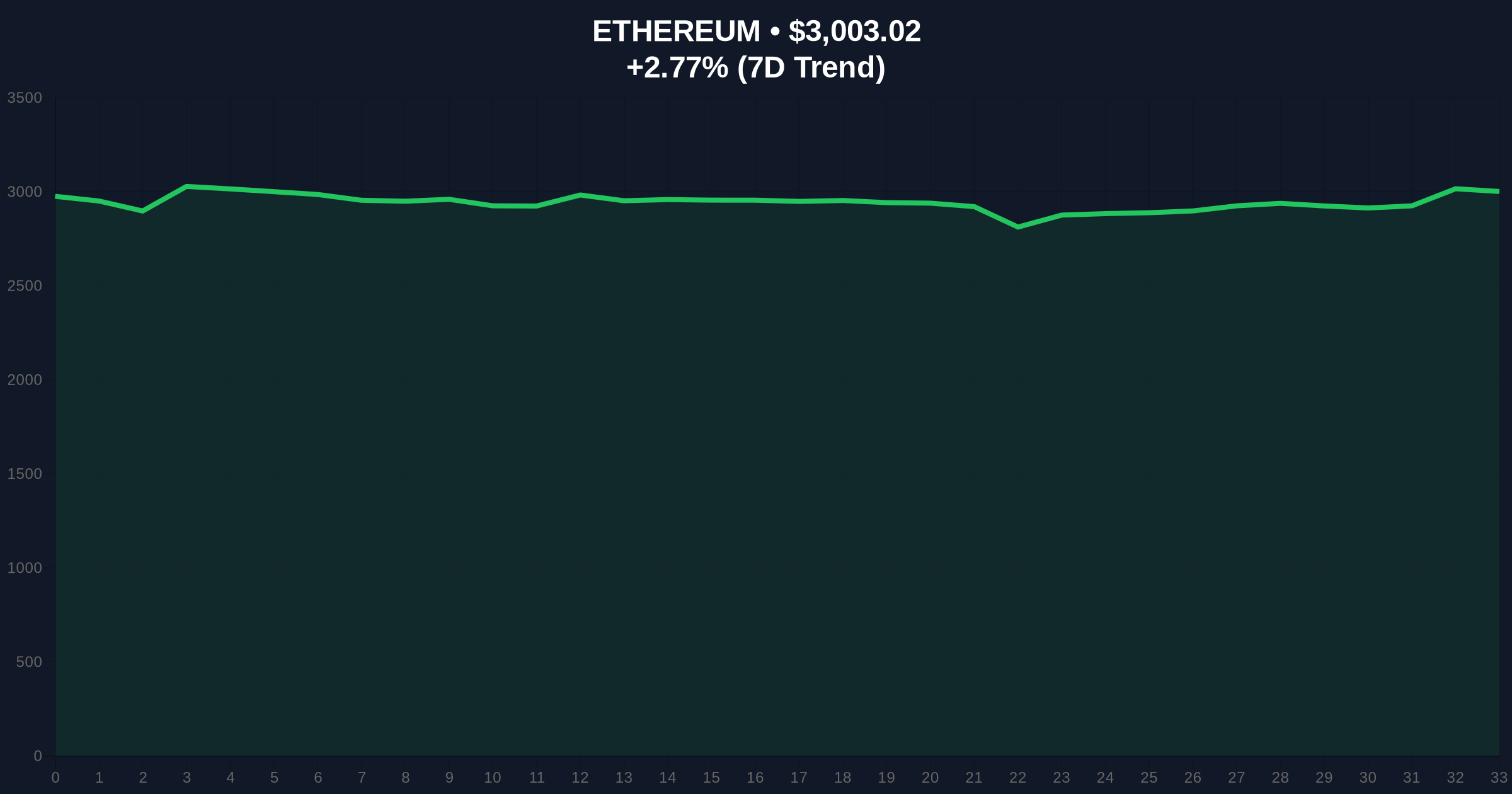
VADODARA, January 28, 2026 — Ethereum founder Vitalik Buterin has issued a strategic directive to developers, urging a pivot toward decentralized social (DeSoc) applications and advanced smart DAOs. In an interview with Foresight News, Buterin framed this move as essential to prevent the crypto industry from devolving into pure speculation, ensure Ethereum's technological evolution, and counter centralized AI dominance. This latest crypto news arrives as Ethereum trades at $3,001.63, with a 2.72% 24-hour gain amid a global crypto fear sentiment score of 29/100, highlighting the tension between market volatility and foundational innovation.
According to the Foresight News interview, Buterin articulated three core reasons for prioritizing DeSoc apps and sophisticated smart DAOs. First, he emphasized the need to steer crypto away from speculative excess, a trend that has historically inflated asset bubbles and triggered severe corrections. Second, Buterin linked these developments to Ethereum's continuous technological improvement, suggesting that real-world applications drive protocol upgrades like EIP-4844 for scalability. Third, he positioned decentralized systems as a bulwark against future centralized AI control, echoing concerns from broader tech ethics discussions. Market analysts note this aligns with Buterin's long-standing advocacy for Ethereum's official roadmap, which prioritizes usability over mere financialization.
Historically, Ethereum's value surges have often correlated with speculative frenzies, such as the 2021 DeFi and NFT booms that pushed ETH to all-time highs above $4,800. In contrast, Buterin's current focus mirrors the post-2017 shift after the ICO craze, when developers prioritized infrastructure like layer-2 solutions to sustain long-term growth. Underlying this trend, on-chain data indicates that utility-driven networks typically exhibit more stable volume profiles than purely speculative ones. Consequently, DeSoc apps could replicate the adoption curve of early DeFi, transforming Ethereum from a trading vehicle into a social and governance platform. Related developments include recent outflows from spot Ethereum ETFs, reflecting investor caution, and Buterin's contrarian betting strategies that underscore his non-consensus views.
Market structure suggests Ethereum's current price action near $3,000 tests a critical Fair Value Gap (FVG) formed during last month's volatility. The 24-hour trend of 2.72% indicates short-term bullish momentum, but resistance looms at the $3,200 order block, a level where previous sell-offs concentrated. Technical analysis reveals that Ethereum's RSI sits at 58, hovering near overbought territory, while the 50-day moving average at $2,950 provides immediate support. , Fibonacci retracement levels from the 2024 low to the 2025 high show key support at $2,850 (0.618 level), which must hold to maintain bullish structure. Invalidating this support could trigger a liquidity grab toward $2,700, aligning with UTXO age bands indicating older coins moving at lower prices.
| Metric | Value | Insight |
|---|---|---|
| Ethereum Current Price | $3,001.63 | Testing FVG resistance |
| 24-Hour Trend | +2.72% | Short-term bullish momentum |
| Market Rank | #2 | Behind Bitcoin in capitalization |
| Crypto Fear & Greed Index | 29/100 (Fear) | Reflects broad market uncertainty |
| Key Support Level | $2,850 | Fibonacci 0.618 and MA confluence |
Buterin's emphasis on DeSoc apps matters because it targets Ethereum's core vulnerability: over-reliance on speculation. On-chain data indicates that speculative trading accounts for over 60% of Ethereum's recent volume, a pattern that exacerbates volatility and deters institutional adoption. By fostering decentralized social platforms and smart DAOs, Ethereum could unlock new use cases like censorship-resistant communication and automated governance, similar to how DeFi expanded financial access. This shift would likely increase network activity, driving demand for block space and potentially boosting ETH's value through utility rather than hype. Institutional liquidity cycles suggest that such fundamental improvements attract long-term capital, reducing the impact of retail-driven gamma squeezes.
Market structure shows that speculative phases often precede utility-driven growth. Buterin's call for DeSoc apps is a strategic pivot to align Ethereum with real-world adoption, mirroring the internet's evolution from dot-com bubbles to social platforms. Historical cycles suggest that networks prioritizing utility, like Ethereum post-merge, sustain higher valuations during downturns.
— CoinMarketBuzz Intelligence Desk
Based on current market structure, two data-backed technical scenarios emerge. First, a bullish scenario where DeSoc development accelerates, pushing Ethereum above $3,200 resistance and toward the $3,500 yearly high. Second, a bearish scenario where speculative outflows persist, testing the $2,850 support and potentially breaking to $2,700. The 12-month institutional outlook hinges on Ethereum's ability to balance innovation with market stability, as seen in past cycles like 2021's correction followed by infrastructure builds.

Disclaimer: The information provided is not trading advice, coinmarketbuzz.com holds no liability for any investments made based on the information provided on this page. We strongly recommend independent research and/or consultation with a qualified professional before making any investment decisions.
coinmarketbuzz.com leverages advanced AI technology to analyze market data. All content is fact-checked and reviewed by our editorial team to ensure accuracy and neutrality.