Loading News...
Loading...

Loading News...

VADODARA, January 15, 2026 — BitMEX co-founder Arthur Hayes has published a blog post forecasting a renewed Bitcoin rally in 2026, attributing the potential upswing to anticipated U.S. dollar liquidity expansion under the Trump administration. This daily crypto analysis examines the macroeconomic drivers, technical structure, and on-chain implications of Hayes' thesis, which hinges on aggressive credit policies ahead of the U.S. re-election cycle. According to Hayes, Bitcoin's underperformance in 2025 stemmed from a contraction in dollar liquidity, a trend he expects to reverse as political pressures mount for economic stimulus.
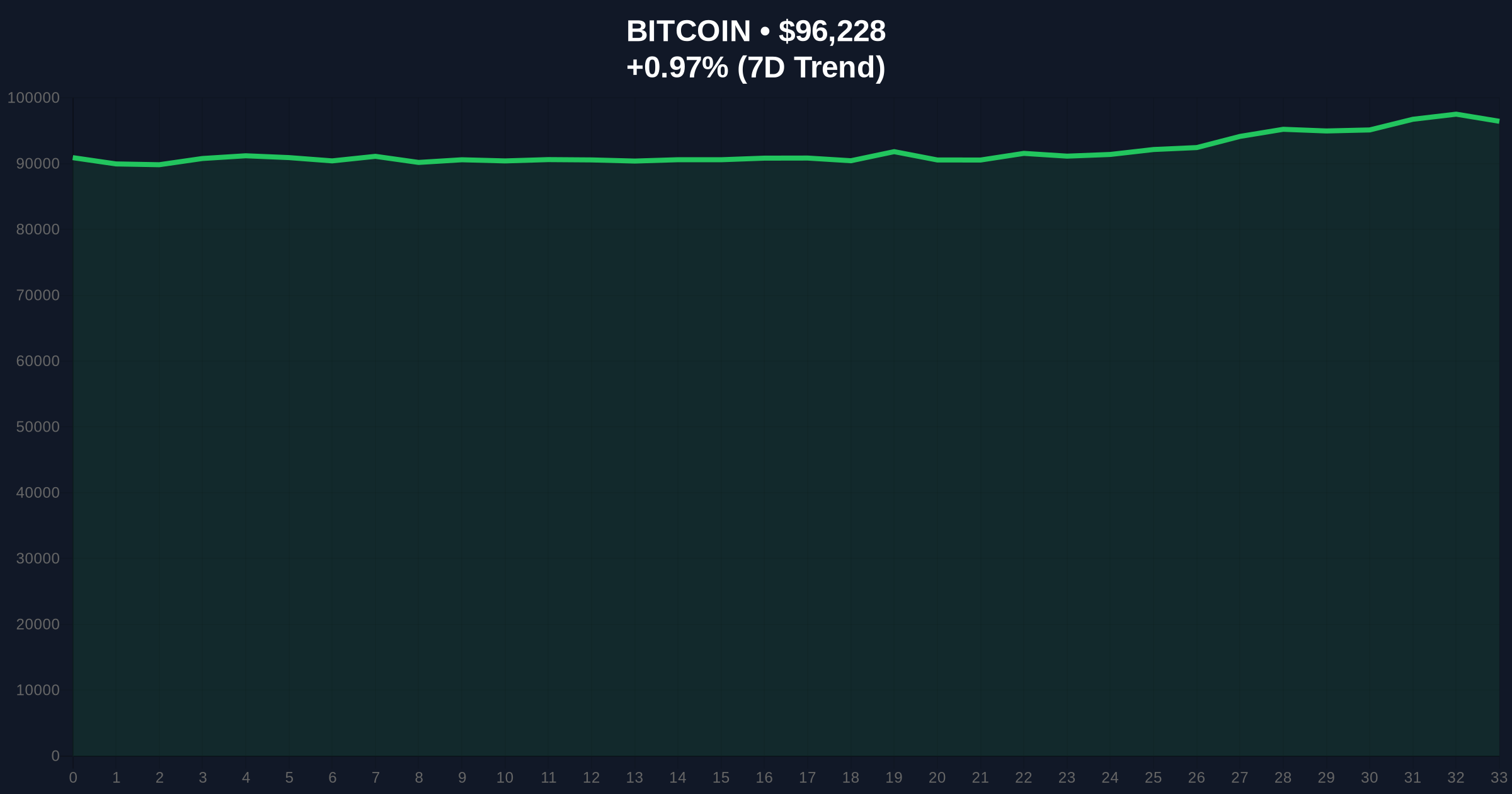
Market structure suggests that Bitcoin's price action has been tightly correlated with global dollar liquidity metrics since the 2020-2021 cycle. Underlying this trend is the Federal Reserve's balance sheet, which contracted through 2025, applying downward pressure on risk assets. Consequently, gold outperformed as central banks diversified from U.S. Treasuries, while the Nasdaq rallied on AI sector tailwinds. Hayes' argument aligns with historical cycles where liquidity injections, such as those during the COVID-19 response, preceded major crypto rallies. The current environment mirrors pre-2024 conditions, where political incentives for growth often override monetary restraint. Related developments include recent inflows into U.S. Bitcoin ETFs, highlighting institutional appetite amid regulatory uncertainty.
In his blog post, Hayes detailed that the Trump administration's designation of artificial intelligence as a national strategic industry has already buoyed tech equities, but broader credit expansion is needed to lift Bitcoin. He noted that the Federal Reserve's balance sheet has begun expanding again, per data from FederalReserve.gov, signaling a shift toward accommodative policy. Hayes personally increased holdings in MicroStrategy (MSTR) and Metaplanet stock, expecting higher returns than spot BTC due to leveraged exposure. Additionally, he views developer issues at Zcash (ZEC) as a buy-the-dip opportunity, increasing his position. This stance reflects a tactical allocation based on liquidity expectations rather than fundamental asset strength.
On-chain data indicates Bitcoin is currently trading at $96,220, with a 24-hour trend of 0.97%. The daily chart shows a consolidation pattern between $92,000 support and $98,500 resistance, forming a Fair Value Gap (FVG) that may attract liquidity. The Relative Strength Index (RSI) sits at 58, suggesting neutral momentum without overbought conditions. A critical Order Block exists near $90,000, where significant volume profile accumulation occurred in Q4 2025. Bullish Invalidation is set at $92,000; a break below this level would indicate failed momentum and potential retest of lower supports. Bearish Invalidation lies at $100,500, where a breakout could trigger a Gamma Squeeze as options positions rebalance. The 50-day moving average at $94,500 provides dynamic support, aligning with Hayes' liquidity-driven rally thesis.
| Metric | Value | Implication |
|---|---|---|
| Bitcoin Current Price | $96,220 | Testing key resistance zone |
| 24-Hour Change | +0.97% | Neutral short-term momentum |
| Crypto Fear & Greed Index | 61 (Greed) | Elevated risk appetite |
| Federal Reserve Balance Sheet Change (30-day) | +$120B (est.) | Initial liquidity expansion |
| Bitcoin RSI (Daily) | 58 | No overbought/oversold signals |
Hayes' prediction matters because it ties Bitcoin's trajectory to macro liquidity cycles, a relationship validated by on-chain forensic data. For institutions, this signals a recalibration of portfolio risk, with assets like MicroStrategy offering leveraged beta to Bitcoin's upside. Retail investors may face increased volatility as liquidity flows impact order book depth. The thesis also intersects with regulatory developments, such as delays in market structure legislation, which could amplify price swings. If liquidity expands as Hayes anticipates, Bitcoin could decouple from traditional risk-off signals, reinforcing its role as a digital hard asset.
Market analysts on X/Twitter have echoed Hayes' liquidity focus, with many highlighting the Federal Reserve's recent balance sheet movements. Bulls argue that post-merge issuance dynamics for Ethereum, via EIP-4844, could create cross-asset tailwinds. Skeptics point to persistent structural issues, such as ETF flow inconsistencies noted in Ethereum ETF inflows. Overall, sentiment leans cautiously optimistic, with derivatives data showing increased call option buying above $100,000.
Bullish Case: If Trump administration policies accelerate credit expansion, Bitcoin could break $100,500 resistance, targeting $110,000 by Q2 2026. This scenario assumes sustained Federal Reserve balance sheet growth above $150B monthly, per historical analogs. Bearish Case: Should liquidity injections stall or regulatory hurdles intensify—such as app store mandates impacting access—Bitcoin may reject at $98,500, falling to test $88,000 support. Invalidation levels remain critical for both outcomes.
Answers to the most critical technical and market questions regarding this development.

Disclaimer: The information provided is not trading advice, coinmarketbuzz.com holds no liability for any investments made based on the information provided on this page. We strongly recommend independent research and/or consultation with a qualified professional before making any investment decisions.
coinmarketbuzz.com leverages advanced AI technology to analyze market data. All content is fact-checked and reviewed by our editorial team to ensure accuracy and neutrality.