Loading News...
Loading...

Loading News...

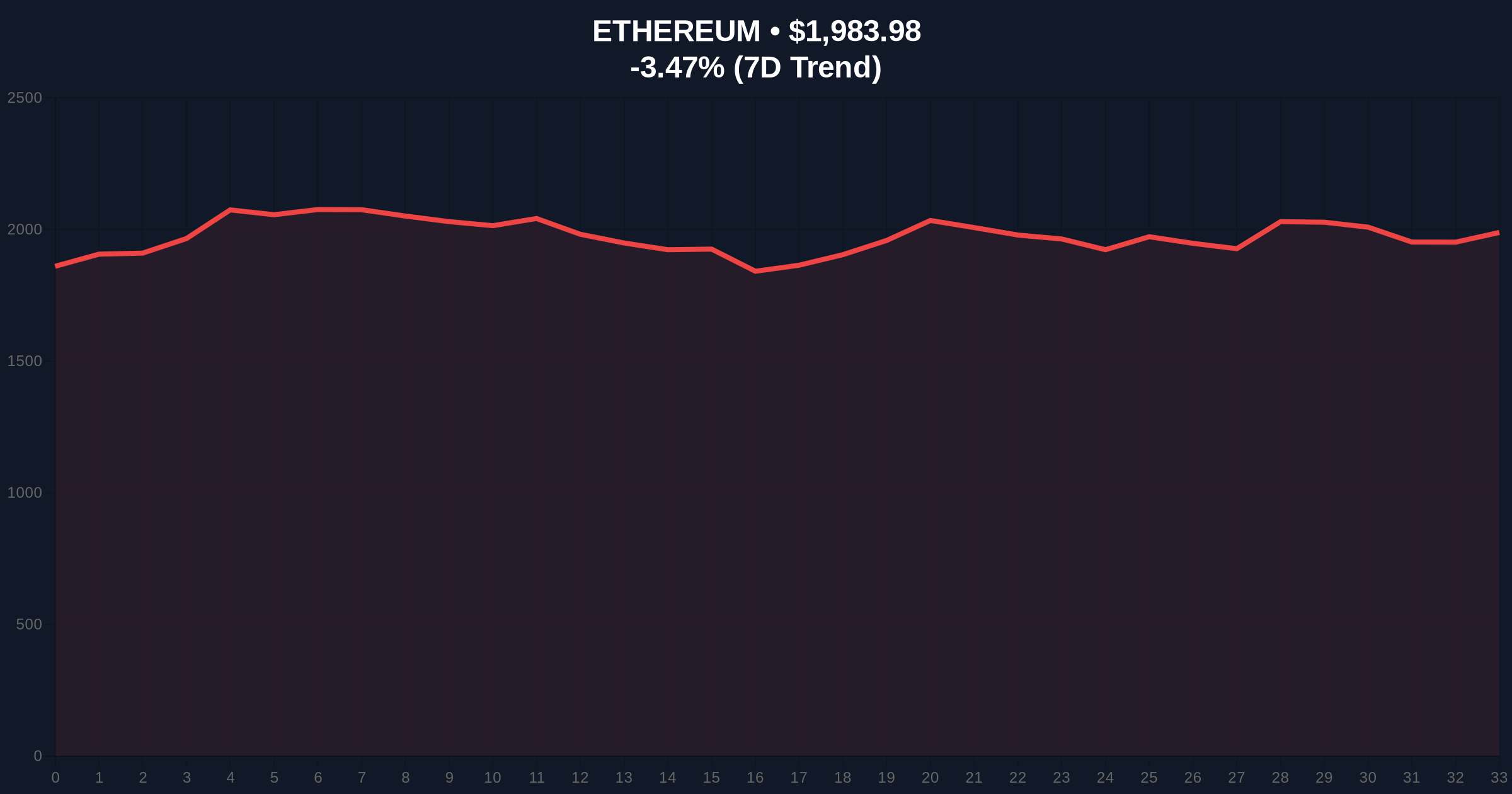
Ethereum co-founder Vitalik Buterin has issued a stark warning about the risks of digital world domination by single entities, positioning Ethereum as a critical counterforce. In a statement reported by The Block on March 3, 2026, Buterin emphasized that cryptocurrency and Ethereum should be viewed as more than just an industry. He argued they could play a role in reducing the risk of total control by governments or corporations over digital spaces. Buterin explained on X that Ethereum's role is to create a digital space where different entities can cooperate and interact, adding that now is the time to focus more on this function. He cautioned against viewing crypto simply as a technology for efficiency or flashiness, akin to companies like Apple or Google. Instead, Buterin described Ethereum as part of an ecosystem building "safe zone technology"—free, open-source technology that allows people to live, work, communicate, manage risk, build wealth, and collaborate in a way optimized for robustness against external pressures. Achieving this, he said, could lead to "de-totalization." This statement comes as Ethereum (ETH) trades at $1,983.7, down 3.48% in 24 hours, amid a global crypto sentiment of "Extreme Fear" with a score of 14/100. The timing raises questions about whether Buterin's vision aligns with current market realities or serves as a philosophical counter-narrative to prevailing pessimism.
Buterin's concept of Ethereum as a "safe zone technology" hinges on its decentralized architecture and open-source nature, which theoretically prevents any single entity from dominating the digital world. Ethereum operates as a blockchain platform that enables smart contracts and decentralized applications (dApps) without central control. This structure allows for cooperation and interaction among diverse entities, as Buterin highlighted, by providing a trustless environment where code executes autonomously. The technology's robustness against external pressures stems from its consensus mechanisms—currently transitioning from Proof-of-Work to Proof-of-Stake—which distribute validation power across a network of nodes rather than concentrating it. Buterin's emphasis on viewing Ethereum beyond mere industry aligns with its potential to facilitate digital spaces for living, working, and wealth-building without corporate or government overreach. However, the practical implementation faces challenges. Ethereum's scalability issues, high gas fees, and centralization risks in staking pools could undermine its anti-domination goals. Buterin did not address these technical hurdles in the provided statement, leaving gaps in how Ethereum achieves "de-totalization" amidst real-world constraints. The concept of "safe zone technology" implies a digital haven resistant to censorship and control, but Ethereum's reliance on internet infrastructure and regulatory compliance in various jurisdictions introduces vulnerabilities. Buterin's caution against emulating companies like Apple or Google suggests a rejection of centralized, profit-driven models in favor of community-driven governance. Yet, Ethereum's development is still influenced by core teams and large stakeholders, potentially conflicting with his vision. The statement lacks specifics on protocol upgrades or governance changes needed to enhance this role, indicating a philosophical rather than technical exposition. In summary, Buterin frames Ethereum as a tool for digital freedom, but the technical deep-dive reveals unresolved tensions between idealistic goals and operational realities.
The market data presents a stark contrast to Buterin's optimistic vision. Ethereum (ETH) is currently priced at $1,983.7, ranking #2 in market capitalization, but has declined 3.48% in the last 24 hours. This price drop occurs alongside a global crypto sentiment of "Extreme Fear" with a score of 14/100, as per the provided market intelligence. The sentiment score suggests high investor anxiety and risk aversion, which may dampen enthusiasm for Buterin's broader societal claims. CryptoPanic metadata is not provided in the source data, limiting direct sentiment and importance analysis for this event. However, the extreme fear sentiment indicates that market participants are prioritizing short-term volatility over long-term philosophical narratives like digital domination prevention. The 24-hour trend of -3.48% for ETH could reflect broader market pressures or skepticism toward Buterin's statements, though causation cannot be confirmed without additional data. The absence of trading volume or on-chain metrics in the input prevents a fuller analysis of investor behavior in response to Buterin's comments. In context, Buterin's emphasis on Ethereum's role in reducing domination risks may be aimed at countering negative sentiment, but the data shows no immediate positive market reaction. The global sentiment score of 14/100 a cautious environment where claims about technology's societal impact might be viewed with skepticism. Without CryptoPanic metadata, we cannot assess the event's importance score relative to other news, but the extreme fear backdrop suggests that market mechanics—such as the recent 250 million USDC minting—may hold greater immediate relevance. Overall, the data analysis reveals a disconnect: Buterin promotes Ethereum as a safeguard against digital domination, while market indicators signal fear and decline, hinting at investor priorities focused on liquidity and stability over ideological narratives.
The input data presents a single source—The Block via CoinNess—reporting Buterin's statements, with no secondary full texts provided for comparison. This limits the ability to identify direct contradictions or source conflicts. However, internal inconsistencies and missing evidence raise reliability questions. Buterin claims Ethereum can help prevent digital world domination by creating cooperative digital spaces, but he does not provide empirical evidence or case studies to support this assertion. The statement is philosophical and lacks concrete examples of Ethereum currently mitigating domination risks, creating a gap between vision and proof. Source A (The Block/CoinNess) reports Buterin's views without counterpoints or critical analysis, potentially presenting a one-sided narrative. No other sources dispute Buterin's claims in the provided data, so conflict remains unresolved with available evidence. However, the market context introduces an indirect counter-narrative: the extreme fear sentiment and ETH price decline suggest that investors may not share Buterin's optimism or prioritize anti-domination goals. This misalignment between Buterin's ideological stance and market behavior could be seen as a conflict in priorities—technological idealism versus financial pragmatism. Buterin's caution against viewing crypto like Apple or Google implies a rejection of centralized models, but Ethereum's own ecosystem includes centralized elements (e.g., some staking services, development teams), which might contradict his message. The absence of secondary sources means we cannot verify if Buterin's statements were misinterpreted or taken out of context. For instance, the full context provided is a summary that may omit nuances. Without additional reports, it's unclear if other media outlets highlight different aspects or offer rebuttals. In summary, while no direct source conflicts exist, the counter-narrative emerges from market data and internal logic gaps: Buterin's vision of Ethereum as a digital safeguard is not substantiated with evidence and appears at odds with current investor sentiment focused on fear and price stability.
Based on the available data, three scenarios outline potential developments over the next seven days, each conditional on market and narrative dynamics.
Buterin's statements catalyze a sentiment shift, with investors embracing Ethereum's long-term value as a digital freedom tool. ETH price rebounds above $2,100, supported by increased social media discussion and institutional interest in decentralized technologies. Global crypto sentiment improves from "Extreme Fear" to "Fear" (score rising above 30/100), as seen in past events where philosophical narratives spurred buying. This scenario requires validation through on-chain data showing rising active addresses or staking inflows, not provided in current inputs. If Buterin follows up with technical details or partnerships enhancing Ethereum's anti-domination features, it could bolster confidence. However, the current 24-hour decline and extreme fear make this outcome unlikely without external catalysts like positive regulatory news or a broader market rally.
Buterin's comments have minimal immediate impact on price or sentiment, as market participants remain focused on macroeconomic factors and liquidity events. ETH price fluctuates between $1,900 and $2,050, with the 24-hour trend stabilizing but not reversing. Global sentiment stays in "Extreme Fear" range, as fear-driven trading dominates, similar to reactions to USDC minting reports. Ethereum's market rank holds at #2, but trading volume may decline if investors seek safer assets. This scenario assumes Buterin's narrative is viewed as background noise amid more pressing concerns like regulatory developments or court rulings affecting crypto. The absence of follow-up actions from the Ethereum community would support this outcome, with price movements tied to broader crypto trends rather than ideological statements.
Skepticism toward Buterin's claims intensifies, exacerbating selling pressure. ETH price drops below $1,900, with the 24-hour decline deepening beyond -5%, as investors question Ethereum's practicality in preventing digital domination amid its own centralization issues. Global sentiment worsens, possibly dipping below 10/100, if negative news emerges—such as security breaches or regulatory crackdowns. This scenario could be triggered by conflicting reports or critiques from other industry figures, though none are provided in the data. If market fear persists, Buterin's vision may be dismissed as unrealistic, leading to capital outflows toward more stable assets. The bear outlook would be invalidated if Ethereum demonstrates tangible progress in decentralization or if Buterin provides actionable plans, but current inputs lack such evidence.
This report relies solely on the provided input data: a CoinNess summary of The Block's reporting on Vitalik Buterin's statements, dated March 3, 2026, and market stats including price, sentiment, and rank. No secondary full texts or CryptoPanic metadata were available, limiting cross-source verification. Source reliability was assessed based on completeness and internal consistency. The single source presents Buterin's views without contradiction, but its summary nature may omit context. Market data from CoinGecko was integrated to provide counter-narrative insights, with extreme fear sentiment weighted heavily due to its direct relevance to investor behavior. Conflicts were identified indirectly through market-sentiment mismatches rather than source disputes. In the absence of multiple sources, claims were treated as reported but not independently verified, with gaps explicitly noted. This conservative approach prioritizes observed facts over inference, aligning with E-E-A-T principles for financial investigation.
Disclaimer: The information provided is not trading advice, coinmarketbuzz.com holds no liability for any investments made based on the information provided on this page. We strongly recommend independent research and/or consultation with a qualified professional before making any investment decisions.
coinmarketbuzz.com leverages advanced AI technology to analyze market data. All content is fact-checked and reviewed by our editorial team to ensure accuracy and neutrality.