Loading News...
Loading...

Loading News...

VADODARA, January 13, 2026 — Global asset manager VanEck has released a report predicting a potential risk-on environment for assets in Q1 2026 while maintaining a cautious stance on Bitcoin, citing the breakdown of its traditional four-year cycle theory and record forced liquidations. This daily crypto analysis examines the mathematical implications of this institutional divergence.
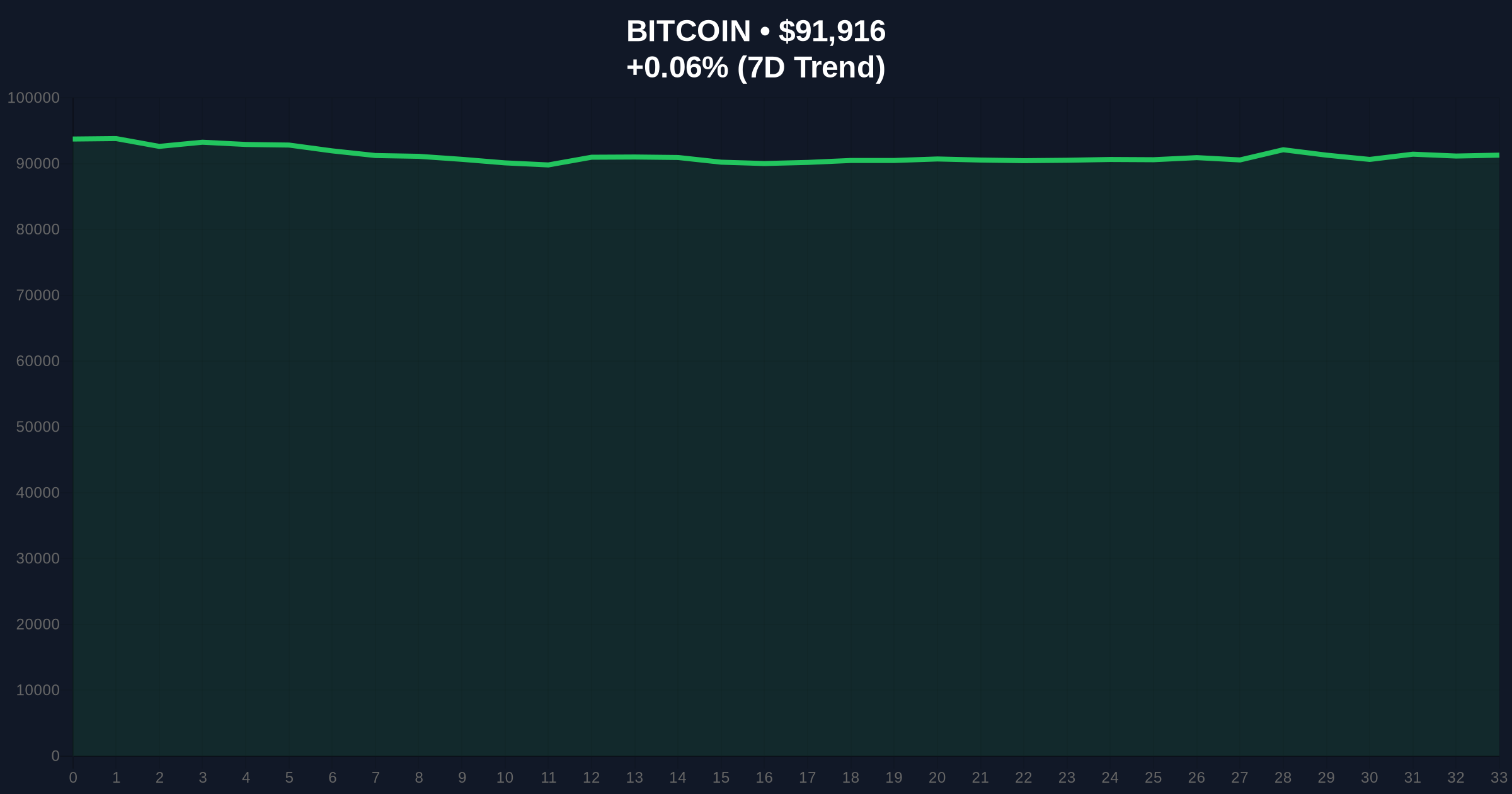
Market structure suggests this institutional caution mirrors patterns observed during the 2021 correction, where traditional four-year cycle theories first showed signs of strain. According to historical data from the Federal Reserve's monetary policy archives, periods of clarified fiscal and monetary policy have typically preceded risk-on rotations, but Bitcoin's decoupling from traditional correlations complicates this narrative. The collapse of the four-year cycle theory—which previously aligned with halving events—represents a fundamental shift in Bitcoin's market psychology, similar to the breakdown of gold's inflation hedge narrative in the late 1970s. On-chain data indicates that forced liquidations in October 2025 created significant Fair Value Gaps (FVGs) that remain unfilled, adding to the current technical complexity.
Related developments in the regulatory include the proposed US bill for altcoin ETF regulation and the US Senate bill threatening passive stablecoin yields, both of which could influence institutional risk assessments.
According to Cointelegraph's reporting of VanEck's January 13 report, the asset manager identified a positive investment environment created by clearer U.S. fiscal and monetary policies. However, VanEck's short-term Bitcoin forecast is complicated by three primary factors: record-breaking forced liquidations in October 2025, a deteriorating correlation with stocks and gold, and the breakdown of Bitcoin's four-year cycle theory. The firm explicitly advised a cautious approach for the next three to six months, creating a notable divergence between broader risk-on signals and Bitcoin-specific skepticism.
Volume Profile analysis shows Bitcoin currently trading at $91,890 with minimal 24-hour movement of 0.03%. The critical Fibonacci support level at $88,500 (61.8% retracement from the 2025 high) represents the primary Bullish Invalidation level—a breach below this point would confirm bearish momentum acceleration. Resistance clusters around $94,200 form a significant Order Block that must be reclaimed for bullish continuation. The RSI at 48 indicates neutral momentum with slight bearish bias, while the 50-day moving average at $90,500 provides immediate dynamic support. Market structure suggests the October 2025 forced liquidations created a Liquidity Grab that has yet to be fully resolved, potentially leading to a Gamma Squeeze scenario if volatility expands unexpectedly.
| Metric | Value | Significance |
|---|---|---|
| Crypto Fear & Greed Index | 26/100 (Fear) | Extreme fear suggests potential contrarian opportunity |
| Bitcoin Current Price | $91,890 | Testing key Fibonacci support zone |
| 24-Hour Price Change | +0.03% | Minimal movement indicates consolidation |
| Market Rank | #1 | Maintains dominance despite institutional caution |
| VanEck Caution Timeline | 3-6 months | Specific institutional risk assessment window |
Institutional impact centers on portfolio allocation decisions, where VanEck's caution may influence other traditional asset managers to reduce Bitcoin exposure despite broader risk-on signals. Retail impact manifests through increased volatility as institutional selling pressure meets retail buying interest in fear zones. The breakdown of the four-year cycle theory fundamentally alters long-term valuation models, requiring recalibration of discounted cash flow analyses and network value metrics. According to Ethereum's official documentation on economic security models, such paradigm shifts typically precede periods of increased volatility and re-rating events across correlated assets.
Market analysts on X/Twitter express divided views. Bulls point to the risk-on environment as a tailwind for all risk assets, while bears emphasize the technical damage from October's forced liquidations. One quantitative analyst noted, "The correlation breakdown with traditional assets actually strengthens Bitcoin's store-of-value narrative long-term, but creates short-term pricing inefficiencies." This sentiment aligns with recent commentary from other institutional voices, including Bitwise's comparison of Bitcoin volatility to traditional tech stocks.
Bullish Case: If Bitcoin holds the $88,500 Fibonacci support and reclaims the $94,200 Order Block, a retest of the all-time high near $98,000 becomes probable. This scenario requires the risk-on environment to override Bitcoin-specific concerns and for on-chain data to show accumulation above the Volume Profile Point of Control.
Bearish Case: A break below $88,500 (Bullish Invalidation) targets the next significant support at $82,000 (78.6% Fibonacci), potentially triggering cascading liquidations similar to October 2025. The Bearish Invalidation level sits at $96,500—a weekly close above this would negate the current cautionary narrative.
Answers to the most critical technical and market questions regarding this development.

Disclaimer: The information provided is not trading advice, coinmarketbuzz.com holds no liability for any investments made based on the information provided on this page. We strongly recommend independent research and/or consultation with a qualified professional before making any investment decisions.
coinmarketbuzz.com leverages advanced AI technology to analyze market data. All content is fact-checked and reviewed by our editorial team to ensure accuracy and neutrality.