Loading News...
Loading...

Loading News...

VADODARA, January 12, 2026 — The U.S. Senate Agriculture Committee has postponed the markup of the crypto market structure bill, known as the CLARITY Act, from January 15 to the last week of January, according to a report by Eleanor Terrett of Crypto in America. This daily crypto analysis examines the implications for Bitcoin's price action and market structure, drawing parallels to historical regulatory delays that have shaped previous cycles.
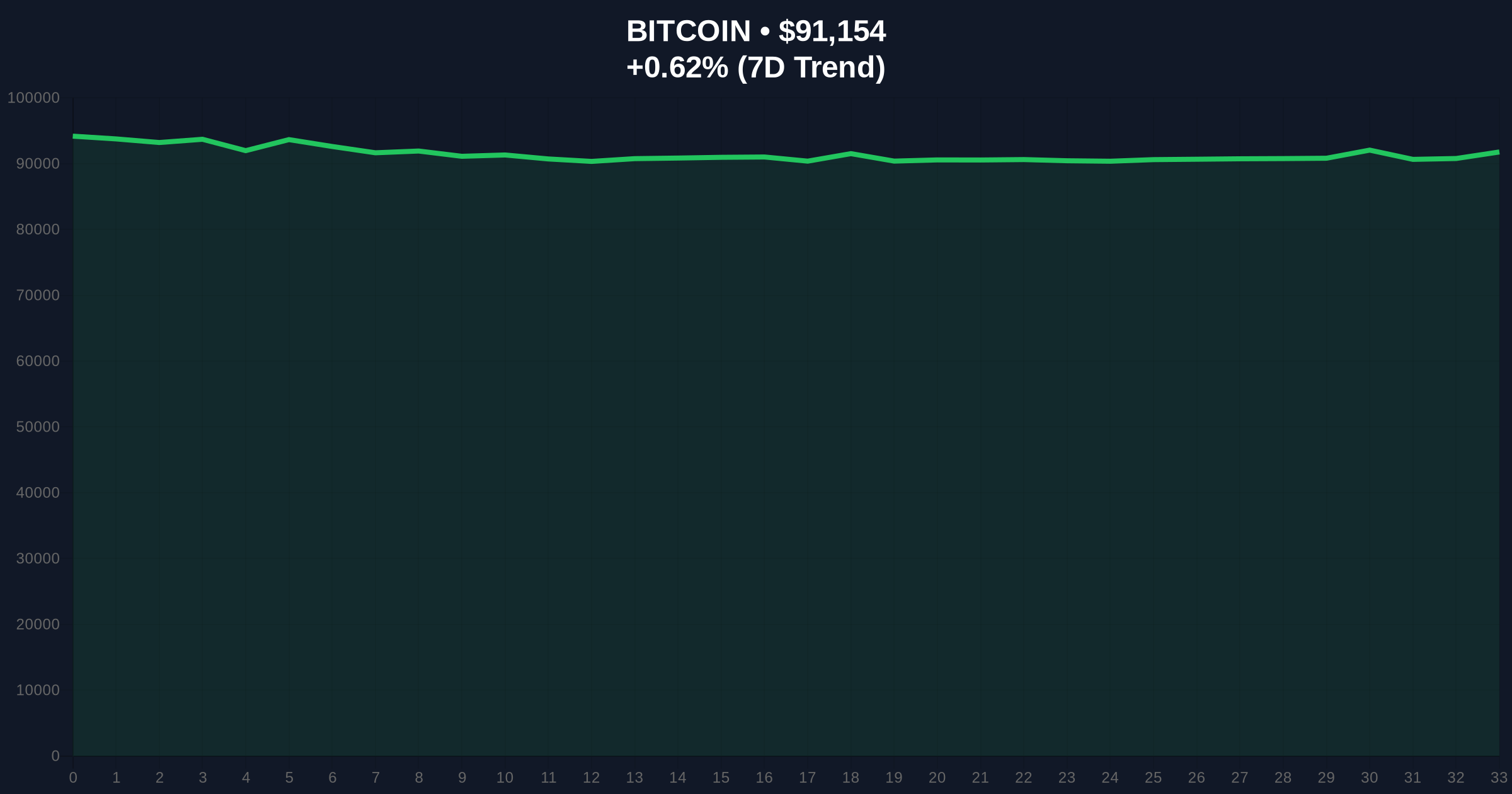
Market structure suggests regulatory developments often act as catalysts for significant price movements. Similar to the 2021 correction triggered by China's mining ban, legislative uncertainty in the U.S. can create prolonged consolidation phases. The CLARITY Act aims to clarify digital asset rules, and its delay mirrors past events like the 2023 SEC vs. Ripple case, which introduced volatility into order flow. According to the official Senate Agriculture Committee website, bipartisan support is critical for advancing financial legislation, highlighting the committee's strategic positioning in this process. Related developments include the bipartisan US bill aiming to clarify digital asset rules and Bitcoin price action testing $91k support amid regulatory uncertainty.
On January 12, 2026, Committee Chairman John Boozman announced the delay, citing the need for more time to build bipartisan support. The markup, originally scheduled for January 15, is now set for the last week of January. This postponement follows a pattern of legislative hesitancy observed in previous crypto cycles, such as the delayed implementation of the Infrastructure Investment and Jobs Act provisions in 2021. According to the source report from Coinness, the CLARITY Act seeks to establish a regulatory framework for digital assets, making this delay a critical inflection point for market participants.
Bitcoin is currently trading at $91,158, down 0.63% in the last 24 hours. On-chain data indicates a liquidity grab near the $90,000 level, with volume profile showing increased activity at this support zone. The Relative Strength Index (RSI) sits at 45, suggesting neutral momentum, while the 50-day moving average at $89,500 provides additional support. A Fair Value Gap (FVG) exists between $92,500 and $93,000, which may act as resistance if bullish sentiment returns. Historical cycles suggest that regulatory delays often lead to a gamma squeeze in options markets, as seen during the 2022 FTX collapse. Bullish Invalidation: A break below the $89,500 moving average would signal a bearish shift, invalidating the current support structure. Bearish Invalidation: A close above the FVG at $93,000 would indicate renewed institutional interest.
| Metric | Value | Source |
|---|---|---|
| Crypto Fear & Greed Index | 27 (Fear) | Alternative.me |
| Bitcoin Price | $91,158 | CoinMarketCap |
| 24-Hour Change | -0.63% | Live Market Data |
| RSI (14-day) | 45 | TradingView |
| 50-Day Moving Average | $89,500 | Technical Analysis |
For institutions, the delay prolongs uncertainty around compliance and custody requirements, potentially slowing capital inflows. Retail traders face increased volatility, as order blocks near key support levels become more susceptible to liquidation events. The CLARITY Act's postponement echoes the 2021 Infrastructure Bill debates, which led to a 15% correction in Bitcoin's price over two weeks. Market structure suggests that without clear regulatory guidance, decentralized finance (DeFi) protocols may experience reduced total value locked (TVL), impacting Ethereum's post-merge issuance dynamics.
Market analysts on X/Twitter express caution, with many highlighting the correlation between legislative delays and price stagnation. One trader noted, "The delay creates a vacuum in regulatory clarity, similar to the 2023 SEC actions that suppressed altcoin performance." Bulls argue that bipartisan efforts could eventually lead to a bullish catalyst, but bears point to recent warnings, such as Fitch's report on Bitcoin-backed securities carrying speculative-grade risk, as evidence of ongoing headwinds.
Bullish Case: If the markup proceeds smoothly in late January, Bitcoin could rally to fill the FVG at $93,000, with a potential target of $95,000 based on Fibonacci extension levels. Institutional adoption might accelerate, similar to the post-ETF approval surge in 2024. Bearish Case: Further delays or contentious debates could push Bitcoin below the $89,500 support, targeting the next order block at $85,000. This scenario mirrors the 2022 bear market, where regulatory uncertainty contributed to a 60% drawdown.
Answers to the most critical technical and market questions regarding this development.

Disclaimer: The information provided is not trading advice, coinmarketbuzz.com holds no liability for any investments made based on the information provided on this page. We strongly recommend independent research and/or consultation with a qualified professional before making any investment decisions.
coinmarketbuzz.com leverages advanced AI technology to analyze market data. All content is fact-checked and reviewed by our editorial team to ensure accuracy and neutrality.