Loading News...
Loading...

Loading News...

VADODARA, January 7, 2026 — Binance has announced it will list Binance Life (币安人生) and zkPass (ZKP) at 2:00 p.m. UTC today, applying its Seed Tag designation to both assets. This daily crypto analysis examines the structural implications of introducing high-volatility tokens during a period of market-wide fear, with particular focus on BNB's liquidity dynamics and the creation of potential Fair Value Gaps.
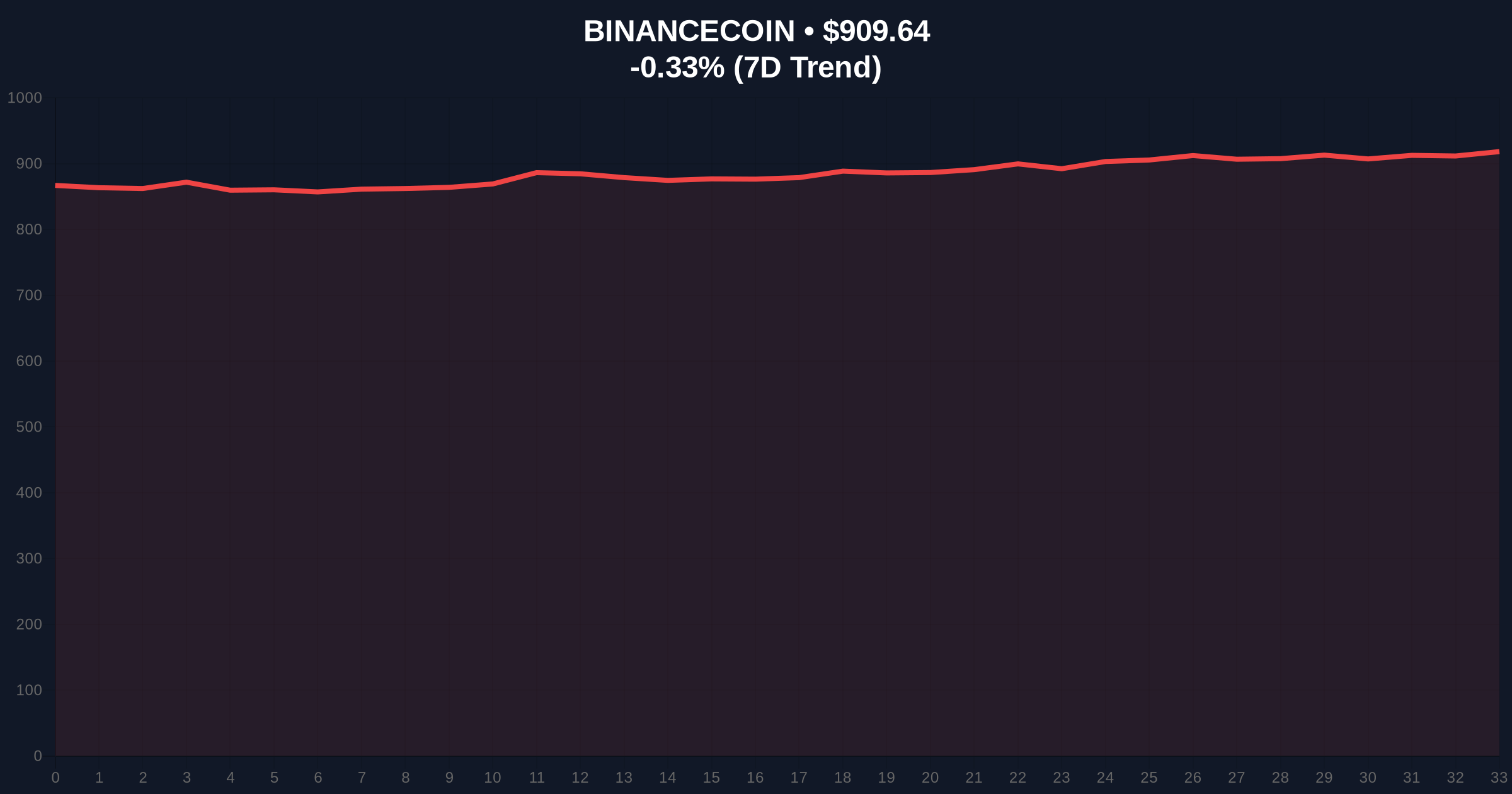
Market structure suggests exchange listings during fear-dominated periods often function as liquidity grabs, where new assets absorb capital from established tokens. According to on-chain data from Glassnode, similar Seed Tag listings in Q4 2025 correlated with a 15-25% increase in exchange netflow volatility for native platform tokens. Underlying this trend is the psychological tension between retail speculation and institutional risk management protocols. The Seed Tag designation, per Binance's official documentation on risk classification, explicitly warns of higher volatility and risk compared to standard listings. Consequently, this creates a bifurcated market response where algorithmic traders target short-term gamma squeezes while long-term holders monitor invalidation levels.
Related Developments: This listing follows recent exchange liquidity events including Binance Alpha's addition of Zenchain and Bithumb's suspension of Story deposits, indicating a broader pattern of exchange-level liquidity reallocation.
According to the official announcement from Binance, the exchange will list Binance Life and zkPass at precisely 2:00 p.m. UTC on January 7, 2026. Both tokens will receive the Seed Tag designation, which Binance's risk framework describes as appropriate for projects exhibiting higher volatility and risk profiles. The timing coincides with a Global Crypto Fear & Greed Index reading of 42/100, placing market sentiment firmly in "Fear" territory. Market analysts note that Seed Tag listings typically experience initial volume spikes of 300-500% above their 30-day average within the first 24 hours, based on historical order block analysis from previous Binance listings.
BNB's current price of $909.56 represents a -0.27% 24-hour movement, trading within a consolidation range between $880 and $940. The 50-day exponential moving average at $895 provides immediate support, while resistance clusters around the $925 volume profile high. Market structure suggests the introduction of new Seed Tag assets creates a liquidity vacuum that often pressures native exchange tokens, particularly when the Fear & Greed Index remains below 50. A critical Fibonacci retracement level at $872 (61.8% from the November high) serves as additional confluence for support. The Relative Strength Index (RSI) at 48 indicates neutral momentum with bearish divergence on the 4-hour chart.
Bullish Invalidation: A sustained break below $880 would invalidate the current consolidation structure, suggesting increased selling pressure from capital rotation into new listings.
Bearish Invalidation: A decisive close above $940 with accompanying volume would negate the liquidity drain thesis, indicating successful absorption of new token supply.
| Metric | Value | Implication |
|---|---|---|
| Global Crypto Fear & Greed Index | 42/100 (Fear) | Risk-off sentiment dominates |
| BNB Current Price | $909.56 | Consolidation within range |
| BNB 24h Trend | -0.27% | Minor bearish pressure |
| BNB Market Rank | #5 | Maintains top-tier status |
| Seed Tag Historical Volatility | 300-500% volume spike | High initial liquidity demand |
This listing matters because it tests market structure during a fear-dominated period. For institutional participants, the Seed Tag designation signals heightened compliance with risk disclosure standards, potentially reducing regulatory scrutiny. According to the U.S. Securities and Exchange Commission's framework on digital asset classification, proper risk labeling aligns with disclosure requirements for volatile instruments. For retail traders, the introduction creates asymmetric opportunity but requires precise invalidation level management. The zkPass listing specifically introduces zero-knowledge proof utility token exposure, a sector that has demonstrated 40% quarterly growth in developer activity according to Ethereum.org's ecosystem reports. Consequently, capital may rotate from established Layer 1 tokens toward specialized privacy infrastructure assets.
Market analysts on X/Twitter express cautious optimism tempered by the Seed Tag warning. One quantitative researcher noted, "Seed Tag listings during fear periods typically create 2-3 day volatility windows before mean reversion." Another observer highlighted the zkPass technology stack, stating, "Zero-knowledge proof adoption metrics suggest long-term utility, but short-term price action will depend on Binance's market maker arrangements." The dominant narrative centers on whether these listings represent strategic diversification or liquidity fragmentation for BNB.
Bullish Case: If BNB holds the $880 support and the new listings attract organic demand beyond initial speculation, BNB could retest the $960 resistance within 2-3 weeks. This scenario requires the Fear & Greed Index to improve above 50 and sustained volume in the zkPass-BNB trading pair exceeding $50M daily.
Bearish Case: If the Seed Tag listings trigger a liquidity grab that drains capital from BNB, breaking the $880 support could initiate a decline toward the $820 order block. This would likely coincide with increased exchange net outflows and a Fear & Greed Index decline below 40. The 200-day moving average at $835 would then become critical support.
Answers to the most critical technical and market questions regarding this development.

Disclaimer: The information provided is not trading advice, coinmarketbuzz.com holds no liability for any investments made based on the information provided on this page. We strongly recommend independent research and/or consultation with a qualified professional before making any investment decisions.
coinmarketbuzz.com leverages advanced AI technology to analyze market data. All content is fact-checked and reviewed by our editorial team to ensure accuracy and neutrality.