Loading News...
Loading...

Loading News...
VADODARA, April 3, 2026. The following report is based on currently available verified source material and market data.
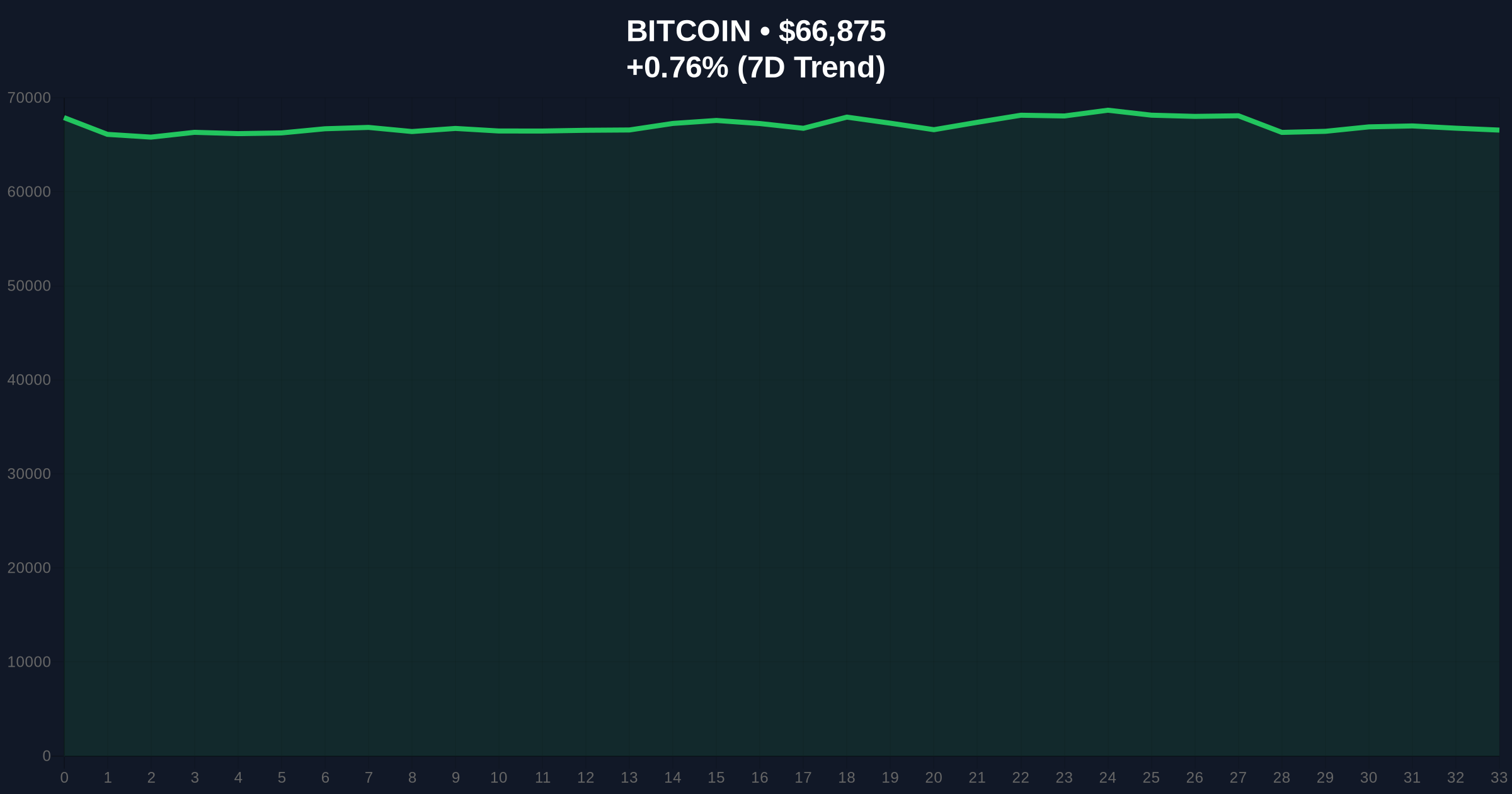
Analysis: Bitcoin's 'Real-Time Barometer' Role Faces Skepticism Amid Market Closures developed into a market-moving story within the reported window. The initial source indicates immediate relevance for crypto sentiment, while fuller validation is still tied to cited datasets and official statements.
On April 3, 2026, with major financial markets closed for the Easter holiday, Bitcoin is being analyzed as a potential real-time barometer for geopolitical crisis and oil price volatility. According to an analysis by CryptoSlate, investors are viewing BTC as a risk indicator while stock markets are closed and commodity liquidity is fragmented. This role is possible due to Bitcoin's 24-hour availability, allowing it to react to weekend events. However, the analysis raises skepticism about whether BTC's movements will be mirrored when traditional markets reopen, testing its reliability as a barometer.
The analysis emerges amid a market environment characterized by extreme fear, with Bitcoin's price at $66,880 and a 24-hour trend of 0.77%. Source: CoinGecko. The event timeline is not provided in source data, but the analysis is dated April 3, 2026. Below is a snapshot of key metrics:
| Metric | Value | Source |
|---|---|---|
| Current Price | $66,880 | CoinGecko |
| 24h Trend | 0.77% | CoinGecko |
| Market Rank | #1 | CoinGecko |
| Global Sentiment | Extreme Fear (Score: 9/100) | CoinGecko |
Why now? The significance lies in the convergence of market closures during a geopolitical crisis, creating a vacuum where Bitcoin's continuous trading can serve as a proxy for risk assessment. Who benefits? Traders and investors seeking real-time insights during off-hours may gain, but they risk misinterpretation if BTC's signals diverge from traditional markets. Time horizons: In the short-term, BTC's weekend price action could influence Monday openings, but long-term implications depend on whether this barometer role proves consistent. Causal chain: Market closures reduce traditional liquidity → investors turn to Bitcoin for real-time data → BTC price reacts to geopolitical events → if movements align with post-weekend traditional markets, BTC's barometer credibility increases; if not, it may be dismissed as noise.
Bitcoin's role as a barometer hinges on its 24/7 trading infrastructure, which allows immediate price discovery in response to geopolitical shocks or oil volatility while stock and commodity markets are offline. Mechanically, this works through reduced sell-side liquidity during weekends, where even modest buy orders can amplify price swings, creating signals that investors interpret as risk indicators. However, low weekend liquidity means these movements are prone to sharp reversals when regular trading resumes, as institutional flows and broader market sentiment reassert dominance. For BTC to be a reliable barometer, its weekend price changes must correlate with subsequent moves in traditional assets, a link that remains unproven and subject to high volatility.
Bitcoin's purported barometer function contrasts with other crypto assets and traditional markets during closures:
The bullish narrative of Bitcoin as a reliable barometer faces several risks:
Failure condition: Bitcoin's price reacts idiosyncratically to crypto-specific factors (e.g., whale activity or regulatory news) rather than geopolitical events, breaking the assumed mechanism.
Practically, if Bitcoin's barometer role gains traction, it could increase weekend trading volumes and institutional interest in crypto as a risk hedge. However, traders should monitor Monday market reopenings for validation; inconsistent correlations may relegate BTC to a niche indicator rather than a broad market proxy. Regulatory scrutiny could also intensify if BTC's volatility during closures impacts traditional finance perceptions.
Historically, Bitcoin has been touted as a digital gold or hedge against inflation, but its evolution into a real-time barometer is a newer narrative driven by its always-on market structure. This analysis builds on past events where BTC price reacted to macroeconomic shifts, yet skepticism persists due to its high volatility and nascent adoption compared to established financial instruments.
Contextually relevant articles include: recent price drops linked to geopolitical escalation, highlighting BTC's sensitivity to crises, and whale deposits to Binance, which could distort weekend liquidity and barometer signals.
Bitcoin's test as a real-time barometer amid market closures presents both opportunity and skepticism. While its 24-hour availability offers unique insights during geopolitical turmoil, low liquidity and unproven correlations with traditional markets raise doubts about reliability. Investors should approach weekend BTC movements with caution, verifying signals against post-holiday market reactions.
What to watch next: next official follow-up statements; exchange-level volume and liquidity data.
Evidence & Sources
Primary source: https://coinness.com/news/1153542
Updated at: Apr 03, 2026, 11:22 AM
Data window: Apr 03, 2026, 11:12 AM → Apr 03, 2026, 11:13 AM
Evidence stats: 2 metrics, 0 timeline points.
Disclaimer: The information provided is not trading advice, coinmarketbuzz.com holds no liability for any investments made based on the information provided on this page. We strongly recommend independent research and/or consultation with a qualified professional before making any investment decisions.
All published reports are reviewed by our editorial team for factual consistency, neutrality, and reader clarity.