Loading News...
Loading...

Loading News...

VADODARA, April 3, 2026. The following report is based on currently available verified source material and market data.
US Spot Bitcoin ETFs Return to Net Inflows Amid Extreme Market Fear: A Skeptical Analysis developed into a market-moving story within the reported window. The initial source indicates immediate relevance for crypto sentiment, while fuller validation is still tied to cited datasets and official statements.
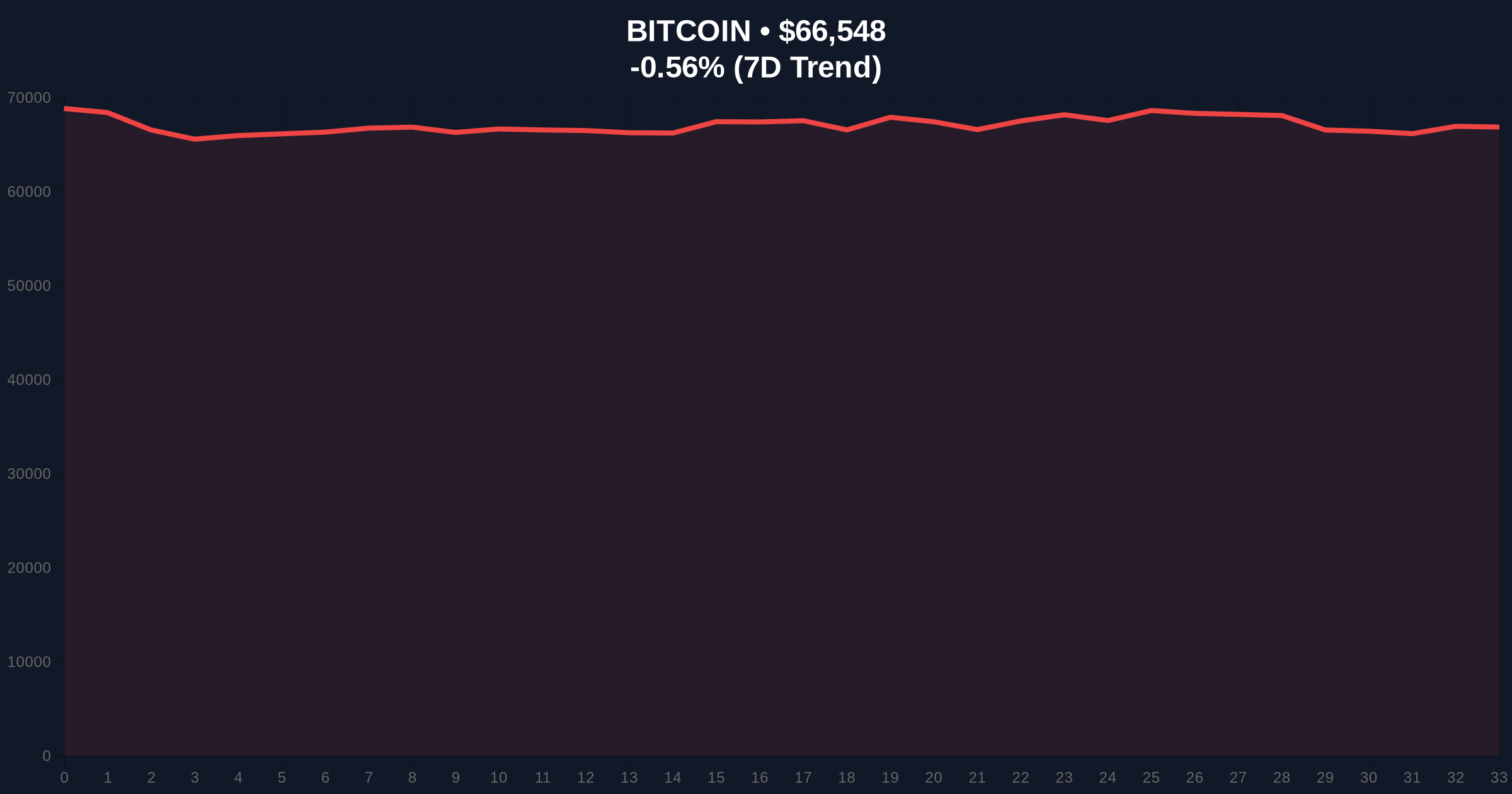
U.S. spot Bitcoin ETFs recorded a net inflow of $9.02 million on April 2, 2026, returning to positive territory after just one day of outflows, according to public statements. This shift occurs as Bitcoin trades at $66,594 with a 24-hour decline of 0.49% and global crypto sentiment registers "Extreme Fear" at a score of 9/100. The event highlights the fragile balance between institutional ETF flows and broader market anxiety, raising questions about the sustainability of inflows in a fearful environment.
The net inflow of $9.02 million marks a reversal from previous outflows, though individual ETF performances varied. BlackRock's IBIT saw an outflow of $3.01 million, while Fidelity's FBTC and VanEck's HODL recorded inflows of $7.29 million and $4.74 million, respectively. Source: public statement. Bitcoin's current price is $66,594 with a 24-hour trend of -0.49%. Source: CoinGecko. The timeline for this event is not provided in source data.
| Metric | Value | Source |
|---|---|---|
| Net ETF Inflow | $9.02 million | Public statement |
| Bitcoin Price | $66,594 | CoinGecko |
| 24h Price Trend | -0.49% | CoinGecko |
| Global Sentiment | Extreme Fear (9/100) | CoinGecko |
Why now? This inflow occurs amidst extreme market fear, suggesting a potential disconnect between ETF activity and retail sentiment. The return to inflows after a single day of outflows may indicate institutional resilience or opportunistic buying at lower prices, but it contrasts sharply with the broader fearful backdrop. Who benefits? Institutional investors and ETF providers like Fidelity and VanEck gain from increased assets under management, while retail traders facing fear may miss out on or misinterpret these signals. Time horizons: Short-term, this could provide minor price support or signal a temporary sentiment shift; long-term, it tests whether ETF flows can sustainably counteract market anxiety. Causal chain: ETF inflows → direct Bitcoin buying pressure → potential price stabilization → but overwhelmed by broader fear-driven selling → limited immediate impact on price decline.
The mechanism involves ETF issuers purchasing Bitcoin to match investor inflows, creating direct buying pressure in the market. For example, Fidelity's FBTC inflow of $7.29 million requires equivalent Bitcoin purchases, while BlackRock's IBIT outflow of $3.01 million triggers sales. However, with Bitcoin's price down 0.49% and sentiment at extreme fear, these ETF flows appear insufficient to offset broader sell-side pressure. The net inflow of $9.02 million is mechanically positive but relatively small compared to daily trading volumes, raising questions about its efficacy in a fearful market.
This ETF activity contrasts with other crypto market developments:
The bullish narrative of returning ETF inflows faces several risks:
Practically, traders should monitor whether ETF inflows persist or if fear leads to outflows. Near-term, this could signal a buying opportunity if institutions accumulate during fear, but confirmation requires sustained inflow trends and price recovery. The event the need to dissect ETF data beyond headline numbers.
U.S. spot Bitcoin ETFs, approved in early 2024, have become key vehicles for institutional exposure, with flows often influencing market sentiment and liquidity. Their performance is tracked as a barometer of institutional interest amid volatile crypto cycles.
Contextually relevant developments include:
The return to ETF inflows amid extreme fear presents a contradictory signal: institutionally positive but contextually weak. While mechanically supportive, its impact is limited by broader market anxiety and data gaps.
Q1: What caused the ETF inflows?Inflows from Fidelity and VanEck outweighed outflows from BlackRock, but the specific driver is not provided in source data.
Q2: How does extreme sentiment affect ETFs?Fear can lead to retail selling and outflows, but this data shows inflows, suggesting a potential disconnect.
Q3: Is $9.02 million significant?Without total volume context, it's unclear; it may be minor relative to daily trading activity.
Q4: What should traders watch next?Monitor if inflows continue and if Bitcoin price responds positively, despite fear metrics.
Final line: Analysts are watching whether ETF inflows can sustain amid extreme fear and if they'll translate into price recovery, with a focus on upcoming flow data and sentiment shifts.
Evidence & Sources
Primary source: https://coinness.com/news/1153505
Updated at: Apr 03, 2026, 04:30 AM
Data window: Apr 03, 2026, 04:28 AM → Apr 03, 2026, 04:29 AM
Evidence stats: 6 metrics, 0 timeline points.
Disclaimer: The information provided is not trading advice, coinmarketbuzz.com holds no liability for any investments made based on the information provided on this page. We strongly recommend independent research and/or consultation with a qualified professional before making any investment decisions.
All published reports are reviewed by our editorial team for factual consistency, neutrality, and reader clarity.