Loading News...
Loading...

Loading News...

VADODARA, April 12, 2026. The following report is based on currently available verified source material and market data.
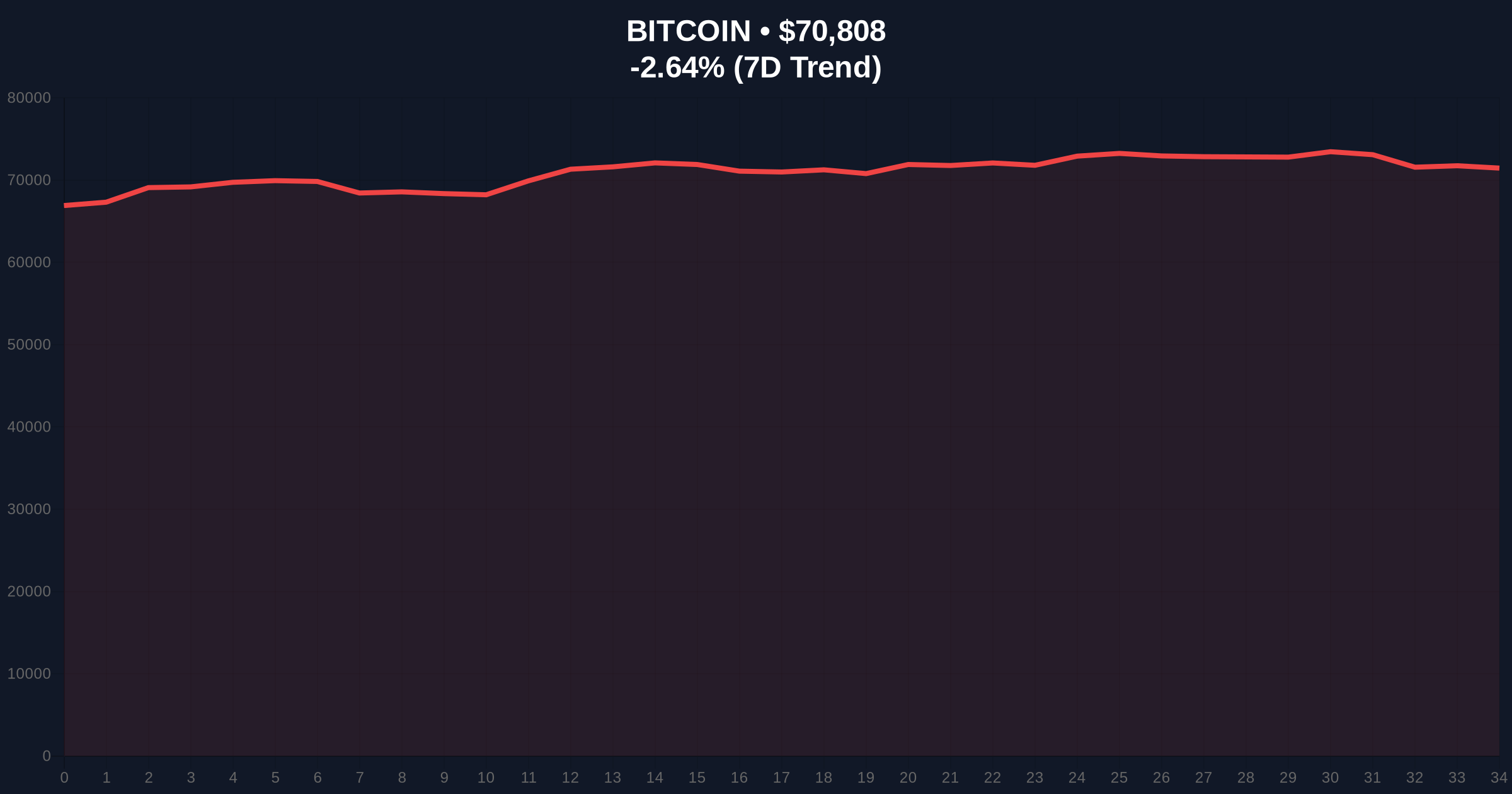
On April 12, 2026, Bitcoin fell below $71,000 after former President Donald Trump ordered a U.S. naval blockade of the Strait of Hormuz, escalating geopolitical tensions with Iran. The announcement, made via social media, followed failed ceasefire negotiations between U.S. and Iranian officials, causing immediate market volatility. This event highlights Bitcoin's sensitivity to macro-political shocks, with prices sliding 2.5% in 24 hours as global crypto sentiment plunged to "Extreme Fear."
The blockade announcement triggered a rapid price decline from above $73,000 to $70,900 within minutes, reflecting heightened risk aversion among traders. According to CoinGecko data, Bitcoin's current price stands at $70,823, down 2.56% over the past day. The global crypto fear and greed index registered a score of 16/100, indicating extreme market pessimism. Concurrently, oil futures spiked 7% on the Hyperliquid platform, with WTI trading volume reaching $1.53 billion, underscoring cross-asset volatility.
| Metric | Value | Source |
|---|---|---|
| Bitcoin Price (Current) | $70,823 | Source: CoinGecko |
| 24-Hour Change | -2.56% | Source: CoinGecko |
| Pre-Blockade Price | $73,000 | Source: public statement |
| Post-Blockade Price | $70,900 | Source: public statement |
| Global Crypto Sentiment | Extreme Fear (16/100) | Source: public statement |
This development matters because it demonstrates Bitcoin's vulnerability to geopolitical flashpoints, particularly those involving oil-rich regions. The timing is critical as markets were already jittery from failed U.S.-Iran talks, with Vice President J.D. Vance's announcement late Saturday initially pushing Bitcoin from $73,000 to $71,500. Consequently, Trump's blockade order amplified selling pressure, triggering a cascade effect.
Short-term, risk-averse traders and institutions benefit from hedging or short positions, while long-term holders face paper losses. The causal chain is clear: geopolitical escalation → oil price spike → inflation fears → risk asset selloff → Bitcoin liquidity drain. Over longer horizons, such events could reinforce Bitcoin's role as a volatile, yet uncorrelated, macro hedge, though immediate impacts are bearish.
The market mechanism operates through a liquidity and sentiment feedback loop. Initially, the blockade announcement created uncertainty, leading to increased selling orders from algorithmic traders and risk-off investors. As Bitcoin dipped below key support levels like $71,000, stop-loss orders were triggered, further draining liquidity. This thin sell-side liquidity meant even moderate selling pressure could accelerate declines, exemplified by the quick drop to $70,900.
Underlying this trend, the spike in oil prices, WTI futures up 7%, raised inflation concerns, prompting capital rotation out of speculative assets like cryptocurrencies. The extreme fear sentiment (16/100) then became self-reinforcing, as retail traders followed institutional lead, exacerbating the downturn.
Bitcoin's reaction mirrors broader crypto market trends, where geopolitical risks often trigger correlated selloffs. However, the blockade's impact extends beyond digital assets:
This event contrasts with typical ETF-driven volatility, emphasizing how external political factors can override internal crypto dynamics.
While the bearish narrative dominates, several uncertainties and counterpoints merit consideration:
Analysts should monitor U.S.-Iran communications and oil market reactions for signs of de-escalation.
In the near term, traders should expect continued volatility as markets digest blockade implementation and potential retaliatory measures. Regulatory scrutiny may intensify, with policymakers watching crypto's reaction to geopolitical events. Additionally, this could accelerate adoption of crypto as a hedging tool in commodity markets, though short-term price action remains pressured.
Bitcoin has historically shown mixed reactions to geopolitical tensions, sometimes acting as a safe haven but often correlating with risk assets during acute crises. The Strait of Hormuz is a critical chokepoint for global oil shipments, making any disruption a macro-economic trigger. This event follows a pattern where crypto markets react swiftly to political announcements, as seen in prior U.S.-Iran conflicts.
Recent related coverage includes:
Bitcoin's drop below $71,000 its acute sensitivity to geopolitical shocks, with Trump's Strait of Hormuz blockade acting as a catalyst for a fear-driven selloff. While short-term impacts are negative, the event reinforces the need for traders to monitor macro-political developments alongside technical indicators.
Q1: How much did Bitcoin drop after the blockade announcement?Bitcoin fell from around $71,500 to $70,900 within minutes, with a total 24-hour decline of 2.5%.
Q2: What is the current global crypto sentiment?Sentiment is "Extreme Fear" with a score of 16/100, per source data.
Q3: How did oil markets react?Oil futures spiked 7% on Hyperliquid, with WTI trading volume hitting $1.53 billion.
Q4: Why does the Strait of Hormuz matter for crypto?Blockades disrupt oil supplies, raising inflation fears that often lead to risk asset selloffs, including cryptocurrencies.
Q5: What are key risks to the bearish outlook?Overreaction, potential de-escalation, and lack of on-chain data could reverse the downturn.
Q6: What should traders watch next?Monitor U.S.-Iran diplomatic developments, oil price trends, and Bitcoin's ability to hold support levels.
Traders are closely watching U.S. naval enforcement actions and any diplomatic breakthroughs that could stabilize markets.
Evidence & Sources
Primary source: https://www.coindesk.com/markets/2026/04/12/bitcoin-slips-below-usd71-000-as-trump-orders-blockade-of-strait-of-hormuz
Updated at: Apr 12, 2026, 04:52 PM
Data window: Apr 12, 2026, 03:46 PM → Apr 12, 2026, 04:51 PM
Evidence stats: 9 metrics, 3 timeline points.
Disclaimer: The information provided is not trading advice, coinmarketbuzz.com holds no liability for any investments made based on the information provided on this page. We strongly recommend independent research and/or consultation with a qualified professional before making any investment decisions.
All published reports are reviewed by our editorial team for factual consistency, neutrality, and reader clarity.