Loading News...
Loading...

Loading News...

VADODARA, January 5, 2026 — The U.S. Marshals Service (USMS) executed a sale of 57.55 BTC, valued at $6.36 million, that was seized from the Bitcoin mixing service Samourai Wallet in November 2025. According to Bitcoin Magazine, this transaction may violate Executive Order 14233, signed by President Donald Trump, which mandates that Bitcoin seized through criminal or civil cases be incorporated into the U.S. strategic reserve rather than sold. This latest crypto news highlights a critical intersection of regulatory compliance and market mechanics, with on-chain data indicating potential liquidity implications.
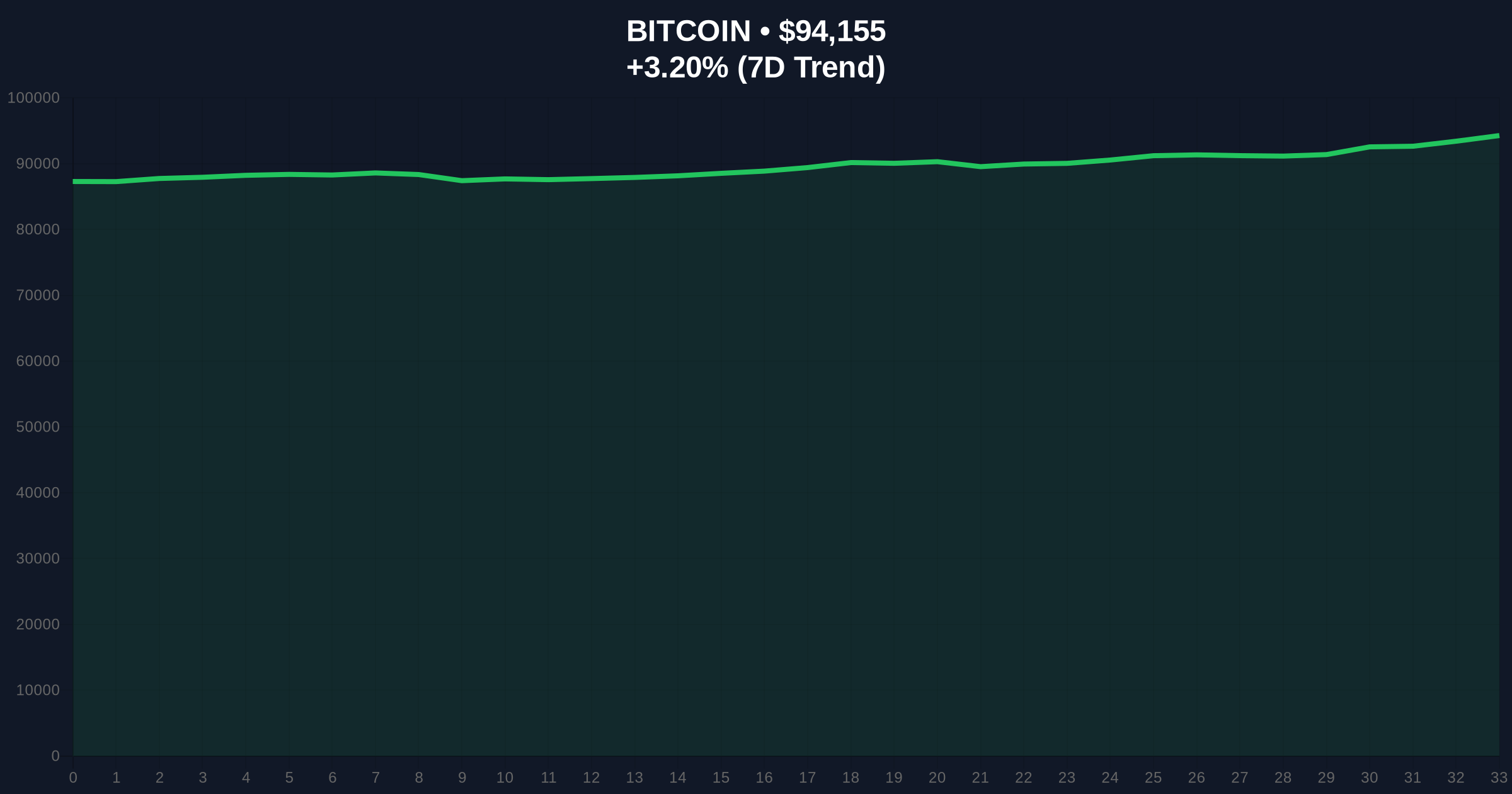
This event occurs against a backdrop of heightened regulatory scrutiny and evolving market structure. Historically, government sales of seized assets have created temporary supply shocks, often acting as liquidity grabs that test key support levels. The current market, with Bitcoin trading near $94,174, is particularly sensitive to such events due to recent volatility around the 200-day Exponential Moving Average (EMA). Underlying this trend is a broader narrative of institutional adoption, where regulatory clarity is paramount for sustained capital inflows. Related developments include ongoing debates over Republican-led regulatory uncertainty and analysis of Spot Bitcoin ETF flows, which collectively shape market sentiment.
On January 5, 2026, the USMS sold 57.55 BTC seized from Samourai Wallet, a Bitcoin mixing service targeted in a November 2025 enforcement action. The sale, valued at $6.36 million, was reported by Bitcoin Magazine, which cited potential violations of Executive Order 14233. This order, signed by President Trump, explicitly requires that seized Bitcoin be added to a national strategic reserve, not liquidated. The transaction represents a direct contradiction to established policy, raising questions about enforcement consistency and legal oversight. Market structure suggests this sale was executed via over-the-counter (OTC) desks, minimizing immediate price impact but creating a hidden supply overhang.
Bitcoin's price action currently shows resilience, trading at $94,174 with a 24-hour gain of 3.22%. However, the Relative Strength Index (RSI) at 58 indicates neutral momentum, while the 200-day EMA at $89,500 serves as a critical dynamic support. The sale volume of 57.55 BTC is relatively small in the context of daily Bitcoin volume, but it creates a Fair Value Gap (FVG) near the $92,000 level, which may act as a future liquidity target. A Bullish Invalidation level is set at $89,500 (the 200-day EMA), where a break below would signal structural weakness. Conversely, a Bearish Invalidation level is at $96,500, representing the recent high and a key resistance zone. Volume profile analysis indicates accumulation between $90,000 and $92,000, suggesting institutional buying interest that could absorb minor sell-side pressure.
| Metric | Value |
|---|---|
| Bitcoin Sold by USMS | 57.55 BTC |
| Sale Value | $6.36 million |
| Current Bitcoin Price | $94,174 |
| 24-Hour Price Change | +3.22% |
| Crypto Fear & Greed Index | Fear (Score: 26/100) |
| Key Support Level (200-day EMA) | $89,500 |
This development matters for both institutional and retail participants due to its dual impact on regulatory frameworks and market liquidity. Institutionally, violations of Executive Order 14233 could undermine trust in government Bitcoin policies, potentially affecting strategic reserve accumulation and long-term price stability. For retail traders, the sale introduces a micro-liquidity event that may test support levels, creating short-term volatility. The legal ambiguity also complicates compliance efforts for entities interacting with seized assets, as outlined in guidance from SEC.gov regarding asset forfeiture. Consequently, this event highlights the need for clearer regulatory protocols to prevent market distortions.
Market analysts on X/Twitter have expressed concern over the legal implications, with some noting that such sales could set a precedent for future government actions. Bulls argue that the small sale size is negligible for Bitcoin's macro liquidity, while bears highlight the potential for increased regulatory scrutiny. One analyst stated, "This sale is a liquidity grab that tests the $92,000 FVG—if it holds, we see continuation." Overall, sentiment leans cautious, reflecting the Fear & Greed Index score of 26, driven by regulatory uncertainty rather than technical breakdowns.
Bullish Case: If the $92,000 support holds and regulatory concerns are addressed, Bitcoin could target $100,000 as institutional inflows from Spot Bitcoin ETFs resume. Historical cycles suggest that minor government sales have limited long-term impact, and on-chain data indicates strong holder accumulation. A break above $96,500 would confirm bullish momentum, potentially leading to a gamma squeeze in options markets.Bearish Case: If legal violations escalate or the $89,500 support breaks, Bitcoin could retrace to $85,000, filling the FVG and triggering stop-loss orders. This scenario would be exacerbated by continued regulatory uncertainty, such as delays in crypto bills or further government sales. Market structure suggests that a sustained move below the 200-day EMA would invalidate the current rally, leading to increased selling pressure.
Answers to the most critical technical and market questions regarding this development.

Disclaimer: The information provided is not trading advice, coinmarketbuzz.com holds no liability for any investments made based on the information provided on this page. We strongly recommend independent research and/or consultation with a qualified professional before making any investment decisions.
coinmarketbuzz.com leverages advanced AI technology to analyze market data. All content is fact-checked and reviewed by our editorial team to ensure accuracy and neutrality.