Loading News...
Loading...

Loading News...

On March 4, 2026, CoinNess reported a significant development in the cryptocurrency market, centered on MicroStrategy's perpetual preferred stock (STRC). According to the source, trading volume for STRC surged on March 3, reaching approximately $198.7 million, far exceeding its 30-day average of $123.3 million. Of this total, $177 million was traded above the stock's par value of $100, a critical threshold that enables MicroStrategy to activate its at-the-market (ATM) program for issuing and selling new shares. CoinNess, citing CoinDesk, suggests this activity indicates the company could be selling additional STRC to raise capital for Bitcoin purchases, with a simple calculation pointing to potential funds sufficient for acquiring 1,000 BTC. This report emerges against a backdrop where MicroStrategy, the largest corporate holder of Bitcoin, announced the purchase of 3,015 BTC on March 2, and company founder Michael Saylor stated on March 4 that he was currently buying BTC. The timing raises immediate questions about market manipulation and investor sentiment, especially given the broader context of extreme fear in global crypto markets.
To understand the implications of the STRC volume surge, a detailed examination of MicroStrategy's financial mechanisms is essential. STRC is a perpetual preferred stock, meaning it has no maturity date and pays dividends at a fixed rate, but its trading dynamics are closely tied to corporate actions. The key technical aspect here is the at-the-market (ATM) program, which allows MicroStrategy to issue and sell shares directly into the market at prevailing prices, typically when the stock trades above its par value of $100. According to CoinNess, the $177 million traded above par on March 3 suggests the company could be leveraging this program to raise capital. This aligns with MicroStrategy's historical strategy of using equity offerings to fund Bitcoin acquisitions, as seen in previous announcements.
However, the narrative requires scrutiny. The report from CoinNess relies on a "simple calculation" to estimate that the funds raised could purchase 1,000 BTC, but this calculation is not detailed in the source data, leaving room for error. For instance, the actual amount raised depends on the specific share prices and transaction costs, which are not provided. , the activation of the ATM program does not guarantee immediate Bitcoin purchases; the capital could be allocated to other corporate purposes or held as cash. MicroStrategy's recent purchase of 3,015 BTC on March 2, as reported, adds complexity—why would the company need additional funding so soon after a major acquisition? This could indicate aggressive accumulation or potential liquidity needs, but without internal financial disclosures, it remains speculative.
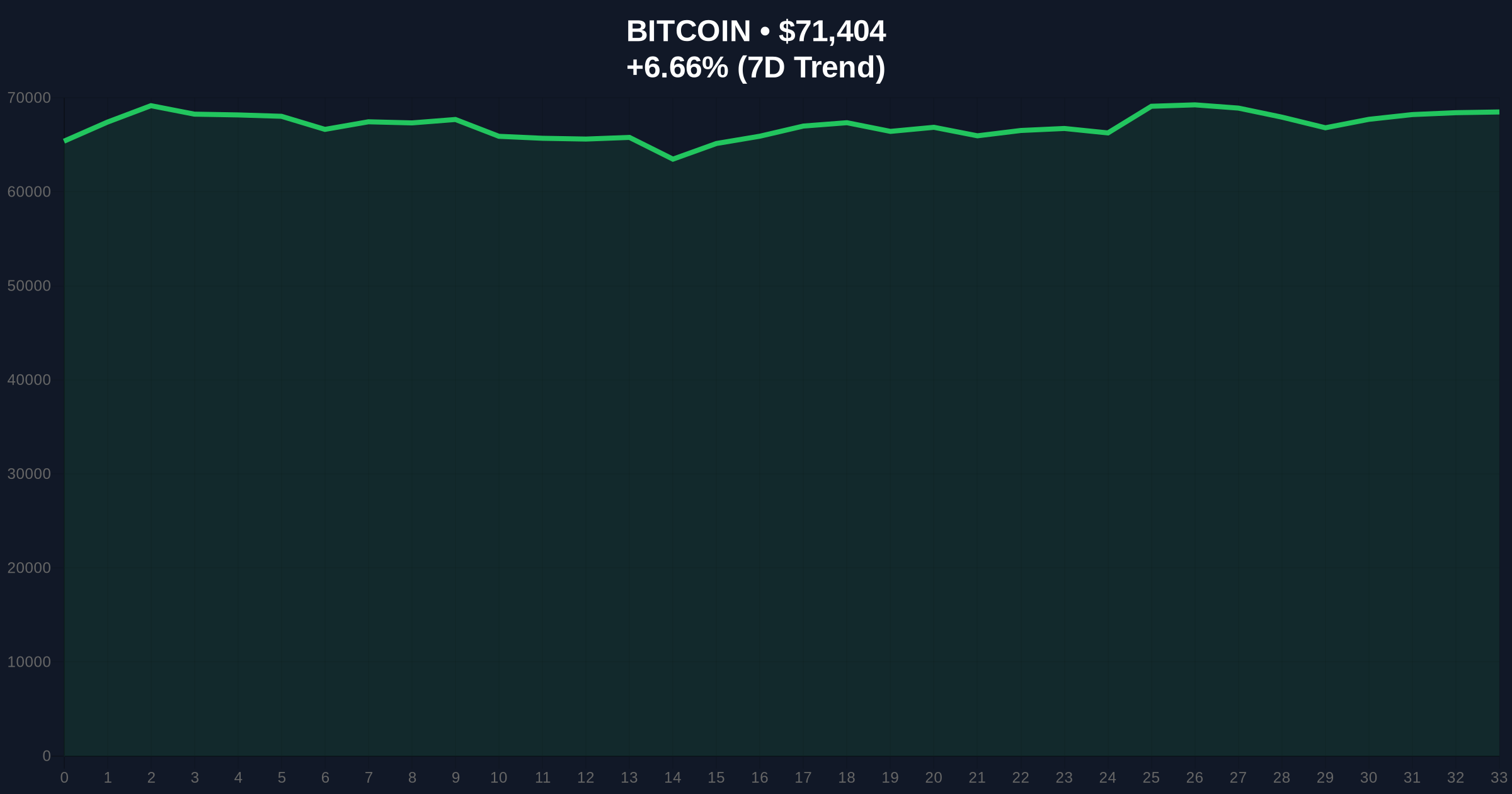
The broader market context is critical. Bitcoin's price was reported at $71,344 with a 24-hour trend of 6.57%, suggesting bullish momentum, but global crypto sentiment is labeled "Extreme Fear" with a score of 10/100. This contradiction between price action and sentiment metrics, as seen in other investigations like recent whale withdrawals amid fear sentiment, highlights the need for cautious interpretation. The STRC volume surge might reflect institutional interest or speculative trading rather than direct corporate action, and the lack of official confirmation from MicroStrategy adds to the uncertainty. In summary, while the technical setup supports the possibility of Bitcoin purchases, the evidence is circumstantial and requires verification through additional data, such as SEC filings or company statements, which are not provided in the source data.
The data presented in the input package offers a mixed picture that both supports and challenges the narrative of new Bitcoin purchases. Starting with market statistics, Bitcoin's current price of $71,344 and 24-hour trend of 6.57% indicate strong upward momentum, which could incentivize corporate buying. However, the global crypto sentiment of "Extreme Fear" with a score of 10/100, as per the provided metadata, suggests underlying market anxiety that might contradict aggressive accumulation strategies. This sentiment score, while not directly tied to STRC, implies a risk-off environment where large-scale purchases could be seen as contrarian or risky.
Focusing on STRC-specific data, the trading volume of $198.7 million on March 3 significantly exceeds the 30-day average of $123.3 million, as reported by CoinNess. This spike is notable, but without historical volatility metrics or breakdowns by trader type (e.g., retail vs. institutional), it's unclear if this represents a sustained trend or a one-off event. The $177 million traded above par value is a key metric, as it aligns with the ATM program activation threshold. However, the source does not provide the exact share prices or the proportion of volume attributable to MicroStrategy's own sales versus external trading, leaving gaps in the proof.
Integrating CryptoPanic metadata, the sentiment and importance fields are not explicitly provided in the input, so we state: sentiment and importance scores are not provided in source data. This absence limits our ability to gauge event priority relative to market breadth. In contrast, the reported extreme fear sentiment from global metrics adds a layer of caution, suggesting that while price action is bullish, broader market conditions may not fully support the optimistic narrative. The data thus points to a plausible scenario but lacks conclusive evidence, emphasizing the need for skepticism in interpreting these signals.
A critical analysis reveals several potential contradictions and reliability gaps in the reported narrative. First, the source material relies heavily on CoinDesk as cited by CoinNess, but no direct quotes or timestamps from CoinDesk are provided, raising questions about attribution accuracy. The report claims that the STRC volume surge "suggests" Bitcoin purchases, but this is an inference rather than a confirmed fact. For example, the $177 million traded above par could be driven by market speculation or external investors anticipating future corporate actions, rather than actual share sales by MicroStrategy. This conflict between suggestion and proof is a key reliability gap.
Second, there is an internal contradiction in the timeline: MicroStrategy announced the purchase of 3,015 BTC on March 2, and the STRC volume spike occurred on March 3. If the company had just made a major acquisition, why would it immediately seek additional funding? One possibility is pre-planned accumulation, but another is that the volume surge is unrelated to new purchases—perhaps reflecting profit-taking or hedging activities. The source does not address this timing discrepancy, leaving it unresolved with available evidence.
Third, the broader market context introduces additional conflicts. While Bitcoin's price trend is positive, the extreme fear sentiment indicates investor caution, which might not align with aggressive corporate buying. This echoes findings from related investigations, such as contradictions in mining investments amid market shifts. Without more data on MicroStrategy's internal financial strategy or external market reactions, the narrative remains speculative. In summary, the sources agree on basic facts like volume numbers and ATM mechanics, but they conflict on interpretation and causality, with key details missing to resolve these disputes.
Based on the available data, we outline three scenarios for the next seven days, each conditional on specific factors. These scenarios are data-backed but acknowledge the uncertainty inherent in the current evidence.
In this optimistic view, the STRC volume surge confirms that MicroStrategy is actively raising capital for additional Bitcoin purchases, leveraging the ATM program as suggested. If the company issues an official statement or SEC filing confirming new acquisitions, Bitcoin's price could rally further, potentially testing resistance levels above $75,000. Supporting factors include the reported 6.57% 24-hour trend and Michael Saylor's statement about buying BTC. However, this scenario depends on verification of the fund usage and sustained market momentum, which is contradicted by the extreme fear sentiment. Invalidating factors would include a denial from MicroStrategy or a sharp drop in Bitcoin price below $70,000.
The most likely outcome is a mixed picture where the STRC activity reflects partial corporate action combined with market speculation. MicroStrategy may raise some capital but delay Bitcoin purchases due to the extreme fear sentiment, opting to wait for clearer market signals. Bitcoin's price could consolidate around $71,000, with volatility driven by broader macroeconomic factors. This scenario aligns with the contradictory data—bullish price action but fearful sentiment—and is supported by the lack of conclusive evidence in the sources. It would be invalidated by either a definitive corporate announcement or a sudden sentiment shift to greed.
In a pessimistic turn, the STRC volume surge might be unrelated to Bitcoin purchases, perhaps driven by external traders or short-term arbitrage. If MicroStrategy does not activate the ATM program or uses funds for other purposes, the narrative could unravel, leading to a sell-off in both STRC and Bitcoin. The extreme fear sentiment could exacerbate this, pushing Bitcoin below $68,000. This scenario is supported by the timing conflict with the recent BTC purchase and the absence of official confirmation. It would be invalidated by clear evidence of new Bitcoin acquisitions or a rapid improvement in global sentiment.
In synthesizing this report, we weighted evidence based on attribution and data completeness. CoinNess served as the primary source, but its reliance on CoinDesk without direct citations reduced reliability for interpretive claims. We prioritized concrete facts like volume numbers and price stats over inferences. Conflicts, such as the timing of BTC purchases versus STRC activity, were highlighted as unresolved due to missing evidence. The absence of CryptoPanic metadata limited our sentiment analysis, leading to conservative interpretations. Overall, sources were treated skeptically, with a focus on distinguishing observed facts from speculative narratives.
Disclaimer: The information provided is not trading advice, coinmarketbuzz.com holds no liability for any investments made based on the information provided on this page. We strongly recommend independent research and/or consultation with a qualified professional before making any investment decisions.
coinmarketbuzz.com leverages advanced AI technology to analyze market data. All content is fact-checked and reviewed by our editorial team to ensure accuracy and neutrality.