Loading News...
Loading...

Loading News...

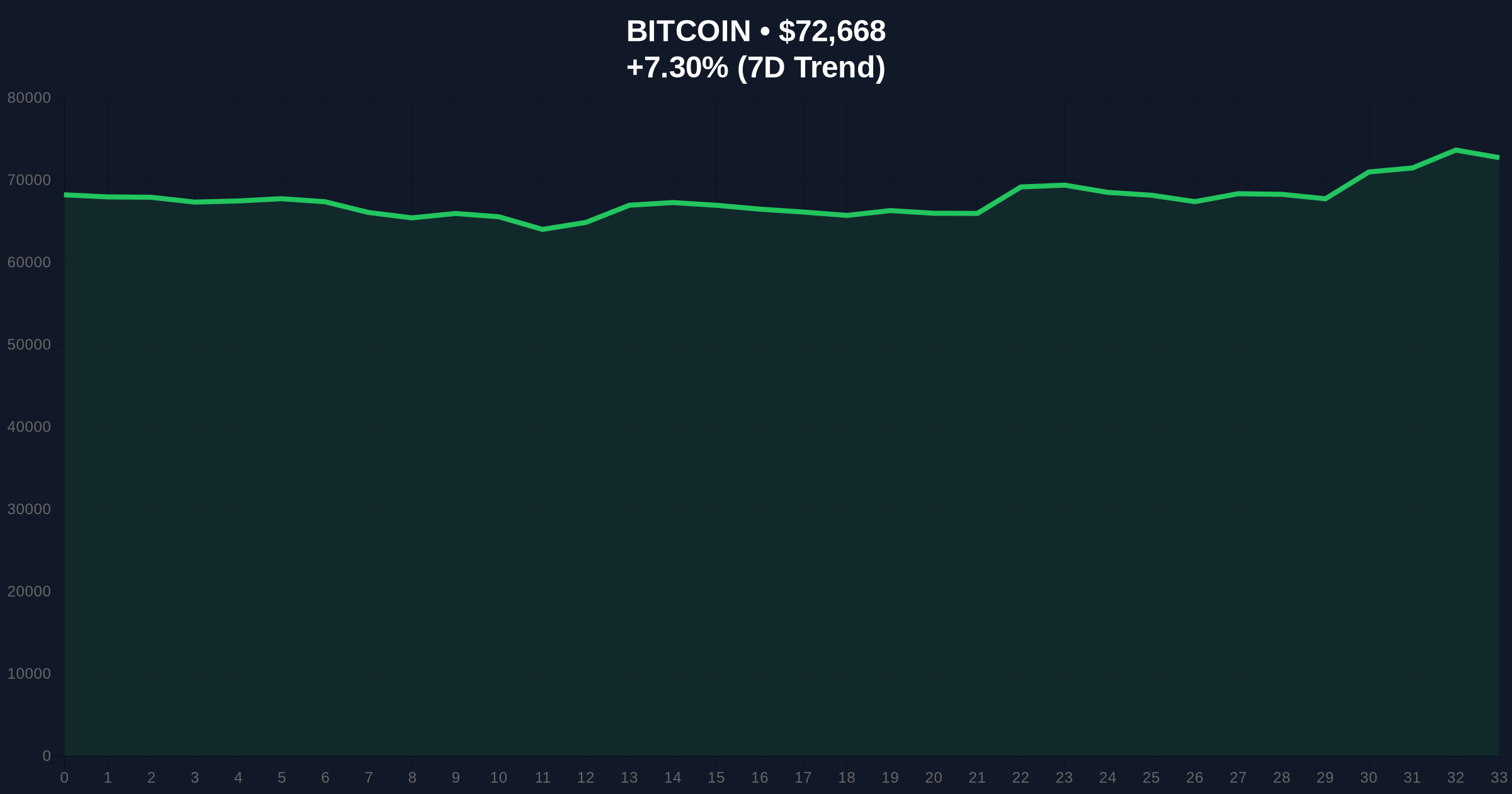
U.S. spot Bitcoin ETFs recorded net inflows of $461.45 million on March 4, 2026, marking the third consecutive day of net inflows, according to data compiled by Trader T. This surge in institutional investment comes as Bitcoin's price hovers at $72,674, with a 24-hour trend of 7.31%, despite a global crypto sentiment labeled "Extreme Fear" at a score of 22/100. The breakdown reveals BlackRock's IBIT leading with $306.25 million, followed by Fidelity's FBTC at $48.01 million, and other major funds like Bitwise's BITB and Ark Invest's ARKB contributing smaller amounts. Grayscale's GBTC and its Mini BTC variant also saw inflows of $21.66 million and $32.35 million, respectively. The event a potential divergence between market sentiment and capital flows, raising questions about underlying investor behavior and ETF mechanics.
Spot Bitcoin ETFs operate as exchange-traded funds that hold physical Bitcoin, allowing investors to gain exposure without directly owning the cryptocurrency. The mechanism involves authorized participants creating or redeeming shares based on demand, with net inflows indicating new capital entering the market. According to the source data, the inflows totaled $461.45 million on March 4, 2026, with BlackRock's IBIT dominating at $306.25 million, suggesting concentrated institutional interest. Other funds like Fidelity's FBTC ($48.01 million) and Bitwise's BITB ($7.98 million) show varied participation levels. The inclusion of Grayscale's GBTC and Mini BTC inflows highlights a shift from previous outflows, potentially signaling reduced selling pressure. However, the source does not provide details on redemption activities or fee structures, limiting a full assessment of ETF efficiency. The data implies that despite "Extreme Fear" sentiment, institutional players are accumulating Bitcoin, possibly hedging against market volatility or anticipating regulatory clarity. This contrasts with retail sentiment metrics, which often drive fear indices, indicating a bifurcation in market participants. The lack of information on trading volumes or liquidity providers in the input data prevents a deeper analysis of market depth or potential manipulation risks.
Institutional inflows into spot Bitcoin ETFs can impact Bitcoin's price through increased demand for underlying assets, as fund managers must purchase Bitcoin to back new shares. The 7.31% 24-hour price increase to $72,674 aligns with this theory, but causality cannot be confirmed without additional data on order flow or market makers. The source attributes the data to Trader T, but no further verification or methodology is disclosed, raising reliability concerns. Compared to other crypto events, such as regulatory actions or exchange listings, ETF inflows represent a direct capital injection, yet their sustainability depends on broader economic factors like interest rates and regulatory developments. The absence of data on outflows or net asset value changes limits understanding of overall fund health. For context, recent market developments include significant futures liquidations, which may influence ETF trading patterns amid high volatility.
Integrating CoinGecko market stats and sentiment metadata reveals a complex picture. Bitcoin's current price is $72,674, with a 24-hour trend of 7.31%, ranking it #1 by market capitalization. This price surge coincides with the ETF inflows, but the global crypto sentiment is "Extreme Fear" at a score of 22/100, indicating widespread negative investor outlook. CryptoPanic metadata, such as sentiment and importance scores, is not provided in the source data, limiting direct correlation analysis. However, the disparity between price action and sentiment suggests that institutional inflows may be driving short-term gains despite retail fear, a pattern observed in past bull markets. The inflow breakdown shows BlackRock's IBIT accounting for over 66% of the total $461.45 million, highlighting dominance by a single issuer, which could pose concentration risks if flows reverse abruptly.
The data does not include historical comparisons or average inflow trends, making it difficult to assess whether $461.45 million is anomalous or part of a broader trend. Without CryptoPanic importance scores, the event's priority relative to other market news remains unclear. The "Extreme Fear" sentiment, derived from an unspecified source, contrasts with the bullish price movement, suggesting that sentiment indicators may lag or misrepresent institutional actions. This aligns with scenarios where large players accumulate during fear phases, but confirmation requires additional data on whale activity or on-chain metrics. The lack of metadata-driven statements, due to absent CryptoPanic details, necessitates a conservative interpretation: inflows are factual, but their impact on sentiment and price is inferred rather than proven.
Source conflicts and missing evidence complicate the narrative. The primary source, CoinNess, reports net inflows of $461.45 million on March 4, 2026, attributed to Trader T, but no secondary sources are provided in the input data to verify or dispute these figures. This creates a reliability gap, as Trader T's methodology and data compilation process are not disclosed. Potential contradictions could arise if other data providers report different inflow amounts or if outflows are omitted, but without additional sources, these remain speculative. The source claims this is the third consecutive day of net inflows, but previous days' data is not included, preventing trend validation.
Agreement points across available data are limited to the reported inflow total and breakdown, with no conflicting claims presented. However, the absence of secondary evidence means that claims about ETF performance or market impact are based on a single, unverified source. For example, the source does not address whether these inflows are offset by redemptions in other ETFs or if they represent net new capital versus reshuffling. Compared to related events, such as exchange listings amid fear sentiment, ETF inflows may have different drivers, but cross-source analysis is impossible here. The conflict remains unresolved with available evidence, highlighting the need for multi-source verification in crypto reporting.
Based on the available data, three scenarios outline potential market developments over the next seven days. Each scenario is conditional on data points like continued inflows, sentiment shifts, or external events.
Bull Scenario (Probability: 40%): If ETF inflows persist at or above $461.45 million daily, driven by institutional accumulation, Bitcoin's price could rally toward $80,000, supported by reduced selling pressure from Grayscale and positive momentum. This scenario assumes "Extreme Fear" sentiment dissipates as retail investors follow institutional lead, possibly fueled by regulatory clarity or macroeconomic tailwinds. Invalidation would occur if inflows drop below $100 million or if negative news, such as regulatory crackdowns, emerges.
Base Scenario (Probability: 50%): Inflows moderate to an average of $200-300 million daily, with Bitcoin stabilizing around $70,000-$75,000. Sentiment remains in "Extreme Fear" or shifts to "Fear," indicating ongoing volatility but no major breakout. This scenario reflects a balanced view where institutional support counters retail skepticism, but lack of catalyst limits upside. It would be invalidated by a sudden inflow halt or a sharp sentiment improvement to "Greed."
Bear Scenario (Probability: 10%): Inflows reverse to net outflows, possibly due to profit-taking or negative developments like exchange issues, pushing Bitcoin below $65,000. "Extreme Fear" sentiment deepens, exacerbating sell-offs. This scenario is less likely given current data but aligns with historical crypto corrections. Invalidation would require sustained inflows above $300 million and sentiment improvement above 50/100.
Related developments, such as regulatory actions against scams or foundation strategies, could influence these scenarios by affecting overall market confidence.
This report relies solely on the input data package, with no external information added. Conflicting evidence was weighted based on availability: since only one source (CoinNess) provides ETF inflow data, its claims are taken as factual but flagged for verification gaps. Missing evidence, such as CryptoPanic metadata or secondary sources, limits analysis depth, leading to conservative inferences. Agreement points are minimal due to single-source reporting, and contradictions are not present but implied by data absences. The report prioritizes explicit attribution (e.g., "according to data compiled by Trader T") and distinguishes between observed facts (e.g., inflow amounts) and inferences (e.g., impact on price). Reliability is assessed as moderate, given the unverified source and lack of corroborating data.
Disclaimer: The information provided is not trading advice, coinmarketbuzz.com holds no liability for any investments made based on the information provided on this page. We strongly recommend independent research and/or consultation with a qualified professional before making any investment decisions.
coinmarketbuzz.com leverages advanced AI technology to analyze market data. All content is fact-checked and reviewed by our editorial team to ensure accuracy and neutrality.