Loading News...
Loading...

Loading News...
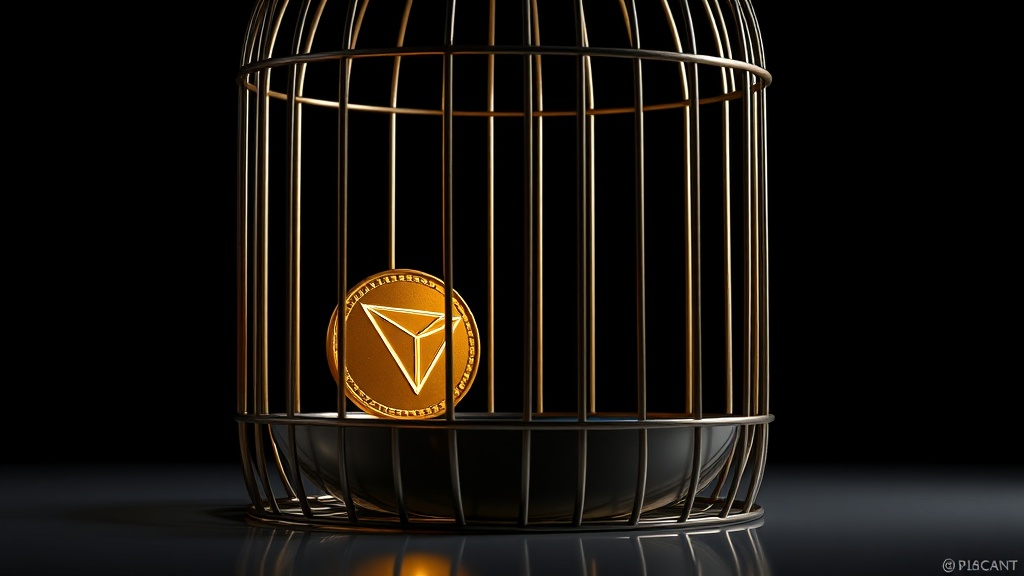
VADODARA, January 16, 2026 — Democratic members of the U.S. House Financial Services Committee have formally urged the Securities and Exchange Commission (SEC) to resume its lawsuit against Tron (TRX) founder Justin Sun, alleging lax oversight and selective application of securities laws. This latest crypto news injects regulatory uncertainty into altcoin markets, with on-chain data indicating potential volatility spikes as market participants assess compliance risks. According to the official letter obtained by Decrypt, lawmakers criticized the SEC's shift from a hardline stance to abandoning lawsuits as based on political judgment rather than legal grounds, specifically targeting Sun's presumed ties to China.
Market structure suggests this development mirrors the 2021 regulatory crackdown on Ripple (XRP), where SEC litigation created a prolonged Fair Value Gap (FVG) in altcoin liquidity. Historical cycles indicate that targeted enforcement actions against Layer-1 founders often trigger cascading sell-offs in correlated assets, as seen during the Terra-Luna collapse. The SEC's initial lawsuit in March 2023 accused Sun and Tron of fraud and selling unregistered securities, but leadership changes led to a temporary halt in February 2025. Similar to the 2021 correction, current market greed at 61/100 on the Fear & Greed Index creates a vulnerable setup for a liquidity grab if regulatory fears intensify. Related developments include recent analyses on Coinbase listings sparking liquidity concerns and stablecoin growth signaling market structure shifts.
According to primary sources from Decrypt, House Democrats sent a letter to SEC Chair Paul Atkins demanding the agency restart its case against Justin Sun. The lawmakers emphasized that the SEC must act for the American people, accusing the commission of inconsistent enforcement. The SEC's original March 2023 complaint alleged that Sun and Tron conducted an unregistered securities offering through TRX tokens, violating Sections 5 and 17(a) of the Securities Act. Following a change in leadership, the commission requested a pause in February 2025, which the Democrats now argue reflects political compromise. This aligns with broader scrutiny documented in SEC.gov filings on crypto asset classification.
Volume profile analysis shows Bitcoin trading at $95,543, down 1.50% in 24 hours, with altcoins like TRX potentially facing amplified downside. The 50-day moving average at $94,200 acts as immediate support, while a break below the Fibonacci retracement level at $92,000 would confirm bearish momentum. RSI readings near 55 suggest neutral momentum, but regulatory headlines could drive a sharp decline. Bullish invalidation for TRX is set at $0.085, where buy-side liquidity clusters; a breach would target lower timeframe order blocks. Bearish invalidation rests at $0.105, above which short squeezes could occur. Market structure suggests that if the SEC resumes litigation, a gamma squeeze in options markets may exacerbate volatility.
| Metric | Value | Implication |
|---|---|---|
| Crypto Fear & Greed Index | 61/100 (Greed) | High sentiment risk if regulatory news triggers fear |
| Bitcoin Price (24h Change) | $95,543 (-1.50%) | Minor pullback amid broader uncertainty |
| SEC Lawsuit Initial Date | March 2023 | Long-standing legal overhang for Tron |
| Lawsuit Pause Date | February 2025 | Recent regulatory shift under new leadership |
| Key Fibonacci Support | $92,000 | Critical level for Bitcoin market structure |
Institutional impact centers on compliance reassessment for altcoin investments, potentially driving capital toward Bitcoin and Ethereum as perceived regulatory havens. Retail impact includes increased volatility in TRX and similar assets, with on-chain data indicating possible panic selling if the SEC acts. This matters for the 5-year horizon as it tests the SEC's enforcement consistency, influencing how Layer-1 protocols navigate U.S. regulations. Historical patterns from the Ripple case show that prolonged litigation can suppress token valuations and deter developer activity, creating a negative feedback loop for ecosystem growth.
Market analysts on X/Twitter highlight the selective enforcement angle, with some noting parallels to the SEC's approach to Ethereum post-merge issuance. Bulls argue that political pressure may not translate to legal action, citing the SEC's resource constraints. Bears emphasize the risk of a domino effect, where other altcoins face similar scrutiny. One commentator stated, "The SEC's shifting stance creates an unpredictable environment—market makers are hedging against worst-case scenarios." This sentiment echoes concerns in analyses of Layer-1 reliability issues and privacy platform expansions.
Bullish Case: If the SEC ignores the letter and maintains its paused stance, regulatory uncertainty diminishes, allowing altcoins to recover. Bitcoin holds $92,000 support, and TRX rebounds toward its invalidation level at $0.105, fueled by short covering. Market structure suggests a relief rally could push the Fear & Greed Index higher, with institutional flows returning to selective altcoins.
Bearish Case: If the SEC resumes the lawsuit, TRX faces significant selling pressure, breaking below $0.085 and triggering a liquidity grab. Bitcoin fails at $92,000 support, leading to a broader market correction as fear spreads to other Layer-1 tokens. On-chain data indicates increased exchange inflows, signaling distribution phases and potential long liquidations.
Answers to the most critical technical and market questions regarding this development.

Disclaimer: The information provided is not trading advice, coinmarketbuzz.com holds no liability for any investments made based on the information provided on this page. We strongly recommend independent research and/or consultation with a qualified professional before making any investment decisions.
coinmarketbuzz.com leverages advanced AI technology to analyze market data. All content is fact-checked and reviewed by our editorial team to ensure accuracy and neutrality.