Loading News...
Loading...

Loading News...

VADODARA, April 2, 2026. The following report is based on currently available verified source material and market data.
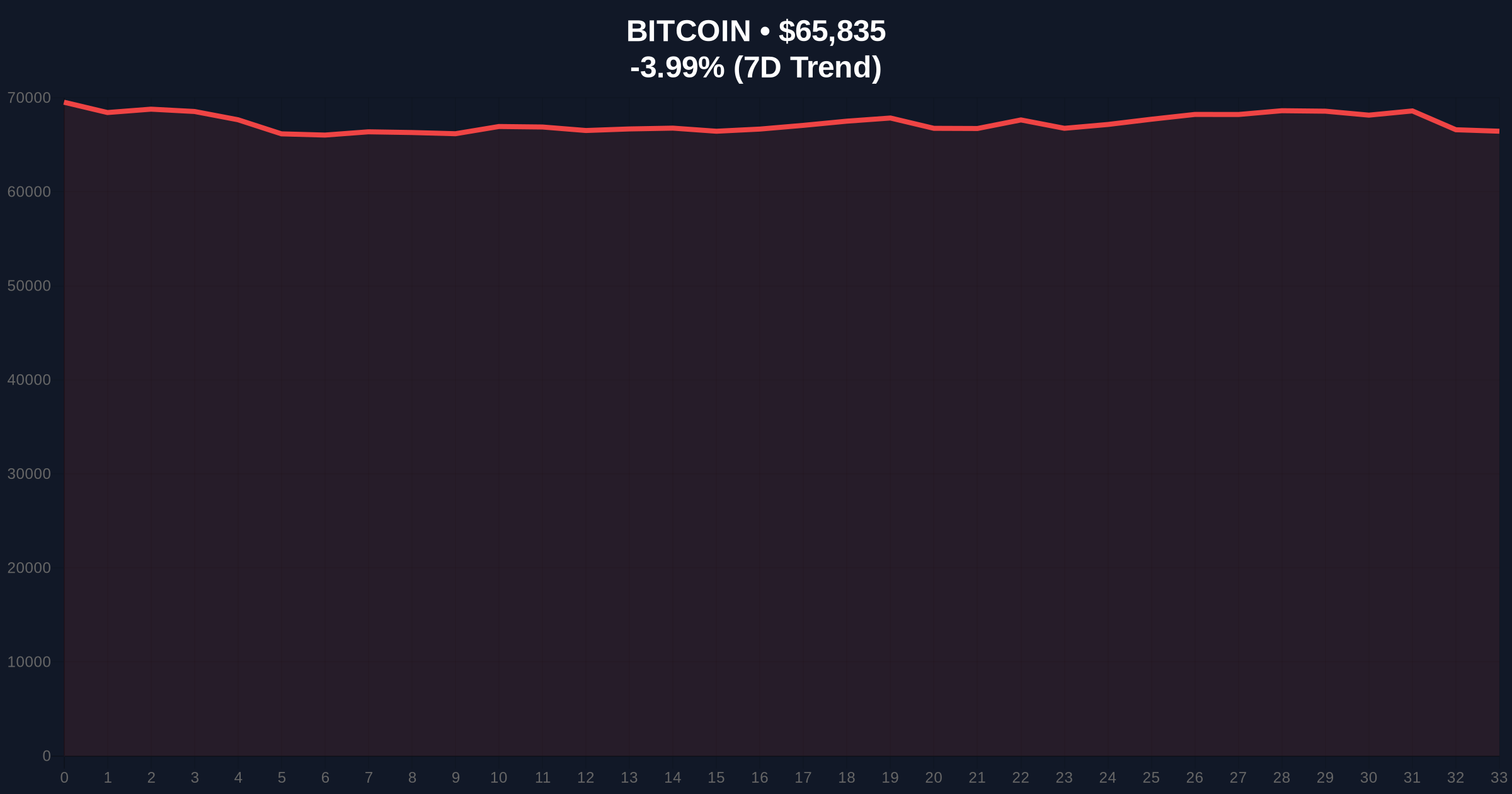
On April 2, 2026, Bitcoin's bear market entered a critical phase where long-term holder metrics suggest a potential bottom is forming, but historical patterns indicate months of sideways trading may still be needed. Bitcoin is currently trading at $65,922, down 3.86% in 24 hours and roughly 45% below its October all-time high, marking an almost six-month downturn. This matters because while price pain has been widely discussed, the emerging 'time pain', extended range-bound conditions that exhaust investors, could test market patience and delay a sustained recovery, impacting both retail and institutional strategies.
Key metrics from blockchain analytics and market data paint a picture of a maturing bear market. Long-term holders, defined as those holding Bitcoin for six months or more, now control approximately 80% of the supply, approaching the 85% level historically seen at bear market bottoms. Current price action shows Bitcoin trading below $66,000, with a 24-hour decline of over 3% and a nearly 45% drop from its peak. The global crypto sentiment is in 'Extreme Fear' with a score of 12/100, reflecting widespread investor anxiety. Source: blockchain analytics, Source: CoinGecko, Source: exchange data.
| Metric | Value | Source |
|---|---|---|
| Long-Term Holder Supply | ~80% | Blockchain analytics |
| Historical Bottom Level | 85% | Blockchain analytics |
| Current Bitcoin Price | $65,922 | CoinGecko |
| 24-Hour Trend | -3.86% | CoinGecko |
| Global Sentiment Score | 12/100 (Extreme Fear) | Not provided in source data |
Why now? Bitcoin is in an almost six-month bear market, with long-term holder supply nearing historical bottom levels, making this a moment for assessing cycle maturity. Who benefits? Patient long-term investors who accumulate at depressed prices stand to gain, while short-term traders and leveraged positions face exhaustion from lack of directional movement. Time horizons: In the short-term (days/weeks), sideways trading may continue, testing investor patience; longer-term (months/years), a true floor formation could set the stage for recovery. Causal chain: Increased long-term holder accumulation → reduced selling pressure → potential price support → but extended consolidation ('time pain') delays momentum, as seen in past cycles where bottoms formed first and holder metrics lagged.
The mechanism hinges on on-chain metrics like Realized Cap HODL Waves from Glassnode, which group Bitcoin supply by the last time coins moved and weight them by realized price. Historically, bear market bottoms coincide with long-term holders controlling at least 85% of supply, indicating these investors bought at low prices and held through downturns. Currently at 80%, the trend suggests accumulation is occurring, but the process is slow: price bottoms often form first, and only months later do holder levels reach peak thresholds, creating a lag that extends the 'boring' phase. This slow grind mechanically exhausts both bulls and bears by limiting volatility and directional cues.
Similar to the 2021 correction, where Bitcoin saw extended consolidation after sharp declines, current conditions mirror past cycles that required months of range-bound trading before recovery. In contrast, altcoins and other assets like Ethereum often exhibit more volatility, but Bitcoin's dominance in holder metrics sets it apart. Broader market context includes:
The bearish scenario could invalidate the bullish narrative if long-term holder supply fails to reach 85% or if external shocks trigger renewed selling. Key risks include:
Practically, traders should prepare for continued range-bound action in the near term, with volatility potentially suppressed. Investors may focus on accumulation strategies, while market analysts will monitor long-term holder trends for confirmation of a floor. The outcome could influence institutional adoption timelines, as prolonged 'time pain' tests resilience.
Bitcoin's bear markets have historically involved phases of price pain followed by time pain, where extended consolidation helps shake out weak hands. The current cycle, down 45% from its high, aligns with past drawdowns, but the emphasis on holder metrics adds a layer of on-chain validation to traditional technical analysis.
Cross-market reactions include broader crypto indices under pressure, with the CoinDesk 20 falling 4.5% recently. Amid recent regulatory and technological shifts, developments such as increased focus on DeFi security and institutional service launches highlight evolving market structures during fear periods.
Bitcoin's bear market is at a crossroads where long-term holder trends suggest a bottom may be near, but historical cycles warn of months more consolidation. The 'time pain' trap the psychological and mechanical challenges ahead, requiring patience from market participants.
Evidence & Sources
Updated at: Apr 02, 2026, 07:57 PM
Data window: Apr 02, 2026, 03:34 PM → Apr 02, 2026, 03:37 PM
Evidence stats: 9 metrics, 3 timeline points.
Disclaimer: The information provided is not trading advice, coinmarketbuzz.com holds no liability for any investments made based on the information provided on this page. We strongly recommend independent research and/or consultation with a qualified professional before making any investment decisions.
All published reports are reviewed by our editorial team for factual consistency, neutrality, and reader clarity.