Loading News...
Loading...

Loading News...

VADODARA, April 8, 2026. The following report is based on currently available verified source material and market data.
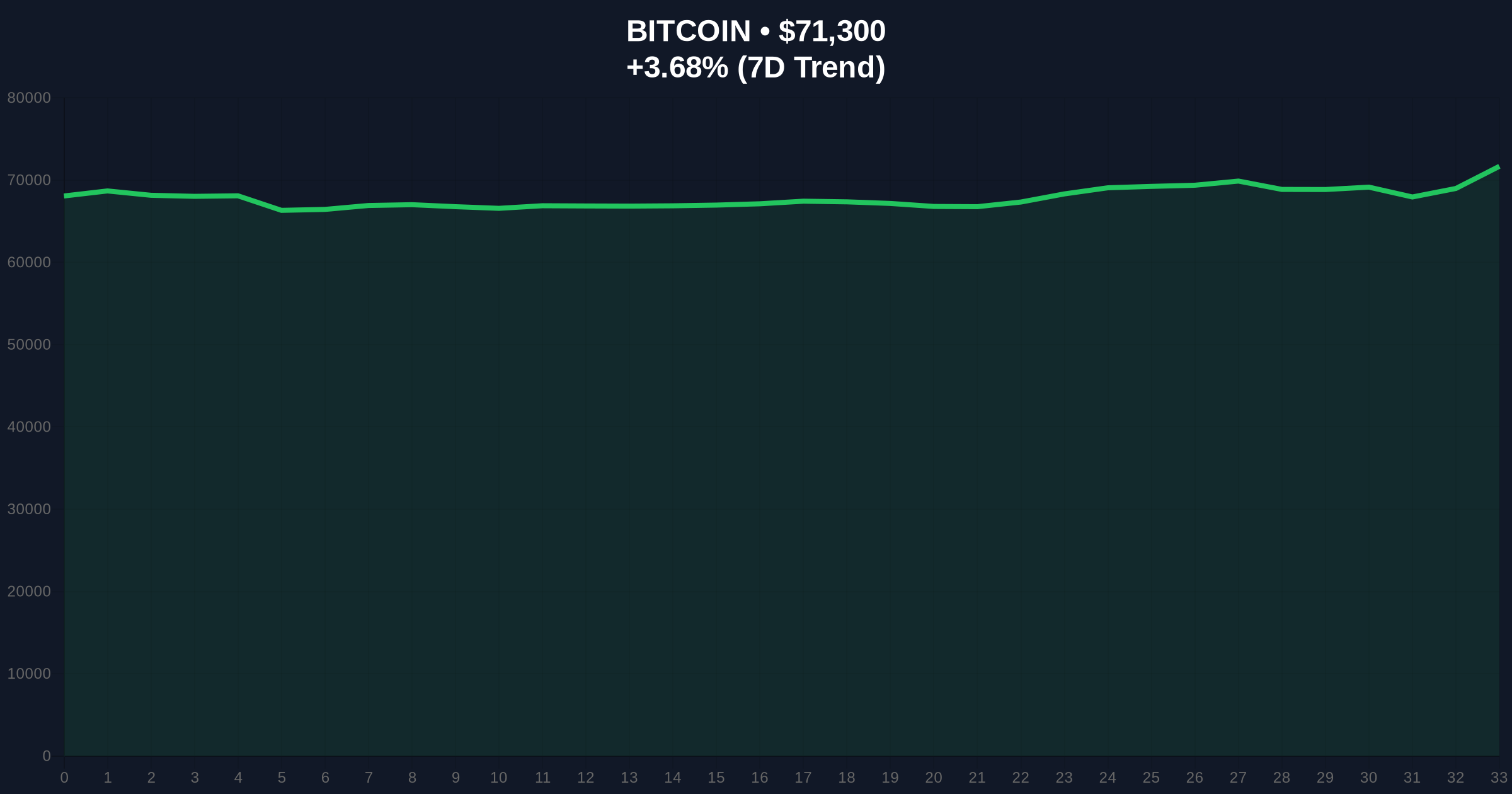
On April 7, 2026, US spot Bitcoin ETFs experienced a total net outflow of approximately $159.44 million, marking a shift from inflows after two consecutive trading days. This development matters because it signals potential cooling in institutional demand for Bitcoin, occurring amid a broader market sentiment of "Extreme Fear" with Bitcoin trading at $71,300, up 3.68% over 24 hours. The reversal in ETF flows could impact price support mechanisms and investor confidence in the near term.
The net outflow of $159.44 million on April 7 represents a significant shift from previous inflows, with individual ETF performances varying widely. Key metrics include Bitcoin's current price of $71,300 and a 24-hour trend of 3.68%, sourced from CoinGecko. The ETF outflow data is attributed to public statements, with specific fund details as follows:
| ETF | Net Flow |
|---|---|
| BlackRock's IBIT | Outflow of $17.5 million |
| Fidelity's FBTC | Outflow of $47.85 million |
| Ark Invest's ARKB | Outflow of $34.15 million |
| Valkyrie's BRRR | Inflow of $2.32 million |
| VanEck's HODL | Outflow of $20.37 million |
| Grayscale's GBTC | Outflow of $41.89 million |
| Morgan Stanley's MSBT | No net flows |
Source: public statement. The timeline for this event is not provided in source data, but it occurred on April 7, 2026.
Why now? This shift comes after two days of inflows, suggesting a potential inflection point in institutional sentiment, coinciding with Bitcoin's price volatility and extreme fear in the broader crypto market. Who benefits? Short-term traders may capitalize on price swings, while long-term holders face uncertainty; ETF issuers like Valkyrie with inflows gain relative advantage, whereas others see outflows. Time horizons: In the short term, outflows could pressure Bitcoin prices by reducing buying support, but over months, this may reflect normal market cycles rather than structural issues. Causal chain: ETF outflows → reduced institutional buying pressure → potential price decline → increased retail caution → further sentiment deterioration.
The mechanism behind ETF outflows involves institutional investors redeeming shares, which requires ETF providers to sell underlying Bitcoin holdings to meet redemptions. This selling activity increases supply on the market, potentially outpacing demand and leading to price downward pressure. Consequently, the shift from inflows to outflows indicates a change in net investor behavior, where selling exceeds buying, disrupting the previous equilibrium that supported price stability.
Compared to other crypto developments, this ETF outflow contrasts with positive news in other sectors, such as stablecoin innovations and regulatory moves. For instance:
These developments suggest a fragmented market where ETF performance may not directly correlate with advancements in DeFi or stablecoins.
The bearish scenario includes several risks that could invalidate the significance of this outflow:
Uncertainty remains high due to the "Extreme Fear" sentiment score of 17/100, indicating broader market anxiety that may amplify reactions.
In the near term, traders should monitor subsequent ETF flow data to determine if this outflow is an anomaly or the start of a longer trend. If outflows persist, Bitcoin could face increased volatility and potential price corrections. Institutions may adjust their strategies based on flow patterns, while retail investors might become more cautious, affecting overall market liquidity.
US spot Bitcoin ETFs have been a key driver of institutional adoption since their approval, providing regulated exposure to Bitcoin. Historically, inflows have often correlated with positive price momentum, while outflows can signal profit-taking or risk aversion. This event occurs in a context where global crypto sentiment is at "Extreme Fear," suggesting underlying market tensions beyond ETF-specific factors.
Amid recent regulatory shifts, such as the FDIC's move to regulate stablecoin issuers under the GENIUS Act, the ETF outflow highlights differing pressures on crypto assets. Additionally, innovations like Circle's stablecoin payout API in Singapore and Danal Fintech's PoC for a won-based stablecoin show ongoing development in the sector, which may influence investor focus away from Bitcoin ETFs in the longer term.
The shift to net outflows in US spot Bitcoin ETFs on April 7, 2026, the fragility of institutional demand in a fearful market. While the immediate impact may pressure prices, the broader context of regulatory and technological advancements suggests a complex for crypto investments.
Evidence & Sources
Primary source: https://coinness.com/news/1153914
Updated at: Apr 08, 2026, 05:24 AM
Data window: Apr 08, 2026, 05:22 AM → Apr 08, 2026, 05:23 AM
Evidence stats: 9 metrics, 0 timeline points.
Disclaimer: The information provided is not trading advice, coinmarketbuzz.com holds no liability for any investments made based on the information provided on this page. We strongly recommend independent research and/or consultation with a qualified professional before making any investment decisions.
All published reports are reviewed by our editorial team for factual consistency, neutrality, and reader clarity.