Loading News...
Loading...

Loading News...

VADODARA, April 2, 2026. The following report is based on currently available verified source material and market data.
Bitcoin Treasury Boom Unwinds as Companies and Governments Sell Holdings Amid Market Weakness developed into a market-moving story within the reported window. The initial source indicates immediate relevance for crypto sentiment, while fuller validation is still tied to cited datasets and official statements.
On April 2, 2026, a significant shift occurred in the cryptocurrency market as the bitcoin treasury boom began to unwind, with multiple public companies and sovereign entities liquidating portions of their bitcoin holdings. This development matters because it signals a reversal from the accumulation trend that characterized corporate and government bitcoin strategies over recent years, potentially impacting market sentiment and price stability during a period of prolonged consolidation and falling prices. The immediate market impact includes increased selling pressure and heightened volatility, as evidenced by bitcoin's price decline and extreme fear sentiment among investors.
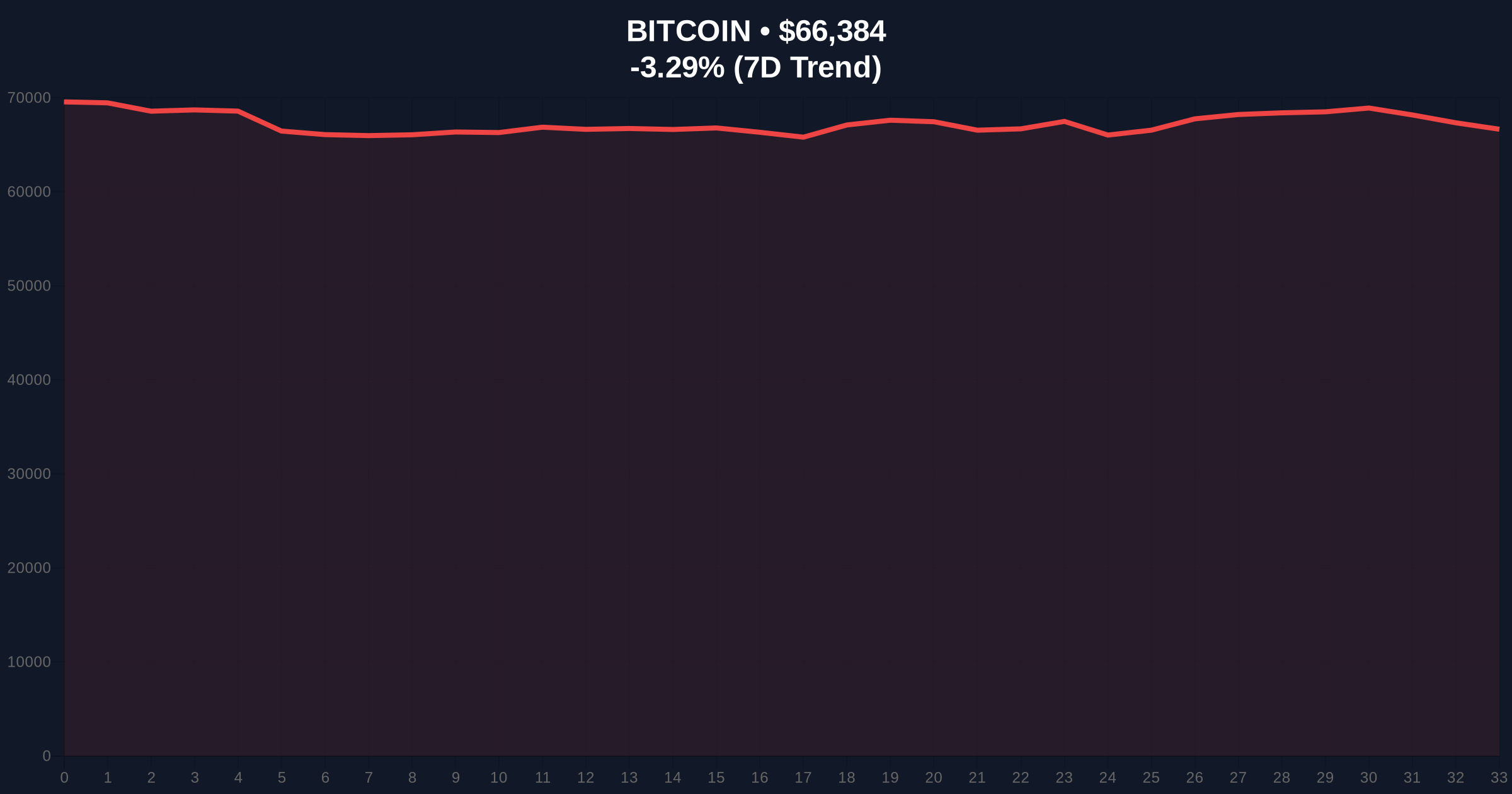
Concrete metrics reveal the scale of this treasury unwinding. Empery Digital (EMPD) sold 370 BTC at an average price of $66,632, generating $24.7 million, leaving the company with 2,989 BTC. Riot Platforms (RIOT) reportedly moved 500 BTC for roughly $34.13 million, reducing its holdings from a peak of over 19,000 BTC to roughly 17,500 BTC. The Bhutan government sold a total of 3,103 BTC, including a single transaction of 375 BTC on March 30. Despite these sales, public bitcoin treasury companies still hold around 1,164,800 BTC, representing over 5% of the total BTC supply. Current market data shows bitcoin trading at $66,381, down 3.30% in the last 24 hours, with global crypto sentiment at "Extreme Fear" (Score: 12/100). Source: public statement, Source: regulatory filing, Source: CoinGecko.
| Entity | Bitcoin Sold | Proceeds/Value | Remaining Holdings |
|---|---|---|---|
| Empery Digital (EMPD) | 370 BTC | $24.7 million | 2,989 BTC |
| Riot Platforms (RIOT) | 500 BTC | $34.13 million | ~17,500 BTC |
| Bhutan Government | 3,103 BTC (total) | Not provided in source data | Not provided in source data |
| Global Market | N/A | Price: $66,381 (-3.30%) | Sentiment: Extreme Fear (12/100) |
Why now? This trend is significant because it occurs during a period of prolonged price weakness and consolidation, which pressures balance sheets and strategic plans for entities that accumulated bitcoin during the previous boom. Falling prices reduce the value of treasury holdings, forcing companies and governments to liquidate assets to meet financial obligations or pivot strategies.
Who benefits? Short-term, sellers benefit by generating liquidity for debt repayment or strategic shifts, but long-term holders and the broader market may face negative impacts from increased selling pressure. Retail investors and traders are particularly affected as liquidation events can exacerbate price declines and volatility.
Time horizons: In the short-term (days/weeks), this unwinding contributes to downward price pressure and market uncertainty. Over longer-term (months/years), it could signal a shift in institutional adoption patterns, potentially slowing corporate bitcoin accumulation until market conditions improve.
Causal chain: The mechanism works as follows: prolonged price weakness → reduced treasury value → balance sheet pressure → liquidation to repay debt/fund pivots → increased selling pressure → further price declines → negative sentiment feedback loop. This creates a self-reinforcing cycle where treasury unwinding amplifies market downturns.
The underlying mechanism involves corporate and sovereign entities responding to financial pressures through strategic bitcoin sales. Companies like Empery Digital and Genius Group are using bitcoin proceeds to repay outstanding debts, with Empery specifically releasing approximately 1,800 BTC that had been held as collateral. This indicates bitcoin is being treated as a liquid asset rather than a permanent reserve. Meanwhile, mining companies like Riot Platforms are selling bitcoin to fund strategic pivots into AI and high-performance computing, reflecting a shift in capital allocation priorities. Sovereign entities like Bhutan are reducing holdings accumulated through state-backed mining operations, suggesting changing national strategies. The process mechanically works through announced sales or blockchain-visible transactions that directly increase sell-side liquidity, potentially overwhelming buy-side demand during weak market conditions.
This treasury unwinding contrasts with other developments in the cryptocurrency space:
The bearish scenario suggests this unwinding could accelerate if prices continue to decline, leading to a cascade of liquidations that overwhelm market support levels. Key risks include:
Counterpoints to consider: Public bitcoin treasury companies still hold over 5% of total supply, suggesting the unwinding is partial rather than complete. Some companies, like Genius Group, stated they will resume building bitcoin treasuries when market conditions improve, indicating this may be a tactical rather than strategic shift.
Practically, this trend may lead to increased volatility in the near term as market participants adjust to changing supply dynamics. Companies may become more cautious about announcing bitcoin acquisitions, potentially slowing the corporate adoption narrative. Regulatory scrutiny could increase if treasury sales are perceived as destabilizing, though no specific regulatory response is indicated in the source data. The market will need to absorb these sales while contending with other factors like ETF flows and macroeconomic conditions.
The bitcoin treasury boom refers to the period when public companies and governments actively accumulated bitcoin as part of their balance sheet strategies, viewing it as a digital reserve asset. This trend gained momentum in the early 2020s as institutional adoption increased, with entities like MicroStrategy leading the way. The current unwinding represents a potential inflection point in this narrative, occurring after bitcoin reached all-time highs and entered a period of consolidation.
Cross-market reactions include Metaplanet's significant bitcoin purchase contrasting with the selling trend, highlighting divergent corporate strategies. Regulatory developments, such as South Korea's FSC expediting stablecoin legislation, may influence broader market sentiment amid the treasury unwinding. Geopolitical factors, including Trump's Iran statements, have contributed to market volatility that compounds the impact of treasury sales.
The unwinding of bitcoin treasuries represents a significant shift in market dynamics, with companies and governments liquidating holdings to address financial pressures during a period of price weakness. While the scale of sales is notable, the broader treasury holdings remain substantial, and some entities indicate potential future accumulation. The market faces increased selling pressure amid extreme fear sentiment, requiring careful monitoring of both liquidation patterns and institutional buying interest.
What to watch next: By James Van Straten|Edited by Omkar Godbole Apr 2, 2026, 9:46 a.m.; : MARA Holdings higher by 10% after selling $1.1 billion in bitcoin to fund debt buyback Bitcoin News More For You Encryption Supremacy: Zcash and Privacy in the Age of Scale By CoinDesk Research Mar 31, 2026 Commissioned byGenZcash Most crypto privacy models weaken as blockchain data grows..
Evidence & Sources
Primary source: https://www.coindesk.com/markets/2026/04/02/the-bitcoin-treasury-boom-is-unwinding-as-some-companies-and-governments-sell-holdings
Updated at: Apr 02, 2026, 12:04 PM
Data window: Apr 02, 2026, 11:46 AM → Apr 02, 2026, 11:53 AM
Evidence stats: 9 metrics, 3 timeline points.
Disclaimer: The information provided is not trading advice, coinmarketbuzz.com holds no liability for any investments made based on the information provided on this page. We strongly recommend independent research and/or consultation with a qualified professional before making any investment decisions.
All published reports are reviewed by our editorial team for factual consistency, neutrality, and reader clarity.