Loading News...
Loading...

Loading News...

VADODARA, April 1, 2026. The following report is based on currently available verified source material and market data.
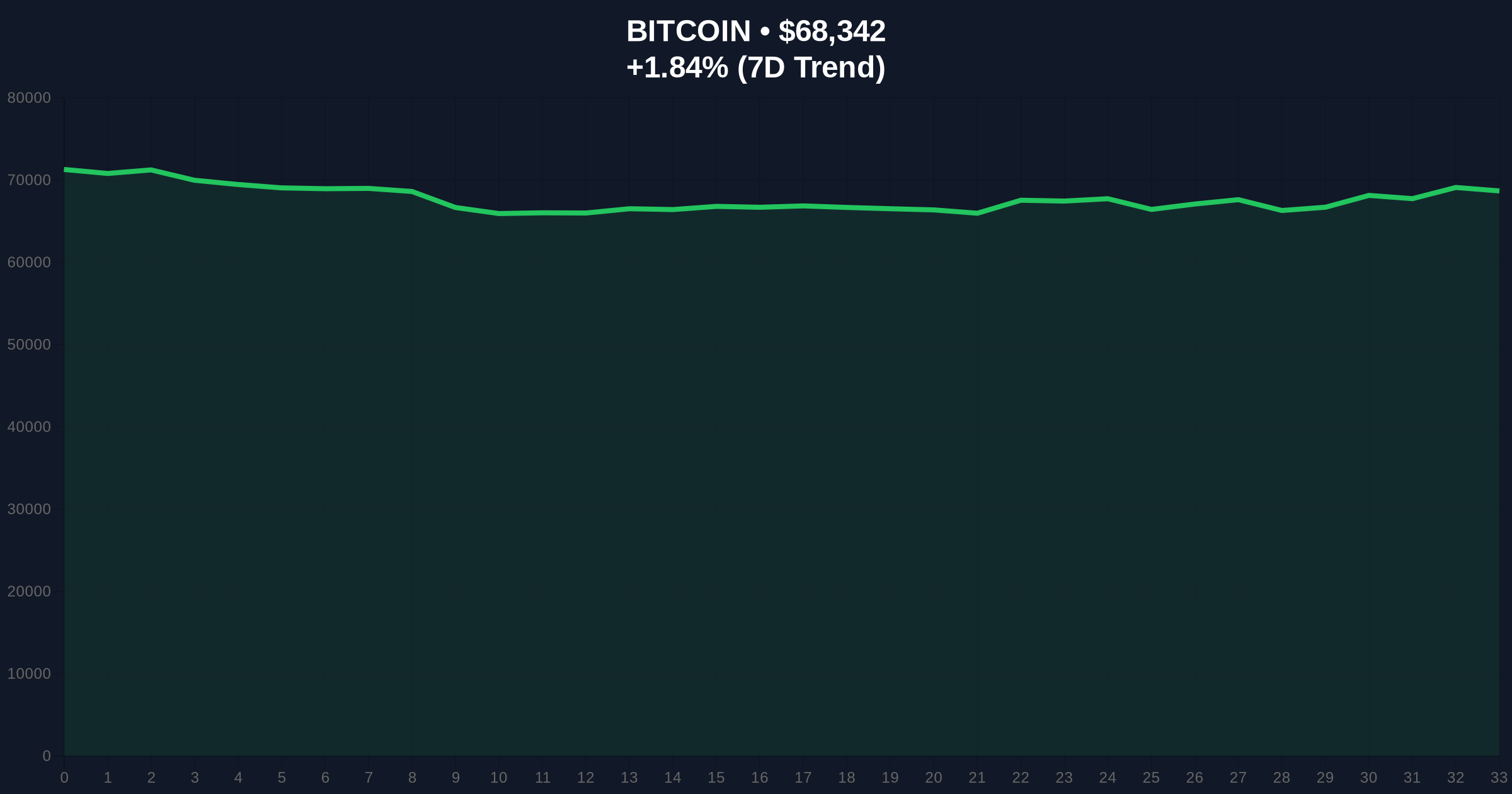
U.S. spot Bitcoin ETFs recorded $1.32 billion in net inflows in March 2026, marking their first monthly inflows since October and ending a four-month streak of outflows, according to SoSoValue data. This development, reported on April 1, 2026, coincides with Bitcoin's first positive monthly candle in six months and a stabilization around $68,314, suggesting a potential shift in market momentum after a 50% decline from October's all-time high of $126,000. The inflows highlight institutional resilience as ETF assets under management dropped only 7.2% at their lowest point, despite significant price volatility and an average investor cost basis near $84,000 that remains above current prices.
The March inflows represent a notable reversal from previous months, with November seeing $3.5 billion in outflows, followed by $1.1 billion in December, $1.6 billion in January, and $206 million in February. ETF holdings declined from 1.38 million BTC in October to a low of 1.28 million BTC, a drop of roughly 7%, and have since recovered to around 1.31 million BTC, according to CheckonChain. Bitcoin's current price is $68,314 with a 24-hour trend of 1.80%, while global crypto sentiment is "Extreme Fear" with a score of 8/100, indicating underlying market tension despite the positive ETF flow data.
| Metric | Value | Source |
|---|---|---|
| March ETF Net Inflows | $1.32 billion | Source: public statement |
| Bitcoin Current Price | $68,314 | Source: CoinGecko |
| ETF AUM Drop from October Highs | 7.2% | Source: public statement |
| Bitcoin Price Decline from October High | 50% | Source: public statement |
| Global Crypto Sentiment | Extreme Fear (Score: 8/100) | Source: CoinGecko |
Why now? The inflows occur as Bitcoin stabilizes after a sharp correction, with the price down 50% from its October peak but showing signs of bottoming, similar to the 2021 correction where drawdowns shrank as institutional participation grew. This timing suggests that institutional buyers may be re-entering at perceived support levels, leveraging the ETF structure for exposure without direct custody risks.
Who benefits? Institutional investors and ETF issuers gain from renewed inflows, which boost assets under management and fee revenue. Retail investors with lower cost bases may benefit from reduced selling pressure, while those underwater near $84,000 face continued losses unless prices recover further.
Time horizons: Short-term, the inflows could provide price support and reduce volatility over days to weeks. Long-term, sustained inflows may signal deeper institutional adoption, potentially leading to more stable market cycles over months to years.
Causal chain: ETF inflows → increased buying pressure on underlying Bitcoin → reduced net selling from ETFs → price stabilization → potential retail FOMO if momentum continues. This mechanism contrasts with the outflows from November to February, which exacerbated the price decline.
The ETF inflow mechanism works through authorized participants creating new ETF shares by purchasing Bitcoin in the spot market, which directly increases demand and absorbs sell-side liquidity. When net inflows occur, as in March, this creates a bullish pressure loop: more shares are created, more Bitcoin is bought, and price support strengthens. Conversely, during outflows, shares are redeemed and Bitcoin is sold, adding downward pressure. The resilience of ETF AUM, dropping only 7.2% despite a 50% price decline, indicates that outflows were relatively contained, possibly due to long-term holders avoiding panic selling, similar to patterns seen in maturing markets like traditional equities.
This development aligns with broader crypto industry trends where institutional products are gaining traction despite market volatility. For context:
Despite the positive inflows, several risks could invalidate the bullish narrative:
Practically, traders should monitor ETF flow data weekly to gauge institutional sentiment, as sustained inflows could signal a longer-term uptrend. Regulatory developments, such as potential approvals in other jurisdictions, may further boost ETF adoption. In the near term, price action around the $68,000 level will test whether the inflows translate into meaningful technical support.
Bitcoin ETFs were launched to provide regulated exposure to Bitcoin, with assets under management peaking in October 2025 before the recent downturn. The four-month outflow streak from November 2025 to February 2026 coincided with Bitcoin's decline from $126,000, reflecting investor caution during market corrections. Historically, ETF flows have correlated with price trends, though AUM resilience during this period suggests structural maturation compared to earlier cycles.
Cross-market reactions include increased institutional activity, such as Franklin Templeton's crypto push, and regulatory challenges, like Hong Kong's missed stablecoin deadline. These developments underscore the complex where ETF inflows occur, balancing growth opportunities with regulatory and market risks.
The March ETF inflows break a negative streak and align with Bitcoin's price stabilization, offering a cautious signal of institutional confidence. However, risks remain due to high investor cost bases and extreme fear sentiment, requiring close monitoring of flow continuity and macroeconomic factors.
Q1: What caused the ETF inflows in March?The inflows likely resulted from institutional buying as Bitcoin stabilized after a 50% decline, with mechanisms involving authorized participants creating new ETF shares.
Q2: How do ETF inflows affect Bitcoin's price?Inflows increase buying pressure on spot Bitcoin, providing price support and potentially reducing volatility through direct market purchases.
Q3: What is the significance of the 7.2% AUM drop?It shows ETF holdings were resilient despite the price crash, indicating that outflows were limited and long-term holders may be staying put.
Q4: Are retail investors driving the inflows?Not provided in source data; the data does not specify investor types, leaving uncertainty about whether institutions or retail are predominant.
Q5: What happens if outflows resume?Resumed outflows could reverse the buying pressure, leading to increased selling and potential price declines, especially if coupled with negative sentiment.
Q6: How does this compare to past market cycles?Similar to the 2021 correction, drawdowns have shrunk, suggesting maturing market structure, but analysts debate whether further declines are possible.
Traders and analysts are watching next whether ETF inflows persist into April, as continuity will be key to confirming a sustained shift in institutional sentiment and price momentum.
Evidence & Sources
Primary source: https://www.coindesk.com/markets/2026/04/01/bitcoin-etfs-post-first-inflows-since-october-as-price-stabilizes
Updated at: Apr 01, 2026, 05:47 PM
Data window: Apr 01, 2026, 12:05 PM → Apr 01, 2026, 04:43 PM
Evidence stats: 9 metrics, 2 timeline points.
Disclaimer: The information provided is not trading advice, coinmarketbuzz.com holds no liability for any investments made based on the information provided on this page. We strongly recommend independent research and/or consultation with a qualified professional before making any investment decisions.
All published reports are reviewed by our editorial team for factual consistency, neutrality, and reader clarity.