Loading News...
Loading...

Loading News...

VADODARA, April 9, 2026. The following report is based on currently available verified source material and market data.
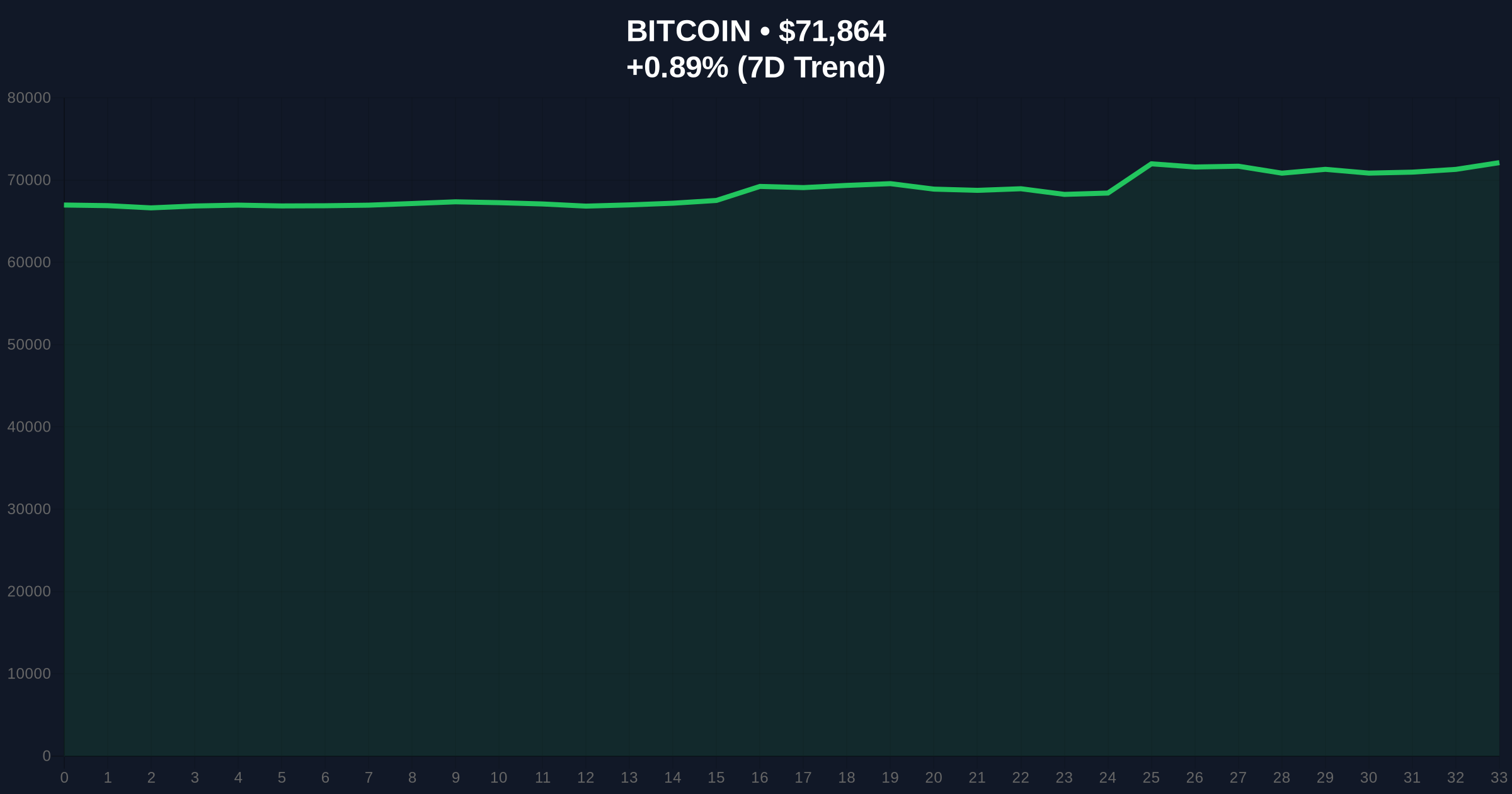
On April 9, 2026, Bitcoin whales holding coins for over seven years sold approximately $271 million in BTC, marking the largest such activity since January. This profit-taking event occurs as Bitcoin trades around $71,862 with a 0.89% 24-hour gain, while global crypto sentiment registers "Extreme Fear" at 14/100. The market now faces a critical test of whether current absorption capacity can prevent the price decline that followed similar whale selling in January.
Key metrics from the whale activity and current market conditions include a $271 million sale by long-term holders, Bitcoin's price holding in the $70,000-$72,000 range, and a 13% correction that followed a $280 million outflow in January. Current on-chain data shows the 30-day net position change for long-term holders remained positive at 88,000 BTC on April 9, reversing from -152,000 BTC in February. The total balance of accumulating cohorts exceeded 4.3 million BTC on Tuesday and rose to 4.5 million on Thursday, indicating sustained transfer to stronger hands.
| Metric | Value | Source |
|---|---|---|
| Whale Sale Amount | $271 million | Source: public statement |
| Bitcoin Current Price | $71,862 | Source: CoinGecko |
| 24-Hour Trend | +0.89% | Source: CoinGecko |
| Global Crypto Sentiment | Extreme Fear (14/100) | Source: market intelligence |
| Previous Correction | 13% after $280M outflow | Source: public statement |
This whale activity matters now because Bitcoin sits at a technical level between $70,000-$72,000 following months of consolidation. The timing coincides with extreme fear sentiment across crypto markets, creating a potential inflection point where whale selling could trigger broader panic or demonstrate market resilience.
Short-term traders and swing investors face immediate volatility risk from large sell orders, while long-term holders benefit from reduced overhead supply pressure as coins transfer to accumulating cohorts. Institutions and ETF investors may see this as a buying opportunity if absorption proves strong, similar to patterns in 2015, 2019, 2020, and 2023 when the Sharpe Ratio dropped to -40.
The causal chain operates through whale selling → increased circulating supply → price pressure → absorption by other buyers → price stability or decline. Unlike January's fragile market, current on-chain metrics suggest stronger absorption capacity, potentially preventing the 13% correction that followed the previous whale outflow.
The whale selling mechanism involves long-term holders (7+ years) executing profit-taking transactions that move coins from dormant wallets to active circulation. This increases available supply on exchanges and OTC desks, creating immediate sell-side pressure. The market response depends on absorption capacity, whether other buyers (institutions, ETFs, retail) can purchase this supply without significant price concessions.
Underlying this trend, the buy-and-sell pressure delta indicates completed capitulation with intense sell pressure below -0.05, now moving toward neutral territory. This signals forced selling has eased while demand gradually rebuilds. The short-term Sharpe Ratio at -40 historically marks accumulation phases, suggesting institutional buyers may be positioned to absorb whale sales.
Compared to adjacent crypto developments, Bitcoin whale activity contrasts with:
This divergence highlights Bitcoin's unique position as both a store of value subject to long-term holder profit-taking and a liquidity anchor for the broader crypto ecosystem.
Several risks could invalidate the bullish absorption narrative:
Uncertainty remains regarding the exact timing of sales and whether $271 million represents the full extent of whale distribution. The failure condition would be absorption metrics turning negative while prices break below $70,000, potentially triggering a cascade similar to January's 13% correction.
Practically, traders should monitor the $70,000-$72,000 range for breakdown or consolidation. If absorption proves sufficient, Bitcoin could establish this zone as support for the next leg higher. If not, a retest of lower levels near $65,000 becomes probable. Institutions will watch ETF flow data and on-chain metrics for confirmation of sustained demand.
Historically, Bitcoin whale movements have preceded both major corrections and consolidation periods. The January 2026 $280 million outflow that triggered a 13% correction established a precedent for how large sales can impact prices when absorption is weak. Current conditions differ with stronger on-chain metrics, but the psychological impact of similar-sized sales creates natural concern among market participants.
Cross-market reactions include the CoinDesk 20 Index declining 0.6% as Bitcoin trades flat, suggesting broader crypto weakness beyond Bitcoin-specific dynamics. Meanwhile, extreme fear sentiment pervades markets amid geopolitical tensions and economic uncertainty, potentially amplifying the impact of whale selling on retail psychology.
The $271 million Bitcoin whale sale tests market resilience at a critical juncture, with absorption metrics suggesting stronger fundamentals than January but extreme fear sentiment creating vulnerability. The outcome will likely determine whether Bitcoin holds the $70,000-$72,000 range or experiences another significant correction.
Q1: How much Bitcoin did whales sell?Old Bitcoin whales sold approximately $271 million in BTC, according to data from Capriole Investments.
Q2: When did this whale selling occur?The sales occurred on Sunday, April 9, 2026, though the exact timing within the day is not provided in source data.
Q3: What happened after similar whale selling in January?A $280 million outflow in January preceded a 13% Bitcoin price correction from $90,000 to $78,700 within two weeks.
Q4: How is the current market different from January?Current on-chain data shows positive net position changes for long-term holders and stronger absorption capacity, with the 30-day net change at 88,000 BTC versus -152,000 BTC in February.
Q5: What price range is Bitcoin trying to hold?Bitcoin is attempting to maintain the $70,000-$72,000 range, according to on-chain analysis of supply absorption patterns.
Q6: What is the current market sentiment?Global crypto sentiment registers "Extreme Fear" with a score of 14/100, according to market intelligence data.
Traders and analysts are closely watching whether absorption metrics remain positive as Bitcoin tests the $70,000 support level following the whale distribution.
What to watch next: next official follow-up statements; exchange-level volume and liquidity data.
Evidence & Sources
Primary source: https://cointelegraph.com/markets/old-bitcoin-whales-sold-dollar271m-in-btc-is-the-crypto-rally-at-stake
Updated at: Apr 09, 2026, 09:01 PM
Data window: Apr 09, 2026, 08:41 PM → Apr 09, 2026, 08:55 PM
Evidence stats: 9 metrics, 0 timeline points.
Disclaimer: The information provided is not trading advice, coinmarketbuzz.com holds no liability for any investments made based on the information provided on this page. We strongly recommend independent research and/or consultation with a qualified professional before making any investment decisions.
All published reports are reviewed by our editorial team for factual consistency, neutrality, and reader clarity.