Loading News...
Loading...

Loading News...

VADODARA, April 10, 2026. The following report is based on currently available verified source material and market data.
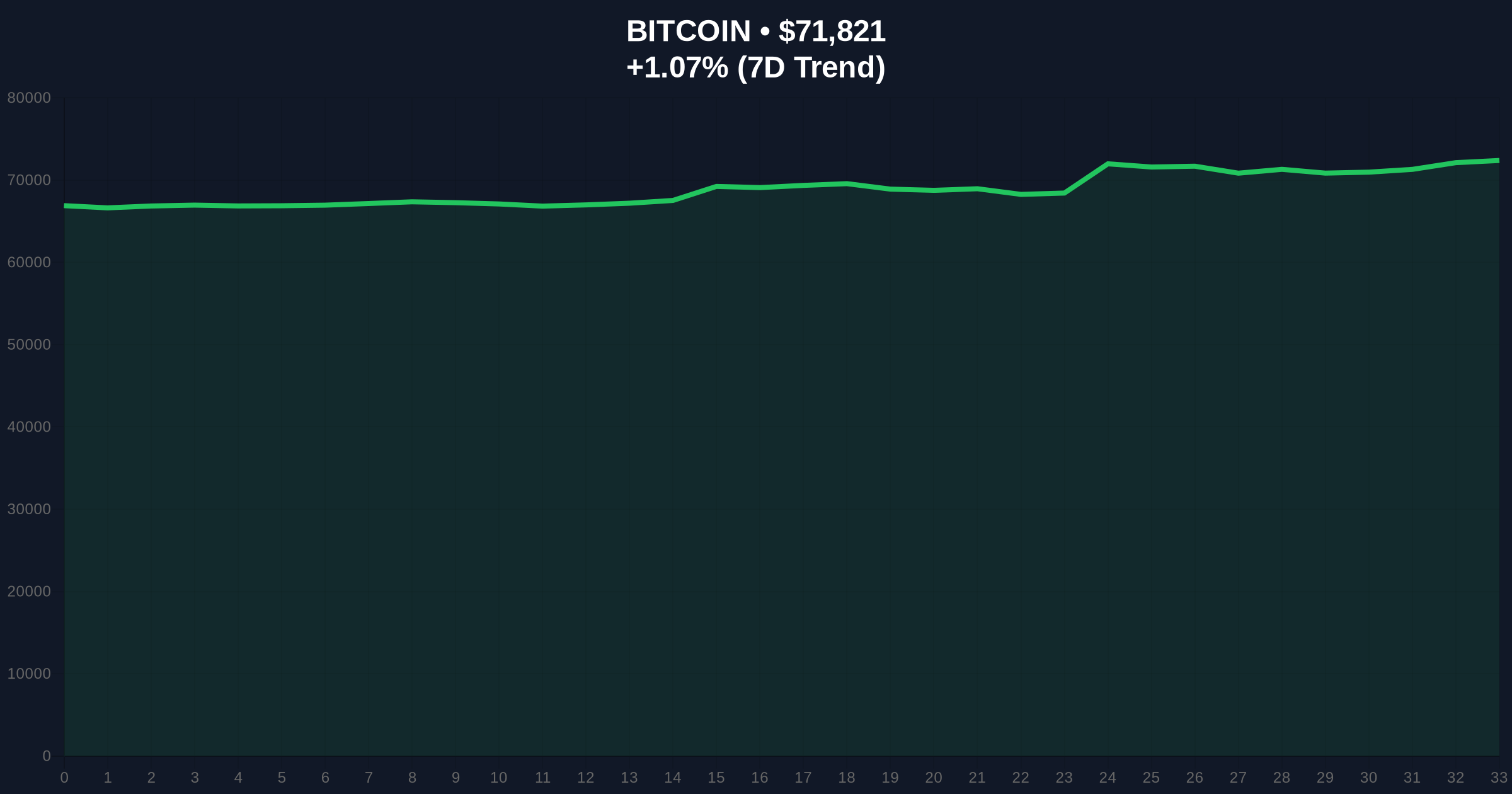
Bitcoin options with a notional value of $1.9 billion are set to expire at 8:00 a.m. UTC today, April 10, 2026, according to data from crypto options exchange Deribit. This event matters because large options expirations can create significant volatility and price pressure around the max pain price, which is $69,000 for Bitcoin. The current market impact shows Bitcoin trading at $71,821 with a 24-hour trend of 1.07%, while the global crypto sentiment remains in "Extreme Fear" with a score of 16/100, indicating heightened uncertainty among traders.
The expiration involves Bitcoin options worth $1.9 billion and Ethereum options worth $330 million, both expiring simultaneously. Key metrics include a put/call ratio of 0.71 for Bitcoin and 0.77 for Ethereum, with max pain prices set at $69,000 and $2,050, respectively. Source: exchange data. Current Bitcoin price is $71,821 with a 24-hour trend of 1.07%. Source: CoinGecko. Global crypto sentiment is "Extreme Fear" (Score: 16/100). Not provided in source data for specific sentiment source.
| Asset | Options Value | Put/Call Ratio | Max Pain Price | Current Price |
|---|---|---|---|---|
| Bitcoin (BTC) | $1.9 billion | 0.71 | $69,000 | $71,821 |
| Ethereum (ETH) | $330 million | 0.77 | $2,050 | Not provided in source data |
Why now? This expiration occurs amid a market environment of "Extreme Fear," where sentiment scores are low, potentially amplifying volatility as traders react to price movements around the max pain level. Who benefits? Market makers and sophisticated traders may profit from hedging activities and volatility arbitrage, while retail traders face increased risk of sudden price swings. Time horizons: Short-term impact includes potential price volatility and liquidity shifts over the next few days; longer-term implications depend on whether this expiration alters market structure or sentiment trends. Causal chain: Options expiration → market makers adjust hedges → liquidity changes around max pain price → potential price pressure → retail trader reactions based on sentiment.
Options expirations work through a mechanical process where market makers, who have sold these contracts, may need to buy or sell underlying assets to hedge their positions as expiration approaches. The put/call ratio of 0.71 indicates more call options than puts, suggesting bullish sentiment among option holders, but the max pain price of $69,000 represents the level where most options expire worthless, creating incentive for price movement toward that point. For Bitcoin, with current price at $71,821 above max pain, there is potential downward pressure as market makers unwind hedges, similar to mechanisms seen in past expirations during volatile periods.
This event mirrors patterns in traditional finance where options expirations, such as quarterly OPEX events, often lead to increased volatility. In crypto, similar large expirations have historically coincided with price swings, especially when sentiment is extreme.
The bearish scenario includes the possibility that price impact is minimal if market makers have already adjusted hedges or if liquidity is sufficient to absorb flows. Uncertainty arises from missing data on open interest distribution and trader positioning beyond the provided metrics.
In the near term, traders should monitor price action around $69,000 for signs of support or resistance, and watch for changes in liquidity on derivatives exchanges. This expiration could set a precedent for how options markets behave during periods of extreme sentiment, influencing future hedging strategies.
Options are financial derivatives that give holders the right to buy or sell an asset at a set price, with expirations often acting as catalysts for market activity. Max pain price is a concept where the price at expiration causes the maximum financial loss to option holders, frequently influencing short-term price movements.
Amid recent market uncertainty, related articles include discussions on the Crypto Fear & Greed Index stuck in 'Extreme Fear', Senate Banking Committee hearings affecting crypto markets, Bitcoin rally extensions, and divergent sentiment between US stocks and crypto. These contexts highlight the broader environment influencing today's options expiration.
The expiration of $1.9 billion in Bitcoin options today presents a key test for market stability, with mechanisms around max pain and hedging likely to drive short-term volatility, all set against a backdrop of extreme fear in the crypto sector.
Q1: What is the max pain price for Bitcoin options?The max pain price is $69,000, where most Bitcoin options would expire worthless.
Q2: How does the put/call ratio affect the market?A ratio of 0.71 indicates more call options than puts, suggesting bullish sentiment among option holders, but this doesn't guarantee price direction.
Q3: What time do the options expire?They expire at 8:00 a.m. UTC on April 10, 2026.
Q4: Why is global crypto sentiment in 'Extreme Fear'?Not provided in source data for specific reasons, but the score of 16/100 reflects high uncertainty among market participants.
Q5: How does this compare to past options expirations?Not provided in source data for historical details, but similar large expirations have often led to increased volatility.
Q6: What should traders watch next?Traders are watching price action around $69,000 and any shifts in liquidity or sentiment post-expiration.
Analysts are closely monitoring whether Bitcoin's price converges toward the $69,000 max pain level and how market makers' hedging activities unfold in the hours following expiration.
Evidence & Sources
Primary source: https://coinness.com/news/1154157
Updated at: Apr 10, 2026, 02:20 AM
Data window: Apr 10, 2026, 02:08 AM → Apr 10, 2026, 02:08 AM
Evidence stats: 7 metrics, 3 timeline points.
Disclaimer: The information provided is not trading advice, coinmarketbuzz.com holds no liability for any investments made based on the information provided on this page. We strongly recommend independent research and/or consultation with a qualified professional before making any investment decisions.
All published reports are reviewed by our editorial team for factual consistency, neutrality, and reader clarity.