Loading News...
Loading...

Loading News...

VADODARA, January 5, 2026 — Binance, the world's largest cryptocurrency exchange by volume, has absorbed approximately $2.4 billion in Bitcoin (BTC) and Ethereum (ETH) deposits over the past seven days, according to on-chain data from CryptoQuant. This daily crypto analysis reveals a critical market structure shift: while inflows signal potential selling pressure, the lack of commensurate stablecoin deposits suggests weak immediate buying power to absorb these assets. Market structure indicates this imbalance could act as a near-term cap on price appreciation, particularly as whale withdrawal volumes decline, pointing to diminished long-term holding conviction.
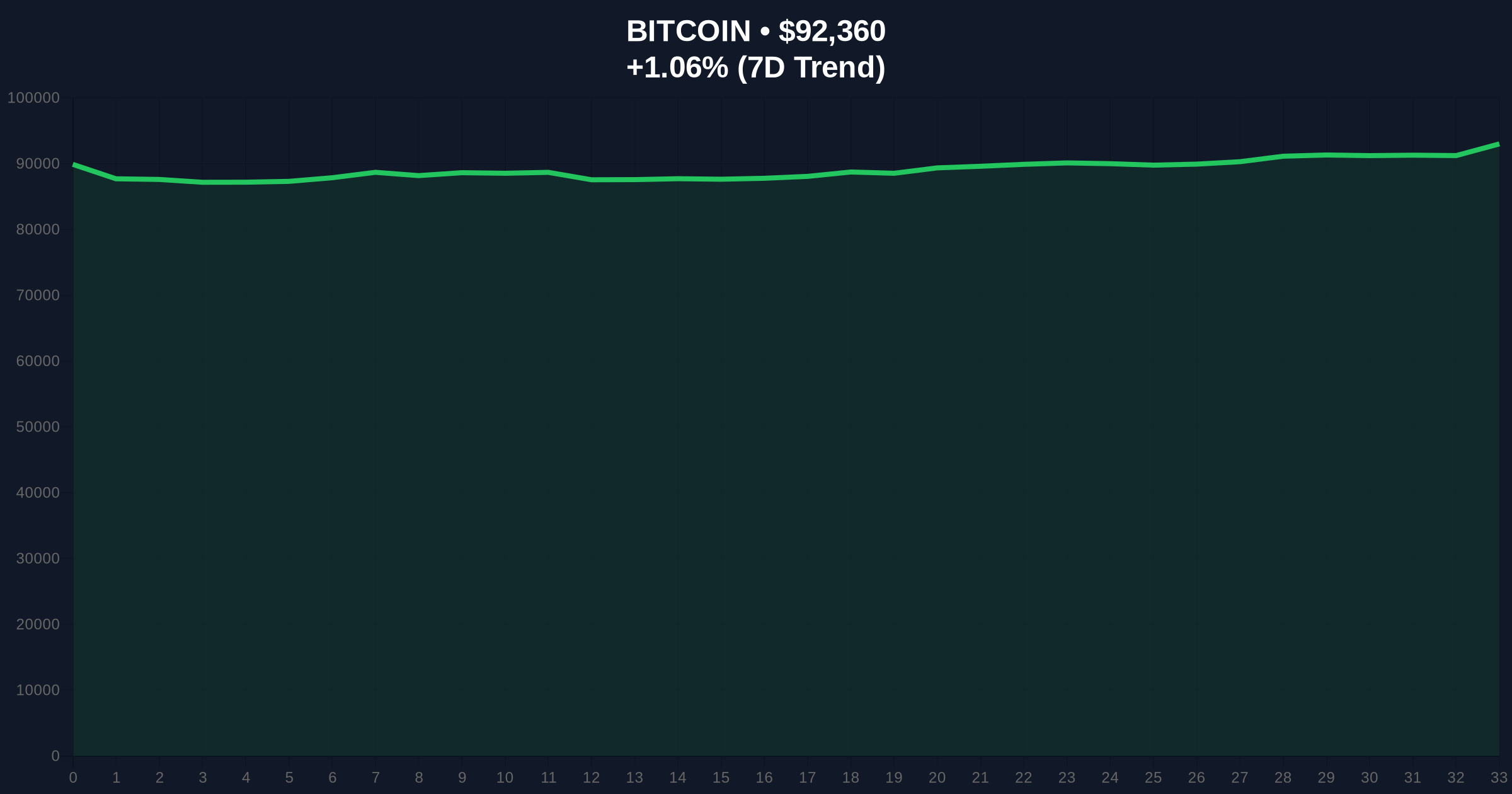
Exchange net flows serve as a primary on-chain metric for gauging market sentiment. Historically, large inflows correlate with increased selling pressure, as holders move assets to exchanges for liquidation. Conversely, outflows often signal accumulation or long-term holding. The current $2.4 billion inflow event mirrors patterns observed during the 2021 bull market correction, where similar deposit surges preceded significant price drawdowns. Underlying this trend is a broader macroeconomic backdrop of tightening liquidity, as noted in recent Federal Reserve communications regarding interest rate policy. Related developments include analysis of tax selling declines and speculation on large Bitcoin stashes, which further contextualize volatility drivers.
According to CryptoQuant data cited by Cointelegraph, Binance received roughly $1.33 billion in BTC and $1.07 billion in ETH deposits over the past week. In contrast, stablecoin inflows during the same period totaled only $42 million, as reported by analyst CryptoOnchain. This disparity highlights a liquidity grab where sell-side pressure outweighs buy-side capacity. , CryptoOnchain noted a decrease in BTC withdrawals from exchanges, suggesting reduced demand from whale investors for long-term custody. The combination of rising exchange balances and falling withdrawal volumes creates a supply overhang that market mechanics must resolve through price discovery.
Bitcoin's price action currently hovers around $92,329, with a 24-hour trend of 1.03%. On-chain data indicates that the $90,000 level represents a critical Volume Profile Point of Control (POC), where significant historical trading activity provides support. The Relative Strength Index (RSI) sits at 52, suggesting neutral momentum, but the 50-day Exponential Moving Average (EMA) at $88,500 offers additional dynamic support. A Fair Value Gap (FVG) exists between $94,000 and $95,500, which price may need to fill to sustain bullish momentum. However, the large exchange inflows create a bearish Order Block near current levels, increasing the probability of a retest of lower supports. Bullish Invalidation is set at $90,000; a break below this level would confirm selling pressure dominance. Bearish Invalidation lies at $96,000, where a breakout could negate the inflow overhang thesis.
| Metric | Value | Source |
|---|---|---|
| Binance BTC Inflows (7-day) | $1.33B | CryptoQuant |
| Binance ETH Inflows (7-day) | $1.07B | CryptoQuant |
| Stablecoin Inflows (7-day) | $42M | CryptoOnchain |
| Bitcoin Current Price | $92,329 | Live Market Data |
| Crypto Fear & Greed Index | 26/100 (Fear) | Alternative.me |
This development matters because it exposes a fundamental liquidity mismatch in the market. For institutional investors, large exchange inflows without corresponding stablecoin deposits indicate a reduction in immediate buying power, potentially delaying entry points for large-scale accumulation. Retail traders face increased volatility risk, as the supply overhang could trigger stop-loss cascades if key supports fail. The decline in whale withdrawals further suggests a shift in high-net-worth investor behavior, possibly due to macroeconomic uncertainties or profit-taking ahead of potential regulatory shifts. Consequently, market efficiency is compromised, as order book depth on the buy-side may be insufficient to absorb sudden sell orders, leading to exaggerated price moves.
Market analysts on X/Twitter have synthesized this data into cautious outlooks. One prominent quant noted, "The stablecoin ratio to BTC inflows is at a yearly low, signaling a classic distribution phase." Others point to Ethereum's technical evolution, such as the ongoing Pectra upgrade including EIP-4844, as a potential counterbalance to selling pressure by improving network utility. However, the prevailing sentiment aligns with fear, as reflected in the Crypto Fear & Greed Index score of 26. Bulls argue that this inflow event could be a precursor to a gamma squeeze if options markets become imbalanced, but bears emphasize the historical precedent of such flows preceding corrections.
Bullish Case: If Bitcoin holds the $90,000 support and stablecoin inflows accelerate, the market could absorb the exchange supply, leading to a rally toward the $96,000 resistance. Increased institutional adoption, as hinted in recent SEC filings for crypto ETFs, might provide fundamental support. Ethereum's ongoing upgrades could also attract capital, reducing net selling pressure. Under this scenario, the Fair Value Gap up to $95,500 is filled within two weeks.
Bearish Case: If whale demand continues to wane and stablecoin inflows remain subdued, the supply overhang could push Bitcoin below $90,000, targeting the 50-day EMA at $88,500. A break below this level might trigger a liquidity grab down to $85,000, where previous order blocks reside. Macroeconomic factors, such as Federal Reserve policy tightening, could exacerbate this move, leading to a prolonged consolidation phase.
Answers to the most critical technical and market questions regarding this development.

Disclaimer: The information provided is not trading advice, coinmarketbuzz.com holds no liability for any investments made based on the information provided on this page. We strongly recommend independent research and/or consultation with a qualified professional before making any investment decisions.
coinmarketbuzz.com leverages advanced AI technology to analyze market data. All content is fact-checked and reviewed by our editorial team to ensure accuracy and neutrality.