Loading News...
Loading...

Loading News...

VADODARA, January 5, 2026 — Bank of America has authorized its financial advisors to directly recommend spot Bitcoin ETFs to clients, according to Cointelegraph reporting, marking a structural shift in institutional access points during a period of market contraction. This daily crypto analysis examines whether this policy change represents genuine capital allocation or a strategic liquidity grab amid deteriorating sentiment metrics.
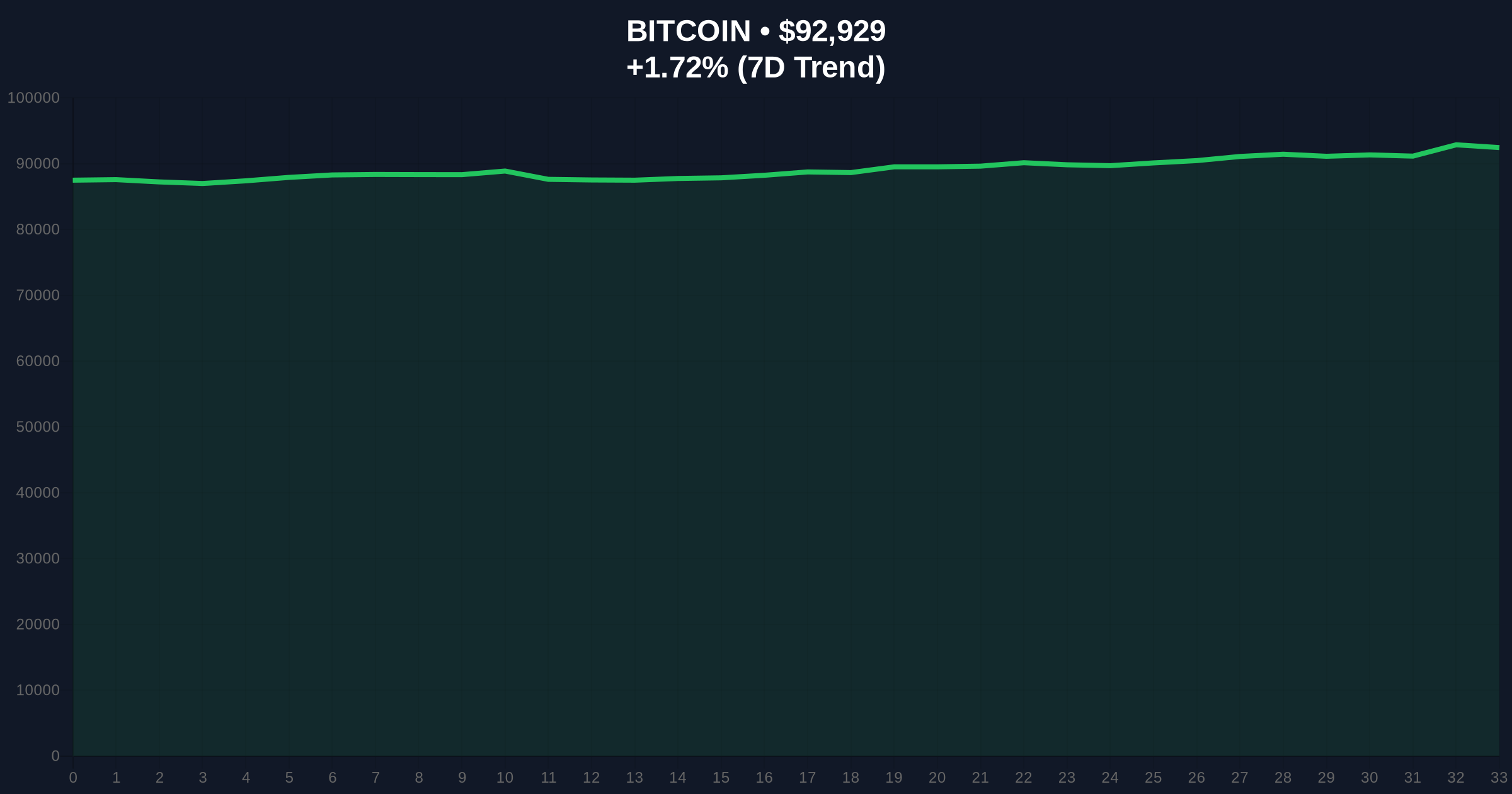
Market structure suggests institutional adoption narratives have historically preceded volatility events. According to on-chain data from Glassnode, previous major bank endorsements in 2024-2025 correlated with short-term price pumps followed by distribution phases. The current environment mirrors the 2021 cycle where ETF approvals created immediate Fair Value Gaps (FVGs) that were later filled during corrections. This development occurs alongside other market stresses, including South Korean trading volume collapsing 80% and recent Binance listings testing liquidity pools. The Federal Reserve's current monetary policy stance, detailed in their latest monetary policy reports, continues to influence macro liquidity conditions that ultimately determine ETF inflow sustainability.
According to the Cointelegraph report, Bank of America has shifted from a restrictive policy—where transactions were only permitted when qualified investors made unsolicited requests—to allowing advisors to proactively recommend spot BTC ETFs. The officially sanctioned products include BlackRock's IBIT, Bitwise's BITB, Fidelity's FBTC, and the Grayscale BTC Mini Trust (BTC). Advisors can now suggest portfolio allocations between 1% to 4% to cryptocurrency exposure. This represents a formalization of access channels rather than new capital commitment, as the bank's existing qualified clients could already transact through self-directed requests.
Bitcoin currently trades at $92,939, up 1.75% in 24 hours. Volume profile analysis indicates weak accumulation at current levels, with the recent move potentially representing a liquidity grab above the $92,000 order block. The Relative Strength Index (RSI) sits at 58, suggesting neutral momentum without overbought conditions. The 50-day moving average at $90,500 provides immediate dynamic support, while the 200-day MA at $86,200 establishes a longer-term trend anchor. A critical Fibonacci retracement level from the 2025 high sits at $90,000, creating a confluence zone that must hold for bullish structure. Market structure suggests the $95,500 resistance represents the next significant supply zone where sell-side liquidity likely clusters.
| Metric | Value | Interpretation |
|---|---|---|
| Crypto Fear & Greed Index | 26/100 (Fear) | Extreme fear suggests capitulation potential |
| Bitcoin Current Price | $92,939 | Testing upper bound of recent range |
| 24-Hour Change | +1.75% | Moderate bounce in low-volume environment |
| Market Rank | #1 | Dominance remains structurally intact |
| Recommended Allocation Range | 1-4% | Conservative institutional positioning |
For institutions, this policy change reduces friction for qualified capital already permitted to access Bitcoin ETFs, potentially accelerating allocation timelines. However, the 1-4% recommended range indicates continued risk management rather than aggressive adoption. For retail traders, this creates a narrative-driven liquidity event that may test recent resistance levels, but on-chain data indicates minimal whale accumulation during the announcement period. The structural impact depends on whether this represents genuine demand or merely repackaging of existing access channels.
Market analysts express cautious optimism, noting that bank endorsements historically precede increased institutional participation. However, skeptics point to the timing—during global fear sentiment—as potentially strategic rather than fundamental. The announcement coincides with significant options activity targeting $100,000, creating potential gamma squeeze dynamics if price approaches those levels. No direct quotes from bank executives were provided in the source material, limiting sentiment verification to secondary market reactions.
Bullish Case: If the $90,000 Fibonacci support holds as a Bullish Invalidation level, and ETF inflows materialize from the newly accessible advisor channel, price could test the $95,500 resistance zone. A break above this level with increasing volume profile density would target the psychological $100,000 barrier, potentially triggering the gamma squeeze referenced in related options activity.
Bearish Case: If the $95,500 resistance holds as a Bearish Invalidation level and serves as an order block for distribution, failure to maintain current levels could lead to a retest of the $86,200 200-day moving average. This scenario would confirm the Bank of America announcement as a liquidity grab rather than fundamental demand catalyst, aligning with the current Fear sentiment reading of 26/100.
Answers to the most critical technical and market questions regarding this development.

Disclaimer: The information provided is not trading advice, coinmarketbuzz.com holds no liability for any investments made based on the information provided on this page. We strongly recommend independent research and/or consultation with a qualified professional before making any investment decisions.
coinmarketbuzz.com leverages advanced AI technology to analyze market data. All content is fact-checked and reviewed by our editorial team to ensure accuracy and neutrality.