Loading News...
Loading...

Loading News...

VADODARA, April 16, 2026. The following report is based on currently available verified source material and market data.
U.S. spot Ethereum ETFs recorded approximately $67.9 million in net inflows on April 15, 2026, marking the fifth consecutive day of positive flows with no outflows reported, according to data from Farside Investors. This sustained institutional demand occurs against a backdrop of "Extreme Fear" in global crypto sentiment, as measured by a score of 23/100, highlighting a divergence between ETF activity and broader market anxiety. The inflows signal growing institutional confidence in Ethereum's long-term prospects, potentially providing price support and influencing market structure during a volatile period.
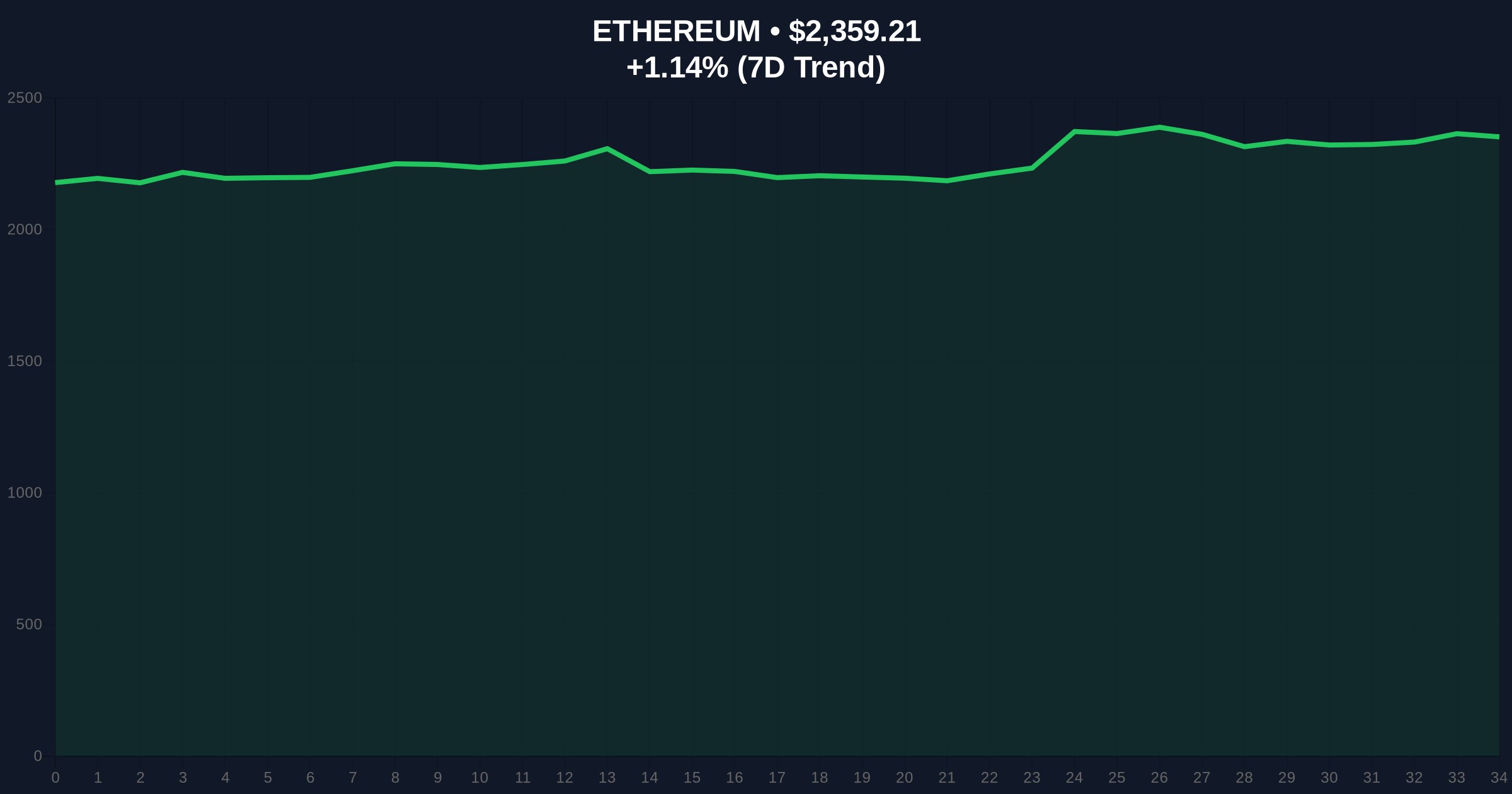
The net inflows of $67.9 million on April 15, 2026, contributed to a five-day streak of positive flows, with individual ETF contributions detailed below. Ethereum's price stood at $2,360.46 at the time of reporting, showing a 1.21% increase over 24 hours, while its market rank remained #2. Source: public statement for ETF data; Source: CoinGecko for price and sentiment metrics.
| ETF | Net Inflow (April 15) |
|---|---|
| BlackRock's ETHA | +$31.5 million |
| BlackRock's Staking ETHB | +$9.8 million |
| Franklin Templeton's EZET | +$1.8 million |
| Grayscale's Mini ETH | +$24.8 million |
Why now? The inflows arrive during a period of "Extreme Fear" in crypto markets, suggesting institutions may be accumulating Ethereum at discounted prices, similar to patterns seen in past corrections like 2021. This timing could indicate a strategic move to build positions before potential market recovery.
Who benefits? Institutional investors and ETF issuers like BlackRock and Grayscale gain from increased assets under management and fee revenue. Retail traders may benefit indirectly through reduced selling pressure and potential price appreciation, while developers could see enhanced ecosystem funding.
Time horizons: Short-term (days/weeks), the inflows provide immediate buying pressure, potentially stabilizing prices amid fear. Long-term (months/years), sustained ETF adoption could drive deeper institutional integration and regulatory acceptance for Ethereum.
Causal chain: ETF inflows → direct buying of underlying ETH by issuers → decreased available supply on exchanges → reduced selling pressure → price support → potential retail FOMO if sentiment shifts.
Spot Ethereum ETFs work by issuing shares that represent direct ownership of Ethereum, requiring issuers to purchase and hold the underlying asset in custody. When net inflows occur, as seen with the $67.9 million on April 15, issuers must buy equivalent amounts of ETH from the market, mechanically increasing demand. This process drains liquidity from exchanges, particularly in thin order books, which can amplify price impacts. The consecutive days of inflows suggest a sustained accumulation pattern, where institutional buyers are systematically adding to positions rather than making one-off trades, creating a structural bid that supports prices even during broader market fear.
The Ethereum ETF inflows contrast with broader market trends, where fear dominates and other assets face challenges. For context:
The bullish narrative hinges on continued ETF inflows, but several risks could invalidate this trend:
In the near term, traders should monitor whether the five-day inflow streak extends, as sustained accumulation could signal a bottom formation during fear periods. If inflows persist, they may gradually shift market sentiment from "Extreme Fear" toward neutrality, reducing volatility. Longer-term, successful ETF adoption could pave the way for more Ethereum-based financial products, enhancing its role in institutional portfolios. However, failure to maintain inflows could see prices retest lower supports, emphasizing the need for cautious optimism.
Spot Ethereum ETFs were approved in the U.S. following a regulatory process that mirrored Bitcoin ETF introductions, aiming to provide regulated access to ETH for traditional investors. Their performance is often tracked as a barometer of institutional interest, with inflows and outflows reflecting broader confidence shifts. Historically, ETF flows have correlated with price movements during market cycles, though causality can be complex due to external factors like macroeconomic conditions.
Amid the ETF inflows, other market events highlight the contrasting dynamics in crypto:
The fifth straight day of net inflows into U.S. spot Ethereum ETFs, totaling $67.9 million on April 15, 2026, a resilient institutional demand that contrasts with pervasive market fear. While this provides short-term price support and long-term adoption potential, risks from sentiment shifts and regulatory changes remain. The mechanism of ETF-driven buying offers a structural bid, but its sustainability will be key to Ethereum's trajectory in the coming weeks.
Q1: What caused the five-day streak of ETF inflows?The inflows are driven by institutional investors allocating capital to Ethereum ETFs, likely due to perceived value during a fear-driven market, though specific catalyst details are not provided in source data.
Q2: How do ETF inflows affect Ethereum's price?Inflows require issuers to buy underlying ETH, reducing exchange supply and creating buying pressure, which can support or increase prices, especially in low-liquidity environments.
Q3: Why is there "Extreme Fear" despite ETF inflows?Global crypto sentiment, measured by metrics like the Fear and Greed Index, reflects broader market anxiety from factors such as volatility or macroeconomic issues, which can diverge from institutional ETF activity.
Q4: What are the risks if ETF inflows stop?Cessation could remove a key source of buying pressure, potentially leading to price declines if selling pressure outweighs other demand sources, especially if fear persists.
Q5: How do Ethereum ETFs compare to Bitcoin ETFs?Both provide spot exposure, but Ethereum ETFs focus on ETH and may include staking features, with flows often influenced by similar institutional dynamics but distinct asset fundamentals.
Q6: What should traders watch next?Monitor daily ETF flow data for continuity, Ethereum price reactions around key levels, and shifts in global sentiment scores to gauge whether institutional accumulation can overcome fear.
Traders and analysts are closely watching whether the ETF inflow streak continues beyond five days, as this could signal a turning point in market sentiment and provide early indicators of a broader recovery.
Evidence & Sources
Primary source: https://coinness.com/news/1154674
Updated at: Apr 16, 2026, 06:17 AM
Data window: Apr 16, 2026, 06:14 AM → Apr 16, 2026, 06:16 AM
Evidence stats: 7 metrics, 0 timeline points.
Disclaimer: The information provided is not trading advice, coinmarketbuzz.com holds no liability for any investments made based on the information provided on this page. We strongly recommend independent research and/or consultation with a qualified professional before making any investment decisions.
All published reports are reviewed by our editorial team for factual consistency, neutrality, and reader clarity.