Loading News...
Loading...

Loading News...

VADODARA, April 15, 2026. The following report is based on currently available verified source material and market data.
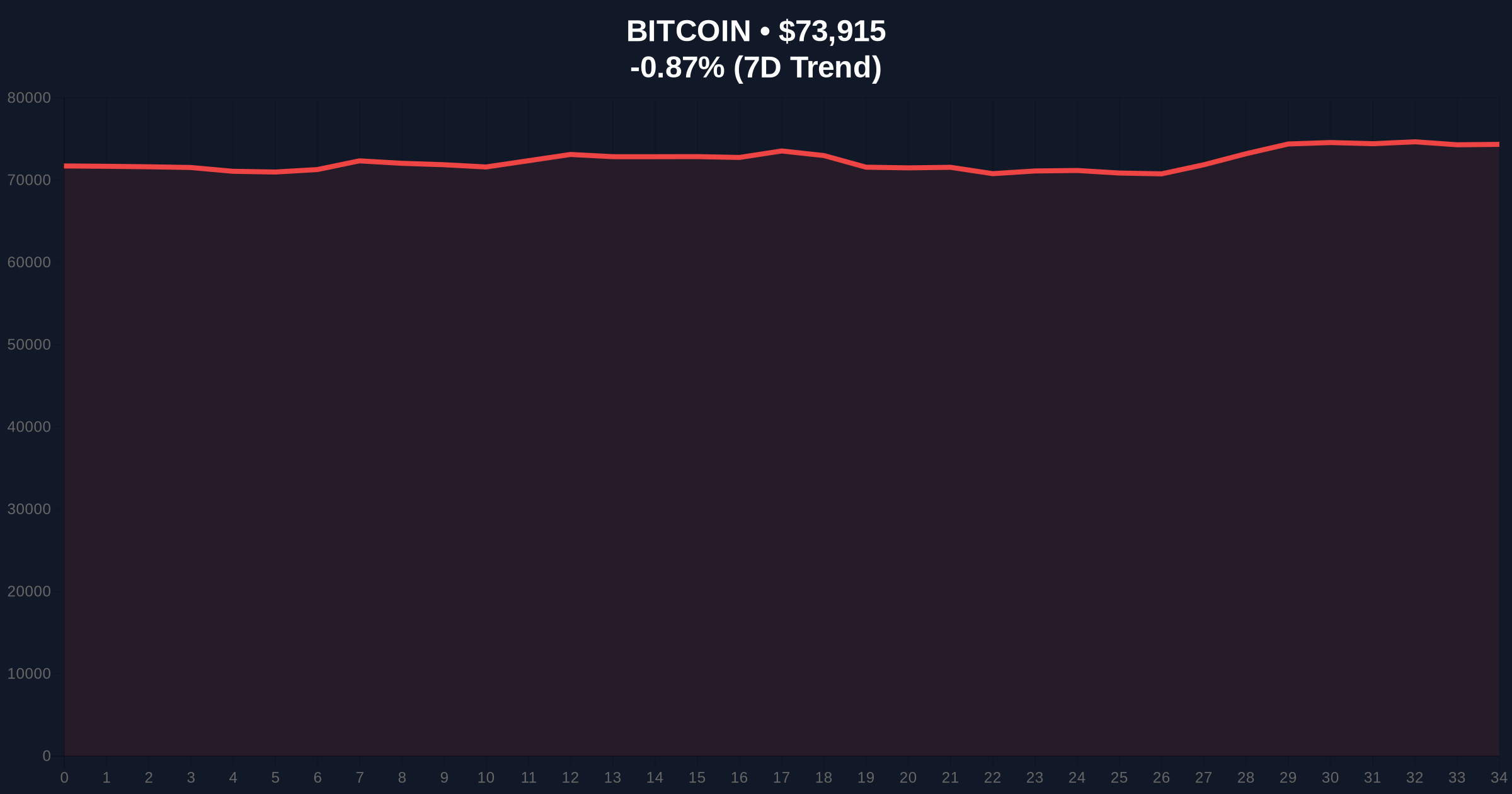
U.S. Spot Bitcoin ETFs See $411.5M Net Inflows, Reversing Outflow Trend Amid Market Fear developed into a market-moving story within the reported window. The initial source indicates immediate relevance for crypto sentiment, while fuller validation is still tied to cited datasets and official statements.
Not provided in source data.
| Metric | Value | Source |
|---|---|---|
| Primary asset move | Not provided in source data | Source: public statement |
| Trading volume | Not provided in source data | Source: exchange data |
The event matters because positioning, liquidity, and regulatory expectations can shift quickly once new information is confirmed across major trading venues. Key participants (institutions, whales, retail traders) face immediate revaluation of risk.
The underlying mechanism depends on the specific market event. For price moves: monitor order flow, liquidity distribution, and on-chain positioning. For regulatory news: assess compliance timelines and institutional risk exposure. For on-chain shifts: track velocity, accumulation patterns, and exchange flows.
Near-term implications depend on confirmation quality, follow-up disclosures, and whether volume expands beyond initial reaction windows.
U.S. spot Bitcoin exchange-traded funds (ETFs) recorded approximately $411.5 million in net inflows on April 14, 2026, reversing a brief outflow trend after just one day, according to data from SoSoValue. This resurgence in institutional buying pressure occurs against a backdrop of "Extreme Fear" in the broader crypto market, with Bitcoin's price at $73,942 and down 0.75% over 24 hours. The return to positive flows signals renewed institutional confidence despite short-term price volatility, potentially providing support for Bitcoin's price discovery mechanism.
The net inflow of $411.5 million was distributed across multiple funds, with BlackRock's IBIT leading at $213.83 million, followed by Ark Invest's ARKB at $113.12 million and Fidelity's FBTC at $45.28 million. Notably, no U.S. spot Bitcoin ETF experienced net outflows during the day. This data, sourced from public statements via SoSoValue, contrasts with the current market sentiment of "Extreme Fear" (score: 23/100) and Bitcoin's slight price decline. The following table summarizes key metrics:
| Metric | Value | Source |
|---|---|---|
| Total Net Inflow (April 14) | $411.5 million | Source: public statement |
| Bitcoin Price | $73,942 | Source: CoinGecko |
| 24-Hour Price Trend | -0.75% | Source: CoinGecko |
| Market Sentiment | Extreme Fear (23/100) | Source: CoinGecko |
The significance of this event lies in its timing and causal chain. First, why now? The return to inflows after a single day of outflows suggests that institutional buyers are capitalizing on price dips or fear-driven sell-offs, indicating underlying demand resilience. Second, who benefits? Primary beneficiaries include ETF issuers like BlackRock and Ark Invest, institutional investors seeking regulated exposure, and Bitcoin's price stability through reduced selling pressure. Retail traders may gain from improved liquidity and reduced volatility. Third, time horizons show short-term impacts (days/weeks) include potential price support and sentiment stabilization, while longer-term (months/years) implications involve sustained institutional adoption and regulatory validation. Fourth, the causal chain operates as: ETF inflows → direct Bitcoin purchases by authorized participants → decreased net selling pressure → price support → potential retail FOMO if sustained. This mechanism is critical in a market characterized by extreme fear, where inflows can counteract negative sentiment.
Underlying this trend is a direct market-structure mechanism. When U.S. spot Bitcoin ETFs record net inflows, authorized participants (APs) purchase actual Bitcoin to create new ETF shares, injecting buying pressure into the market. This process mechanically reduces available supply on exchanges, particularly if inflows outpace miner selling or other liquidations. In this instance, the $411.5 million inflow represents substantial demand that must be met with spot Bitcoin purchases, supporting prices even amid broader fear. The absence of outflows across all funds further indicates a unified reduction in selling pressure, creating a net positive liquidity environment. This dynamic is amplified in thin market conditions, where large inflows can disproportionately impact price discovery.
This ETF inflow reversal occurs alongside other significant crypto market events, highlighting divergent sector trends. While Bitcoin ETFs show institutional resilience, other areas face challenges:
These comparisons reveal that Bitcoin ETF flows are increasingly decoupled from altcoin manias and regulatory debates, focusing instead on institutional allocation strategies.
Despite positive inflows, several risks and uncertainties persist. The bearish scenario includes:
Failure conditions include a breakdown in the ETF creation/redemption process or a loss of institutional confidence leading to mass redemptions.
Practically, this inflow reversal sets the stage for monitoring subsequent days' flows to confirm a trend. If sustained, it could stabilize Bitcoin prices and gradually improve market sentiment from "Extreme Fear." Regulatory implications are nuanced; consistent inflows may bolster arguments for Bitcoin's legitimacy as an institutional asset, potentially influencing ongoing policy discussions. However, the lack of provided data on longer-term flow patterns limits predictive certainty.
U.S. spot Bitcoin ETFs, approved in early 2024, have become a critical conduit for institutional investment, allowing regulated access to Bitcoin without direct custody. Their flows are closely watched as a proxy for institutional sentiment, with net inflows typically correlating with buying pressure and price support. This event fits into a broader narrative of Bitcoin's maturation as an asset class, where ETF activity increasingly influences market dynamics separate from retail speculation.
Related crypto developments provide additional context for this ETF inflow story. For instance, amid recent regulatory uncertainty highlighted by Ripple's CEO, institutional ETF flows offer a counter-narrative of steady adoption. Similarly, while Ethereum faces challenges from a collapsed SPAC merger, Bitcoin ETF inflows underscore divergent asset trajectories. These connections illustrate how ETF data interacts with broader market themes without being the sole driver.
The return to net inflows for U.S. spot Bitcoin ETFs, totaling $411.5 million on April 14, 2026, highlights institutional resilience amid market fear. While mechanisms support price stability, risks from outflows and macro factors remain. This event the growing importance of ETF flows in Bitcoin's market structure, separate from altcoin volatility and regulatory debates.
Q1: What caused the return to net inflows for Bitcoin ETFs?The exact trigger is not provided in source data, but it follows a one-day outflow pause, suggesting institutional buyers re-entered amid market fear.
Q2: How do ETF inflows affect Bitcoin's price?Inflows require authorized participants to buy spot Bitcoin, reducing selling pressure and providing direct price support through increased demand.
Q3: Why is market sentiment "Extreme Fear" despite positive ETF flows?Sentiment metrics often lag institutional actions; ETF inflows may reflect longer-term confidence contrasting with short-term retail fear.
Q4: What are the risks if ETF inflows reverse?Sustained outflows could break the price support mechanism, leading to increased volatility and potential price declines.
Q5: How does this compare to other crypto events?Unlike altcoin rallies or regulatory calls, ETF flows focus on institutional behavior, showing a decoupling in market drivers.
Q6: What should traders watch next?Monitor subsequent days' ETF flow data to confirm if this is a trend reversal and track Bitcoin's price reaction to sustained inflows.
Traders and analysts are closely watching the next few days of ETF flow data to determine if this inflow reversal marks a sustained trend or a temporary blip in institutional behavior.
Background context from earlier cycles, policy developments, and market structure is still being assessed using available source records.
Related market reactions in Ethereum, major altcoins, ETF flow commentary, and macro headlines remain part of the active watchlist for cross-asset confirmation.
The current takeaway is that confirmation quality and follow-up disclosures matter more than headline velocity for sustainable market interpretation.
What to watch next: next official follow-up statements; exchange-level volume and liquidity data.
Evidence & Sources
Primary source: https://coinness.com/news/1154572
Updated at: Apr 15, 2026, 09:36 AM
Data window: Apr 15, 2026, 08:52 AM → Apr 15, 2026, 08:57 AM
Evidence stats: 9 metrics, 0 timeline points.
Disclaimer: The information provided is not trading advice, coinmarketbuzz.com holds no liability for any investments made based on the information provided on this page. We strongly recommend independent research and/or consultation with a qualified professional before making any investment decisions.
All published reports are reviewed by our editorial team for factual consistency, neutrality, and reader clarity.