Loading News...
Loading...

Loading News...

VADODARA, April 20, 2026. The following report is based on currently available verified source material and market data.
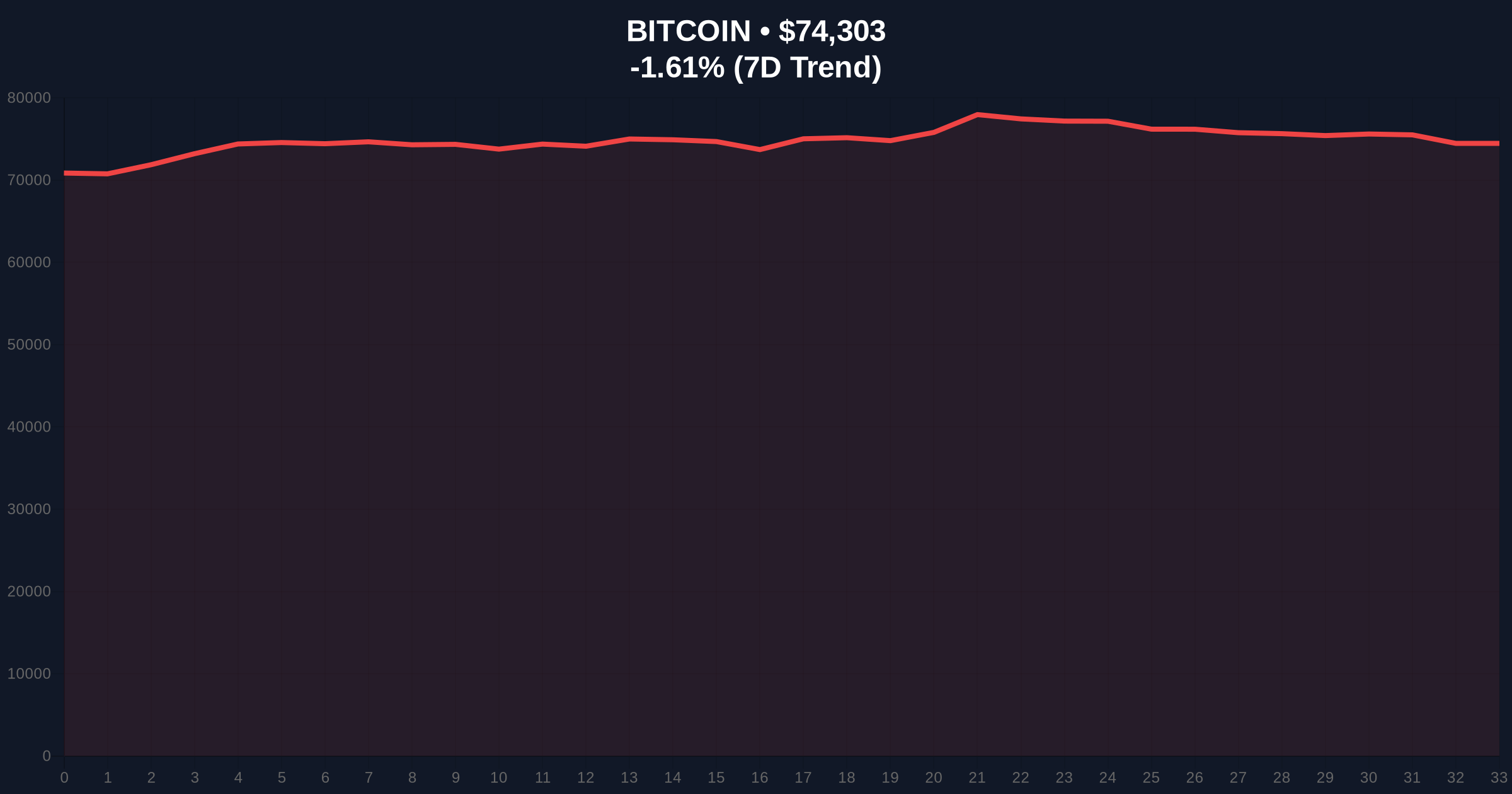
Bitcoin Futures Show Slight Short Bias Amid Market Fear: What It Means for Traders developed into a market-moving story within the reported window. The initial source indicates immediate relevance for crypto sentiment, while fuller validation is still tied to cited datasets and official statements.
On April 20, 2026, Bitcoin perpetual futures markets on the world's top three exchanges by open interest, Binance, OKX, and Bybit, showed a slight short bias, with overall ratios at 48.59% long and 51.41% short. This data, sourced from exchange metrics, emerges as Bitcoin trades at $74,289, down 1.63% in 24 hours, amid a "Fear" sentiment score of 29/100. The imbalance matters because futures positioning can signal trader sentiment and potential price pressure, offering insights into market dynamics during a cautious phase.
The 24-hour long/short ratios for BTC perpetual futures reveal a consistent lean toward short positions across major platforms. Overall, longs account for 48.59% and shorts for 51.41%, with individual exchange data showing minimal variation. This occurs against a backdrop of declining Bitcoin prices and heightened market fear, as indicated by CoinGecko metrics. Below is a snapshot of key data points:
| Metric | Value | Source |
|---|---|---|
| Overall Long Ratio | 48.59% | Source: exchange data |
| Overall Short Ratio | 51.41% | Source: exchange data |
| Bitcoin Price | $74,289 | Source: CoinGecko |
| 24h Price Trend | -1.63% | Source: CoinGecko |
| Market Sentiment | Fear (29/100) | Source: CoinGecko |
Specific exchange ratios include Binance at 48.83% long and 51.17% short, OKX at 48.13% long and 51.87% short, and Bybit at 48.88% long and 51.12% short. The timeline for this data is not provided in source data, but it reflects recent market conditions.
Why now? This short bias gains significance as Bitcoin experiences a slight price dip and fear sentiment, suggesting traders may be hedging or betting on further declines in a volatile environment. Who benefits? Short-term traders and hedgers could profit from downward moves, while long-term holders might face increased selling pressure. Time horizons: In the short term, this could exacerbate price volatility if short positions trigger liquidations; over longer periods, it may indicate cautious sentiment that could slow bullish momentum. Causal chain: Increased short positions → potential selling pressure or hedging → amplified price swings → impact on market confidence and liquidity.
Perpetual futures allow traders to speculate on Bitcoin's price without an expiry date, using funding rates to balance long and short positions. The long/short ratio reflects aggregate trader bets: a short bias means more participants expect price declines. Mechanically, this can influence market dynamics through several pathways. For instance, if short positions increase, it may lead to higher selling pressure in spot markets as traders hedge, or it could trigger cascading liquidations if prices rise unexpectedly, squeezing shorts. The data from top exchanges by open interest, Binance, OKX, and Bybit, provides a liquidity-weighted view, making it a reliable indicator of sentiment among large players.
The bearish scenario hinges on several uncertainties. What could invalidate the short bias narrative? If Bitcoin's price rebounds sharply, short positions might face liquidation cascades, leading to a rapid shift toward longs. Key risks include:
Failure condition: If funding rates turn positive or spot buying surges, the short bias may quickly reverse, highlighting the fragility of such metrics in fast-moving markets.
In the near term, traders should monitor for liquidations and funding rate shifts, as these could signal momentum changes. If the short bias persists, it may pressure Bitcoin's price toward support levels, but a reversal could fuel a relief rally. Practically, this data the importance of combining futures metrics with on-chain and spot market analysis for a fuller picture.
Bitcoin perpetual futures have become a key tool for speculation and hedging, with exchanges like Binance, OKX, and Bybit dominating open interest. Historically, extreme long/short ratios have preceded market turns, but moderate biases like the current one often reflect short-term sentiment rather than structural shifts. This context helps frame the data as a snapshot in a broader, evolving market narrative.
While this report focuses on Bitcoin futures, other market events may provide context. For example, recent DeFi exploits have shaken investor confidence, potentially influencing risk appetite in derivatives. However, direct links to these events are not provided in source data, so they remain peripheral considerations.
Bitcoin futures markets show a slight short bias amid fear sentiment, offering a window into trader psychology during a price dip. While the ratios suggest caution, their moderate nature limits predictive power, emphasizing the need for multi-faceted analysis in volatile conditions.
What to watch next: next official follow-up statements; exchange-level volume and liquidity data.
Evidence & Sources
Primary source: https://coinness.com/news/1154962
Updated at: Apr 20, 2026, 08:05 AM
Data window: Apr 20, 2026, 08:02 AM → Apr 20, 2026, 08:04 AM
Evidence stats: 9 metrics, 0 timeline points.
Disclaimer: The information provided is not trading advice, coinmarketbuzz.com holds no liability for any investments made based on the information provided on this page. We strongly recommend independent research and/or consultation with a qualified professional before making any investment decisions.
All published reports are reviewed by our editorial team for factual consistency, neutrality, and reader clarity.