Loading News...
Loading...

Loading News...
VADODARA, April 14, 2026. The following report is based on currently available verified source material and market data.
Tether Launches Self-Custodial Wallet, Shifts from Infrastructure to Consumer Payments developed into a market-moving story within the reported window. The initial source indicates immediate relevance for crypto sentiment, while fuller validation is still tied to cited datasets and official statements.
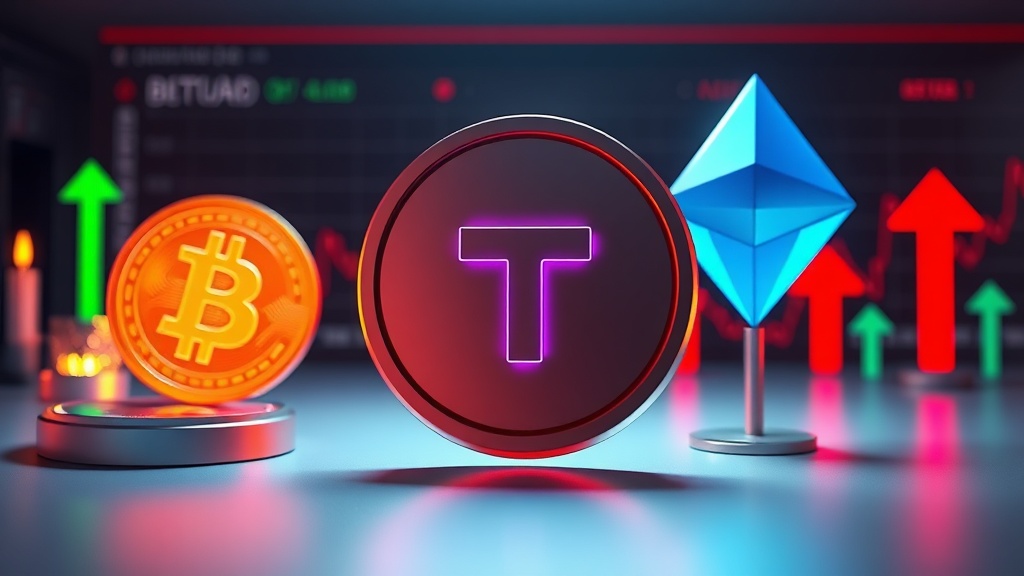
On April 14, 2026, Tether, the issuer of the world's largest stablecoin USDT, launched a self-custodial crypto wallet called tether.wallet, marking a strategic shift from infrastructure provider to direct consumer-facing payments. The wallet allows users to hold and send USDT, USAT, gold-backed XAUT, and Bitcoin across multiple blockchains, aiming to simplify crypto transactions by enabling fee payment in the sent asset and using human-readable addresses like "name@tether.me." This move comes as Bitcoin trades near $75,000 amid extreme market fear, with Tether seeking to leverage its $185 billion USDT ecosystem and over 570 million indirect users to drive mainstream adoption of crypto payments.
The launch is backed by key metrics highlighting Tether's market position and current crypto conditions. Tether's USDT has a market cap of $185 billion, with the stablecoin pegged at $1.0001. Bitcoin, a supported asset in the wallet, is priced at $74,851.36 according to public statements, aligning with CoinGecko data showing Bitcoin at $74,881 with a 24-hour trend of 5.55%. The global crypto sentiment is "Extreme Fear" with a score of 21/100, indicating high market volatility. Source: public statement for USDT and Bitcoin prices; Source: CoinGecko for real-time Bitcoin data.
| Metric | Value | Source |
|---|---|---|
| USDT Market Cap | $185 billion | Public statement |
| Bitcoin Price | $74,851.36 | Public statement |
| Bitcoin 24h Trend | 5.55% | CoinGecko |
| Global Sentiment | Extreme Fear (21/100) | CoinGecko |
This development matters now because it represents Tether's pivot into consumer payments at a time when crypto adoption is accelerating but user experience remains a barrier. Why now? With Bitcoin approaching $75,000 and institutional interest growing, Tether aims to capture retail users seeking easier access to stablecoins and Bitcoin. Who benefits? Retail users gain simplified self-custody and lower friction, while Tether expands its ecosystem; exchanges and intermediaries may face reduced reliance as users transact directly. Time horizons: Short-term, this could boost USDT utility and Bitcoin adoption; long-term, it positions Tether as a key player in AI and machine-to-machine commerce. Causal chain: Tether launches wallet → reduces transaction complexity → increases user adoption → enhances network effects for USDT and supported assets → potentially drives higher transaction volumes and price stability.
The wallet operates by allowing users to control private keys on their devices, enabling self-custody without intermediaries. Underlying this trend, it uses Tether's Wallet Development Kit (WDK) to support multi-blockchain transactions, where fees are paid in the sent asset (e.g., USDT for USDT transfers), eliminating the need for separate gas tokens. This mechanism reduces friction by abstracting technical complexities, such as replacing long wallet addresses with human-readable names. Consequently, the shift from indirect use through exchanges to direct interface could increase transaction speed and security, aligning with Tether CEO Paolo Ardoino's vision of seamless transactions for humans, machines, and AI agents.
Tether's move contrasts with broader industry trends focused on institutional tools and regulatory compliance. For instance, the XRP Ledger recently added zero-knowledge proofs to target institutional privacy gaps, while Visa's involvement with Stripe's Tempo blockchain highlights corporate blockchain adoption. Unlike these efforts, Tether's wallet emphasizes retail accessibility, similar to wallets like MetaMask but with integrated stablecoin support. Key industry developments include:
Despite the bullish narrative, several risks could undermine Tether's wallet success. The bearish scenario includes regulatory scrutiny on stablecoins, potential technical vulnerabilities in self-custody, and competition from established wallets. Uncertainty exists around user adoption rates and whether the wallet can achieve seamless interoperability across blockchains. Failure conditions involve low uptake due to persistent UX issues or security breaches eroding trust. Key risks to watch:
In the near term, Tether's wallet could increase on-chain activity for USDT and Bitcoin, potentially supporting price stability for USDT and boosting Bitcoin's use as a payment medium. If successful, it may spur similar offerings from competitors, accelerating the trend toward user-friendly crypto interfaces. Over the longer term, this could facilitate Tether's expansion into AI and machine-to-machine transactions, as hinted by Ardoino, though success depends on technological execution and market acceptance.
Tether has historically operated as an infrastructure provider, issuing USDT and supporting crypto payments indirectly through exchanges and payment rails. With over 570 million users interacting with its technology, this wallet launch builds on its Wallet Development Kit, previously used in third-party projects like Rumble wallet. The move reflects a natural evolution in Tether's strategy to directly engage end-users, leveraging its dominant stablecoin position in a market where Bitcoin and other assets are gaining traction.
This launch occurs alongside other crypto advancements, such as XRP Ledger adding zero-knowledge proofs for institutional privacy and Aave dominating DeFi with a 30% TVL share amid extreme market fear. These developments highlight a bifurcated industry focus: Tether targets retail payments, while others enhance institutional tools. Not provided in source data for specific cross-market reactions, but the broader context suggests a growing emphasis on both accessibility and sophistication in crypto infrastructure.
Tether's introduction of a self-custodial wallet marks a significant shift toward consumer-facing crypto payments, aiming to simplify transactions for stablecoins and Bitcoin. While it leverages Tether's massive USDT ecosystem and addresses key friction points, success hinges on overcoming regulatory, security, and adoption challenges in a volatile market environment.
Evidence & Sources
Primary source: https://www.coindesk.com/business/2026/04/14/tether-introduces-crypto-wallet-to-bring-stablecoin-and-bitcoin-payments-directly-to-users
Updated at: Apr 14, 2026, 03:57 PM
Data window: Apr 14, 2026, 02:36 PM → Apr 14, 2026, 03:41 PM
Evidence stats: 9 metrics, 1 timeline points.
Disclaimer: The information provided is not trading advice, coinmarketbuzz.com holds no liability for any investments made based on the information provided on this page. We strongly recommend independent research and/or consultation with a qualified professional before making any investment decisions.
All published reports are reviewed by our editorial team for factual consistency, neutrality, and reader clarity.