Loading News...
Loading...

Loading News...

VADODARA, April 18, 2026. The following report is based on currently available verified source material and market data.
U.S. Government Moves $606,000 in Bitcoin Linked to 2016 Bitfinex Hack to Coinbase: Restitution or Market Signal? developed into a market-moving story within the reported window. The initial source indicates immediate relevance for crypto sentiment, while fuller validation is still tied to cited datasets and official statements.
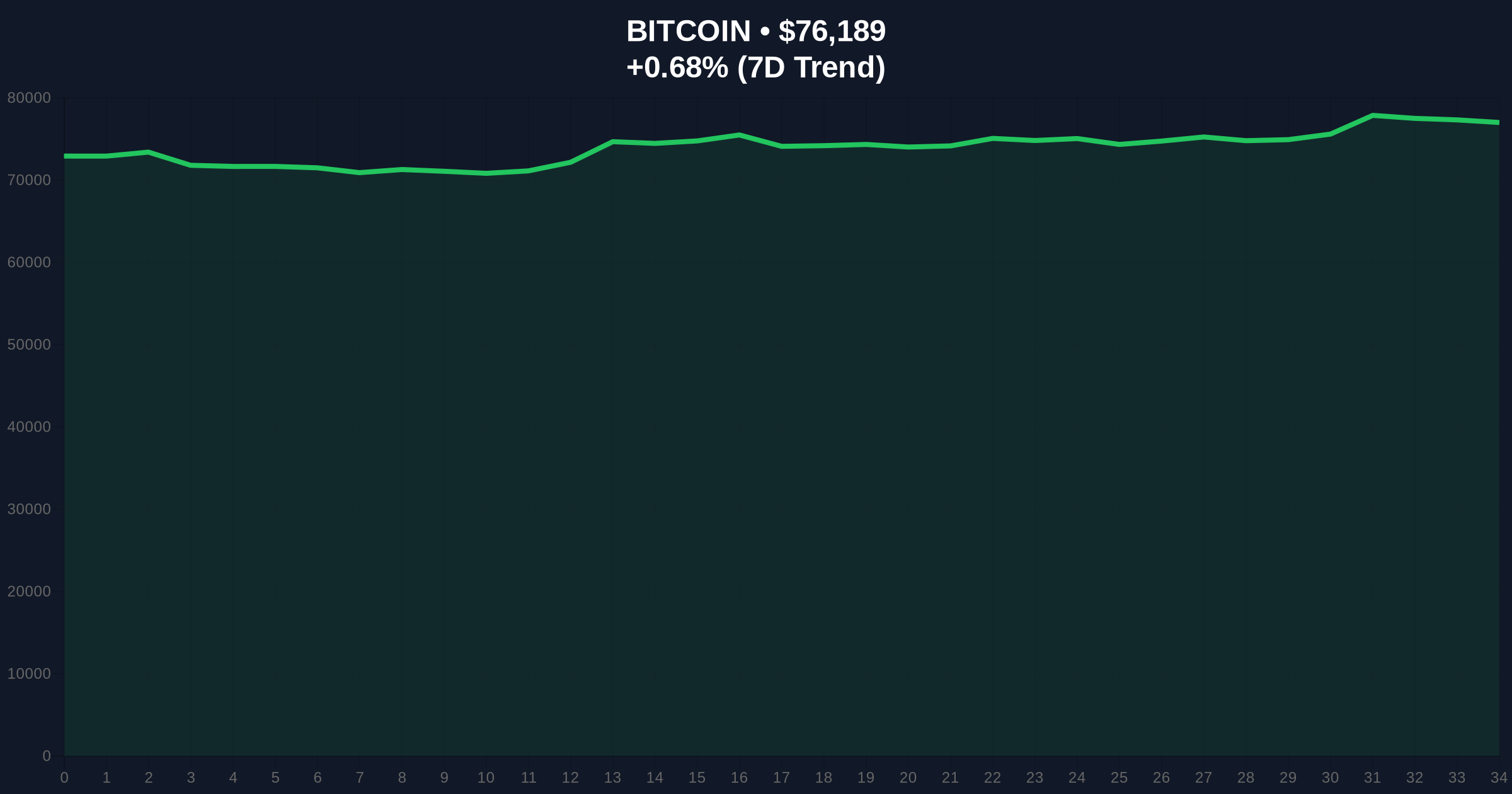
On April 17, 2026, the U.S. government transferred approximately $606,000 worth of bitcoin (8 BTC) linked to the 2016 Bitfinex hack to Coinbase Prime, according to on-chain data tracked by Arkham. This movement, while relatively small in value, raises questions about government handling of seized crypto assets and potential market implications. The transfer occurs amid a "Fear" sentiment in global crypto markets, with Bitcoin trading around $76,192, up 0.68% in 24 hours. The event matters because it involves court-mandated restitution to Bitfinex rather than Treasury liquidation, but the mechanics of exchange transfers often trigger selling pressure concerns among traders.
The transfer involves specific metrics tied to the 2016 Bitfinex hack and current market conditions. According to exchange data, the government moved 8 BTC valued at $606,000, with Bitcoin's price at $76,196.17 at the time of reporting. The original hack involved 119,756 BTC, worth $72 million in 2016 and approximately $8.9 billion today. Bitfinex has stated it will use returned funds to redeem all Recovery Right Tokens and allocate at least 80% of remaining net proceeds to repurchase and burn its UNUS SED LEO token. Current market data shows Bitcoin at $76,192 with a 0.68% 24-hour gain, while global crypto sentiment registers "Fear" at a score of 26/100.
| Metric | Value | Source |
|---|---|---|
| Transfer Value | $606,000 | Source: exchange data |
| Bitcoin Amount | 8 BTC | Source: exchange data |
| Current Bitcoin Price | $76,192 | Source: CoinGecko |
| 24-Hour Trend | +0.68% | Source: CoinGecko |
| Original Hack Value (2016) | $72 million | Source: public statement |
| Current Hack Value (2026) | $8.9 billion | Source: public statement |
This event matters now because it tests the U.S. government's stated policy of holding seized bitcoin as part of a national strategic reserve while executing court-ordered restitution. The timing coincides with heightened market sensitivity to large movements, especially from government-controlled wallets. Who benefits? Bitfinex and its token holders stand to gain through token burns and customer restitution, while the government demonstrates compliance with legal proceedings. However, traders face uncertainty about whether this signals broader selling pressure.
In the short term (days/weeks), the market watches for follow-up transfers or selling activity that could impact Bitcoin's price stability. Long-term (months/years), this sets precedent for how governments handle seized crypto in restitution cases. The causal chain is: government transfer to exchange → market interpretation as potential selling signal → possible liquidity impact if large volumes follow → price volatility if sentiment shifts. Yet, the court mandate for in-kind return to Bitfinex complicates this narrative.
The transfer mechanism involves several layers: First, the U.S. government controls wallets containing bitcoin seized from Ilya Lichtenstein, who was convicted for the 2016 Bitfinex hack. Second, federal proceedings in early 2025 mandated in-kind restitution, requiring the government to return coins directly to Bitfinex rather than liquidate them. Third, the movement to Coinbase Prime, an institutional platform, suggests custody or preparatory steps rather than immediate retail selling. Fourth, Bitfinex's plan involves using returned bitcoin to redeem Recovery Right Tokens and burn LEO tokens, creating deflationary pressure on that specific asset rather than direct Bitcoin market selling.
This contrasts with typical whale behavior where exchange deposits directly precede market sales. Here, the destination is predetermined by court order, potentially insulating Bitcoin from immediate selling pressure unless Bitfinex decides to liquidate portions later. The $606,000 transfer represents a tiny fraction (0.00007%) of the original hack total, indicating this may be a test transaction or partial transfer rather than a bulk movement.
This event occurs alongside broader developments in crypto markets and government crypto policies:
Compared to other market events, this transfer's impact is limited by its small size and legal framework, unlike larger institutional movements that directly affect liquidity.
The bullish narrative, that this is merely procedural restitution with minimal market impact, faces several risks:
Uncertainty remains about whether this transfer is isolated or part of a larger series. Data is missing on the government's exact timeline for full restitution and whether Bitfinex will hold or sell returned bitcoin. The failure condition for the neutral narrative would be if subsequent transfers occur without clear legal mandates, suggesting broader selling intentions.
Practically, this transfer signals continued government activity in crypto markets but within legal constraints. Near-term, market participants should monitor for additional movements and Bitfinex's handling of returned assets. If Bitfinex follows through on token burns, it could support LEO token value while minimizing Bitcoin market impact. However, any deviation from the stated plan, such as direct bitcoin sales, could introduce new selling pressure. The event also tests the resilience of market sentiment amid "Fear" conditions, where negative interpretations could amplify effects.
The 2016 Bitfinex hack involved Ilya Lichtenstein fraudulently transferring 119,756 BTC from the exchange. After years of investigation, authorities seized a portion of the stolen bitcoin in 2022, then worth $3.6 billion. Lichtenstein was sentenced to 60 months in prison in 2024 and released in January 2026. Federal proceedings in early 2025 solidified the requirement for in-kind restitution to Bitfinex, setting the stage for this transfer. This context is because it distinguishes the movement from discretionary government selling.
This event occurs amid other market developments that contextualize its significance:
The U.S. government's transfer of $606,000 in bitcoin linked to the Bitfinex hack represents a legally mandated restitution move rather than a clear market signal. While exchange deposits typically raise selling concerns, the court-ordered in-kind return to Bitfinex and the small transaction size limit immediate impact. However, in a market with "Fear" sentiment, even procedural movements can trigger volatility if misinterpreted. The key takeaway is that legal frameworks increasingly dictate government crypto actions, potentially reducing discretionary selling but introducing new complexities for market participants.
Q1: Does this transfer mean the U.S. government is selling bitcoin?Not necessarily. The transfer is part of court-ordered restitution to Bitfinex, requiring in-kind return rather than Treasury liquidation. However, exchange movements often raise selling concerns.
Q2: How much bitcoin does the U.S. government still hold from the Bitfinex hack?Not provided in source data. The original hack involved 119,756 BTC, but the amount remaining in government custody is unspecified.
Q3: What will Bitfinex do with the returned bitcoin?Bitfinex plans to redeem all Recovery Right Tokens for affected customers and use at least 80% of remaining net proceeds to repurchase and burn its UNUS SED LEO token.
Q4: Could this transfer affect Bitcoin's price?The $606,000 value is tiny relative to Bitcoin's market cap, making direct price impact unlikely. However, if it signals larger future transfers or shifts market sentiment, indirect effects could occur.
Q5: What is the significance of the transfer to Coinbase Prime?Coinbase Prime is an institutional platform, suggesting the movement may involve custody or preparation rather than immediate retail selling. This aligns with restitution logistics.
Q6: How does this relate to the U.S. national bitcoin reserve?The government has mentioned holding seized bitcoin as part of a strategic reserve, but court-ordered restitution takes precedence in this case, highlighting potential policy conflicts.
Traders and analysts are watching for follow-up transfers and Bitfinex's execution of its token burn plan to assess whether this remains a procedural event or evolves into a market factor.
What to watch next: By Omkar Godbole|Edited by Shaurya Malwa Apr 17, 2026, 7:03 a.m.; (As of today, it would be worth $8.9 billion) What followed were years of sophisticated money laundering via crypto mixers, darknets, and chain-hopping between coins, as well as the purchase of gold..
Evidence & Sources
Primary source: https://www.coindesk.com/markets/2026/04/17/the-u-s-government-moves-usd606-000-in-bitcoin-linked-to-the-2016-bitfinex-hack-to-coinbase
Updated at: Apr 18, 2026, 02:19 PM
Data window: Apr 17, 2026, 07:03 AM → Apr 18, 2026, 02:13 PM
Evidence stats: 9 metrics, 3 timeline points.
Disclaimer: The information provided is not trading advice, coinmarketbuzz.com holds no liability for any investments made based on the information provided on this page. We strongly recommend independent research and/or consultation with a qualified professional before making any investment decisions.
All published reports are reviewed by our editorial team for factual consistency, neutrality, and reader clarity.