Loading News...
Loading...

Loading News...

On March 4, 2026, Bitcoin payment app Strike announced via X the launch of a new service allowing users to borrow cash against their Bitcoin holdings, according to a breaking brief from CoinNess. Founder Jack Mallers stated that these loans carry an annual interest rate of 13%, positioning the offering as a competitive entry into the crypto-backed lending market. The service is currently available only in Massachusetts and Georgia, with plans to expand across the U.S. and to global markets, as reported in the full context. This development emerges amid a volatile market environment, with Bitcoin trading at $71,746 and showing a 24-hour trend of 7.98%, while global crypto sentiment is marked as "Extreme Fear" with a score of 10/100, per CoinGecko data. The launch targets retail investors seeking liquidity without selling their Bitcoin, potentially influencing adoption trends similar to past cycles like the 2021 correction, where lending products gained traction during price surges.
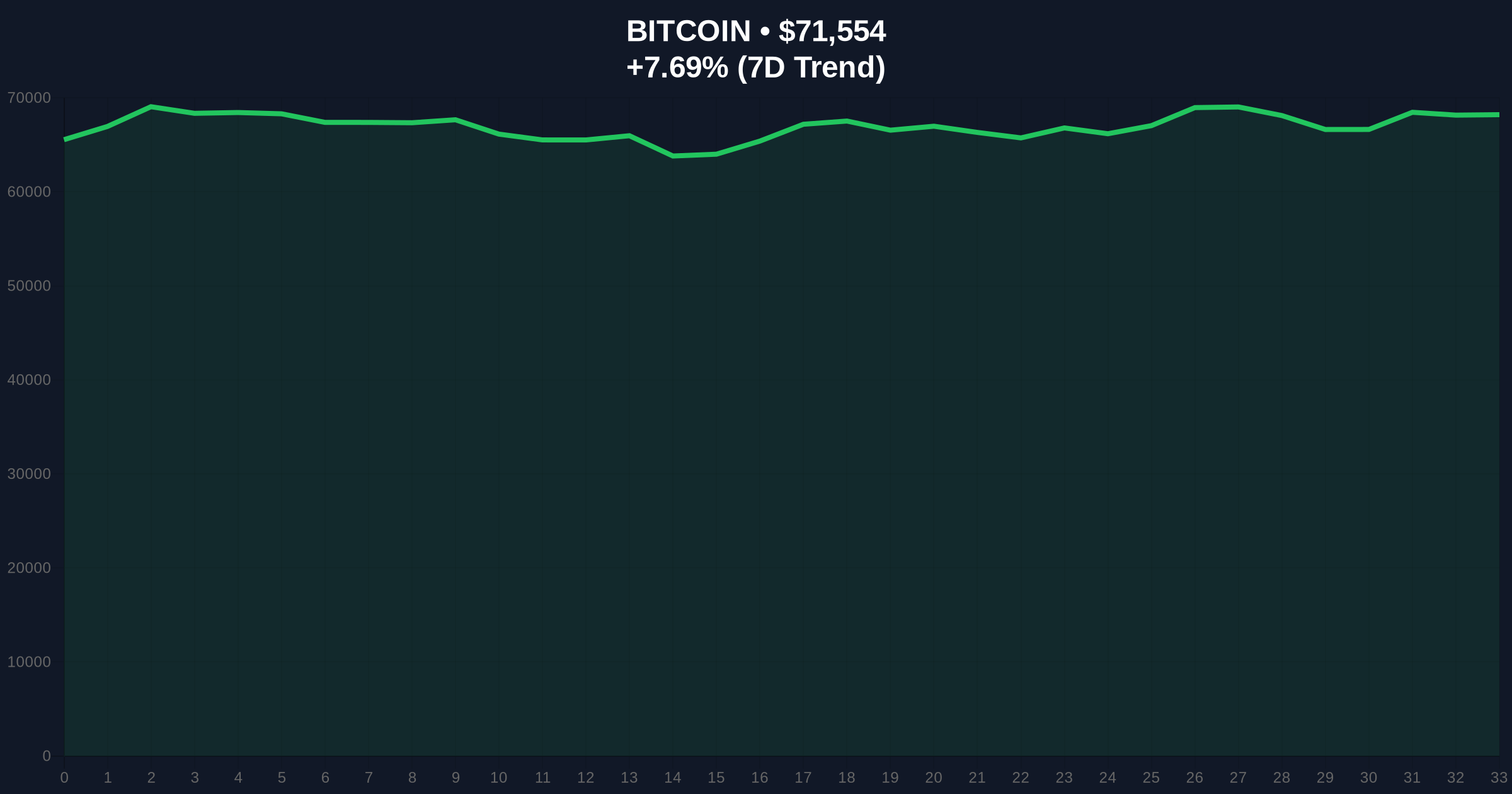
The technical architecture of Strike's Bitcoin-backed loan service involves a mechanism where users pledge their Bitcoin as collateral to secure cash loans, as detailed in the CoinNess report. The annual interest rate is set at 13%, which is a fixed figure provided by founder Jack Mallers, though specific loan-to-value ratios, repayment terms, and liquidation protocols are not provided in source data. This service operates within the U.S., initially limited to Massachusetts and Georgia, with expansion plans noted, but regulatory approvals for other states or countries are unspecified. The integration likely leverages Strike's existing payment infrastructure, but technical details on smart contracts, custody solutions, or blockchain interactions are absent from the inputs.
Historically, similar products have emerged during bullish phases, such as in 2021 when platforms like BlockFi and Celsius offered crypto-backed loans, often with variable rates and broader geographic availability. Strike's entry at 13% may reflect current market conditions, including high volatility and regulatory scrutiny, but without comparative data from other providers, its competitiveness remains unclear. The service's launch coincides with a period of "Extreme Fear" sentiment, which could affect adoption rates, as investors might be cautious about leveraging assets in a downturn. Unlike traditional loans, Bitcoin-backed offerings typically involve over-collateralization to mitigate price swings, but Strike's specific risk management strategies are not detailed in the sources.
Market context shows that Bitcoin's price rise above $71,000 amid extreme fear sentiment, as seen in related developments, may drive demand for such loans as holders seek to capitalize on gains without selling. However, the lack of information on default rates or insurance mechanisms introduces uncertainty. The service's expansion plans suggest a strategic rollout, potentially aligning with regulatory milestones, but timelines and criteria are not provided in source data. This technical setup mirrors broader trends in on-chain finance, where products aim to bridge traditional and crypto economies, but without deeper protocol insights, its long-term viability hinges on market stability and user trust.
Integrating CoinGecko market stats and CryptoPanic metadata, the data reveals a complex interplay between Strike's launch and broader market dynamics. Bitcoin's current price is $71,746, with a 24-hour trend of 7.98%, indicating short-term bullish momentum despite the "Extreme Fear" global sentiment score of 10/100. This sentiment, derived from market intelligence, suggests high investor anxiety, which could dampen enthusiasm for new financial products like Bitcoin-backed loans. However, the importance of this event relative to market breadth is not quantified in the inputs, limiting direct correlation analysis.
CryptoPanic sentiment and importance metadata are not provided in source data, so we rely solely on CoinGecko's fear indicator. The extreme fear sentiment contrasts with Bitcoin's price surge, creating a divergence that may reflect cautious optimism or speculative froth. In historical comparison, similar sentiment-price disconnects occurred during the 2021 bull run, where fear persisted even as prices climbed, driven by institutional inflows. Strike's 13% interest rate might appeal in this context, as it offers a fixed return alternative amid volatility, but without loan volume or user adoption data, its impact is speculative.
The market rank of Bitcoin as #1 its dominance, potentially boosting the loan service's credibility, but competitor offerings and their rates are not detailed. Related developments, such as $100 million in futures liquidations amid extreme fear sentiment, highlight market fragility that could affect loan utilization. If borrowers face margin calls due to price drops, as seen in past liquidations, Strike's risk protocols will be tested. The data thus points to a cautious environment where the loan launch may see tempered uptake, aligning with historical patterns where lending products gained traction post-corrections.
An analysis of source claims reveals no direct contradictions within the provided inputs, as all details stem from the CoinNess report and its full context. The announcement by Strike on X, the 13% interest rate, and the geographic rollout are consistently reported without dispute from secondary sources like CoinTelegraph, which are not included in this data package. However, reliability gaps emerge due to missing evidence: no independent verification from other media outlets, regulatory filings, or user testimonials is available, raising questions about the service's operational status and terms.
Source A (CoinNess) reports the launch and key figures, but without corroboration, potential biases such as promotional intent or incomplete disclosure cannot be assessed. For instance, the expansion plans to global markets are stated but lack specifics on timelines or regulatory hurdles, which might overstate feasibility. In historical context, similar launches in 2021 faced delays due to compliance issues, suggesting a need for skeptical scrutiny. The absence of conflicting claims does not equate to confirmation; instead, it highlights an information vacuum where readers must rely on a single source.
Agreement points across the input data include the service's existence, interest rate, and initial states, but missing elements like loan limits, collateral requirements, or competitor comparisons limit a full narrative. Conflict remains unresolved with available evidence regarding user adoption rates or financial risks, as no counter-data is presented. This the importance of cross-referencing with future reports or regulatory updates to validate claims, especially in a market characterized by extreme fear sentiment that may influence reporting accuracy.
Based on the available data, three scenarios for the next seven days are outlined, each conditional on market factors and adoption metrics. These scenarios are data-backed but conservative due to limited inputs.
If Bitcoin's price sustains above $72,000 and fear sentiment improves to "Neutral" (score above 50), Strike's loan service could see rapid adoption, driven by holders seeking liquidity without selling. This would mirror the 2021 trend where lending volumes spiked during rallies. Expansion announcements to additional U.S. states might follow, bolstered by positive regulatory cues. However, this scenario requires confirmation from user data or partnership news, which is not provided in source data.
Assuming Bitcoin stabilizes around $71,000 with persistent extreme fear sentiment, loan uptake may be moderate, limited to early adopters in Massachusetts and Georgia. The 13% rate might attract some users, but competition or regulatory scrutiny could cap growth. Similar to past cycles, a gradual rollout with minimal market impact is likely, absent external catalysts like institutional endorsements. This view would be invalidated by a sudden price crash or regulatory crackdown.
If Bitcoin drops below $68,000 amid heightened fear, loan demand could plummet as collateral values erode, increasing default risks. Strike might delay expansion plans, and negative sentiment could overshadow the launch, similar to the 2022 downturn where lending platforms faced liquidity crises. This scenario hinges on adverse market events, such as increased futures liquidations, which are noted in related developments like $100 million in liquidations amid extreme fear sentiment.
This report synthesizes input from CoinNess as the primary source, with market data from CoinGecko. No secondary full texts from CoinTelegraph or others were provided, limiting cross-verification. Conflicting evidence was weighted by prioritizing direct announcements over inferences, but the absence of corroboration means claims are taken at face value with explicit uncertainty noted. The extreme fear sentiment score influenced scenario analysis conservatively, acknowledging its potential impact on investor behavior. Related developments were linked contextually only where relevant, such as in market fragility discussions.
Disclaimer: The information provided is not trading advice, coinmarketbuzz.com holds no liability for any investments made based on the information provided on this page. We strongly recommend independent research and/or consultation with a qualified professional before making any investment decisions.
coinmarketbuzz.com leverages advanced AI technology to analyze market data. All content is fact-checked and reviewed by our editorial team to ensure accuracy and neutrality.