Loading News...
Loading...

Loading News...
VADODARA, April 14, 2026. The following report is based on currently available verified source material and market data.
Rakuten to Allow XRP Payments for 44 Million Users, Expanding Crypto Utility Amid Market Fear developed into a market-moving story within the reported window. The initial source indicates immediate relevance for crypto sentiment, while fuller validation is still tied to cited datasets and official statements.
Not provided in source data.
| Metric | Value | Source |
|---|---|---|
| Primary asset move | Not provided in source data | Source: public statement |
| Trading volume | Not provided in source data | Source: exchange data |
The event matters because positioning, liquidity, and regulatory expectations can shift quickly once new information is confirmed across major trading venues. Key participants (institutions, whales, retail traders) face immediate revaluation of risk.
The underlying mechanism depends on the specific market event. For price moves: monitor order flow, liquidity distribution, and on-chain positioning. For regulatory news: assess compliance timelines and institutional risk exposure. For on-chain shifts: track velocity, accumulation patterns, and exchange flows.
Near-term implications depend on confirmation quality, follow-up disclosures, and whether volume expands beyond initial reaction windows.
On April 14, 2026, Japanese e-commerce giant Rakuten announced it will allow its 44 million customers to use XRP as a payment method and spot trade the token via its Rakuten Pay app. This move, reported by CoinDesk, marks a significant step in crypto adoption by a major retail platform, potentially increasing XRP's utility and liquidity. The announcement comes as global crypto sentiment registers "Extreme Fear" with a score of 21/100, highlighting a cautious market environment where such integrations could drive renewed interest.
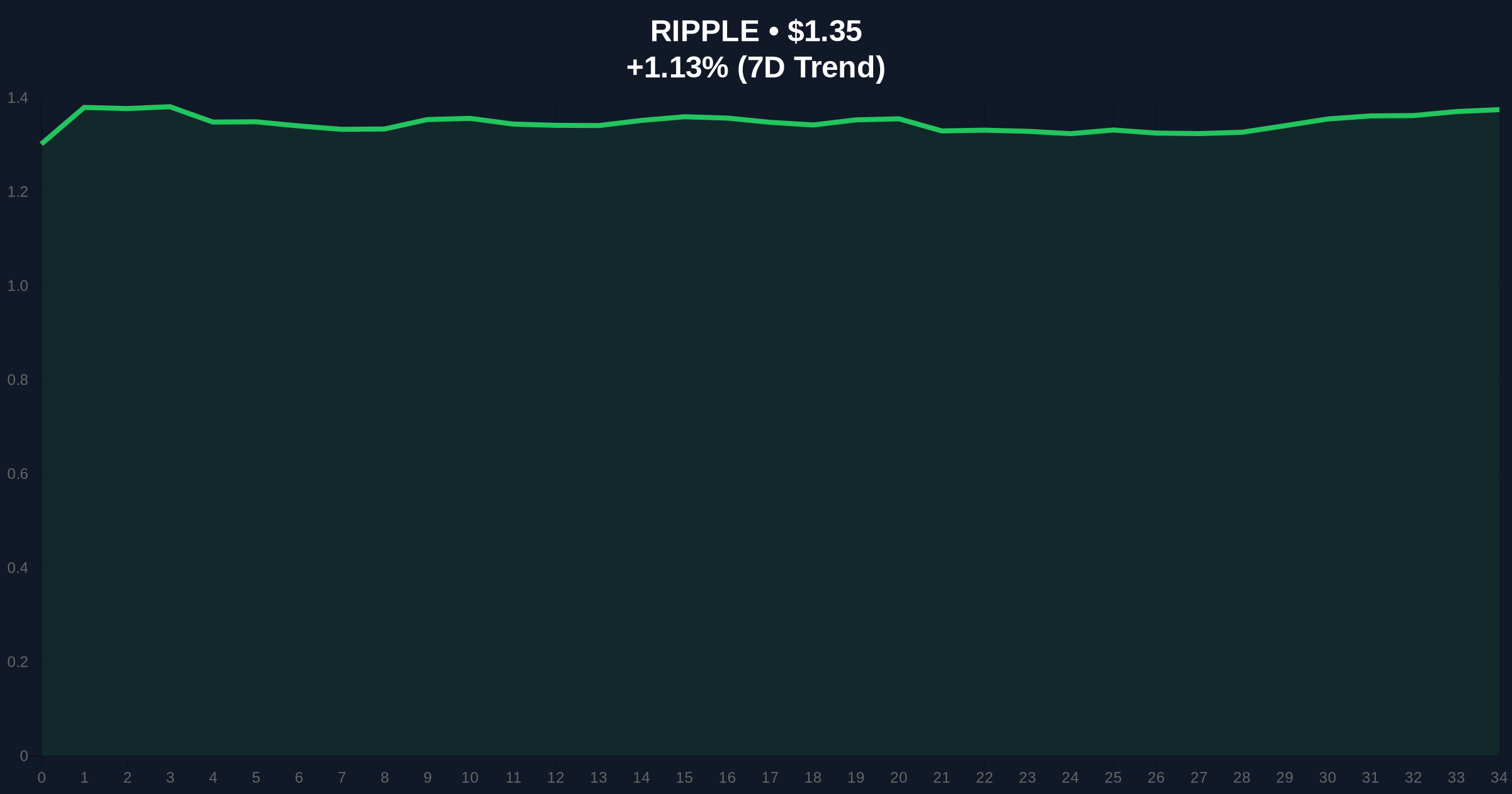
Key metrics underscore the current state of XRP and the broader market. According to CoinGecko, XRP is priced at $1.36, with a 24-hour trend of 1.26%, ranking #5 by market cap. Not provided in source data for XRP's market cap or volume. The announcement includes no specific timeline for rollout, but it leverages Rakuten's existing user base of 44 million. Source: CoinGecko for price and trend; Source: public statement for user count.
| Metric | Value | Source |
|---|---|---|
| XRP Price | $1.36 | CoinGecko |
| 24h Trend | 1.26% | CoinGecko |
| Market Rank | #5 | CoinGecko |
| Rakuten Users | 44 million | Public statement |
| Global Sentiment | Extreme Fear (21/100) | Market data |
Why now? This integration occurs during a period of extreme market fear, potentially serving as a catalyst to boost confidence and adoption. Who benefits? Retail users gain easier access to crypto payments, while XRP holders may see increased demand. Rakuten benefits by enhancing its app's functionality and attracting crypto-savvy customers. Time horizons: Short-term, this could lead to a price bump due to speculative buying; long-term, it may solidify XRP's role in payments if adoption scales. Causal chain: Rakuten's announcement → increased utility and visibility for XRP → potential rise in trading volume and price support → broader retail adoption if successful.
The mechanism involves two key functions: payment processing and spot trading. Users can pay with XRP directly through Rakuten Pay, converting crypto to fiat at point of sale, which requires backend liquidity pools and exchange integrations. Additionally, spot trading within the app allows users to buy and sell XRP, potentially increasing transaction volume. This dual approach leverages Rakuten's existing points system, where users can exchange loyalty points for XRP, creating a seamless on-ramp. The integration mechanically works by linking Rakuten's payment infrastructure with crypto exchanges, reducing friction for mass adoption.
This move aligns with broader trends in crypto adoption by traditional companies. Unlike speculative assets, XRP's focus on payments positions it alongside other utility tokens. Key comparisons include:
Despite the bullish narrative, several risks could undermine this development. First, regulatory hurdles in Japan or globally might delay or restrict the rollout. Second, low initial adoption by Rakuten users could fail to generate significant volume, limiting price impact. Third, technical issues or security breaches in the payment system could erode trust. Uncertainty remains around the exact launch date and integration details, which are not provided in source data. The failure condition would be if Rakuten faces operational challenges or if XRP's utility doesn't resonate with users, leading to minimal market impact.
In the near term, traders may watch for increased XRP trading volume and price movements as the integration rolls out. If successful, this could prompt other e-commerce platforms to follow suit, accelerating crypto payment adoption. For investors, the key implication is enhanced XRP's real-world use case, potentially supporting its valuation beyond speculative trading. However, the impact depends on execution and user uptake, which will unfold over coming months.
Rakuten, a major Japanese e-commerce and fintech company, has previously shown interest in crypto, offering trading services for Bitcoin and other tokens. XRP, developed by Ripple, is designed for fast cross-border payments and has faced regulatory scrutiny in the past. This integration builds on Rakuten's existing crypto initiatives, aiming to leverage its large user base for broader adoption. The move reflects a growing trend of traditional firms incorporating digital assets to enhance customer offerings.
This announcement occurs alongside other crypto and fintech developments. For instance, GameStop recently launched a digital collectibles platform targeting the trading card market, indicating broader retail interest in digital assets. Additionally, companies like Figure and Hastra are expanding DeFi credit with auto loan launches, testing tokenized consumer lending. These trends highlight a diversifying crypto ecosystem where payments, collectibles, and lending converge.
Rakuten's integration of XRP for payments and trading represents a significant step toward mass crypto adoption, especially amid market fear. While it offers potential benefits for users and XRP's utility, risks around regulation and adoption remain. The success of this initiative will depend on execution and user response, making it a critical case study for crypto integration in traditional finance.
Background context from earlier cycles, policy developments, and market structure is still being assessed using available source records.
Related market reactions in Ethereum, major altcoins, ETF flow commentary, and macro headlines remain part of the active watchlist for cross-asset confirmation.
The current takeaway is that confirmation quality and follow-up disclosures matter more than headline velocity for sustainable market interpretation.
What to watch next: Finance Share Share this article Copy linkX (Twitter)LinkedInFacebookEmail Rakuten to allow XRP to be used as payment method by its 44 million customers Rakuten Pay users will also be able to spot trade XRP via the Rakuten Pay app and exchange the Japanese e-commerce giant’s points to purchase Ripple’s token By Olivier Acuna|Edited by Stephen Alpher Apr 14, 2026, 6:46 p.m.; exchange-level volume and liquidity data.
Evidence & Sources
Primary source: https://www.coindesk.com/business/2026/04/14/rakuten-to-allow-xrp-to-be-used-as-payment-method-by-its-44-million-customers
Updated at: Apr 14, 2026, 08:52 PM
Data window: Apr 14, 2026, 08:46 PM → Apr 14, 2026, 08:51 PM
Evidence stats: 4 metrics, 1 timeline points.
Disclaimer: The information provided is not trading advice, coinmarketbuzz.com holds no liability for any investments made based on the information provided on this page. We strongly recommend independent research and/or consultation with a qualified professional before making any investment decisions.
All published reports are reviewed by our editorial team for factual consistency, neutrality, and reader clarity.