Loading News...
Loading...

Loading News...

VADODARA, January 27, 2026 — Decentralized prediction platform Polymarket has launched groundbreaking volatility markets for Bitcoin and Ethereum. This daily crypto analysis reveals the strategic implications. The new markets track Volmex's 30-day implied volatility indexes. They allow users to predict volatility levels through December 31, 2026.
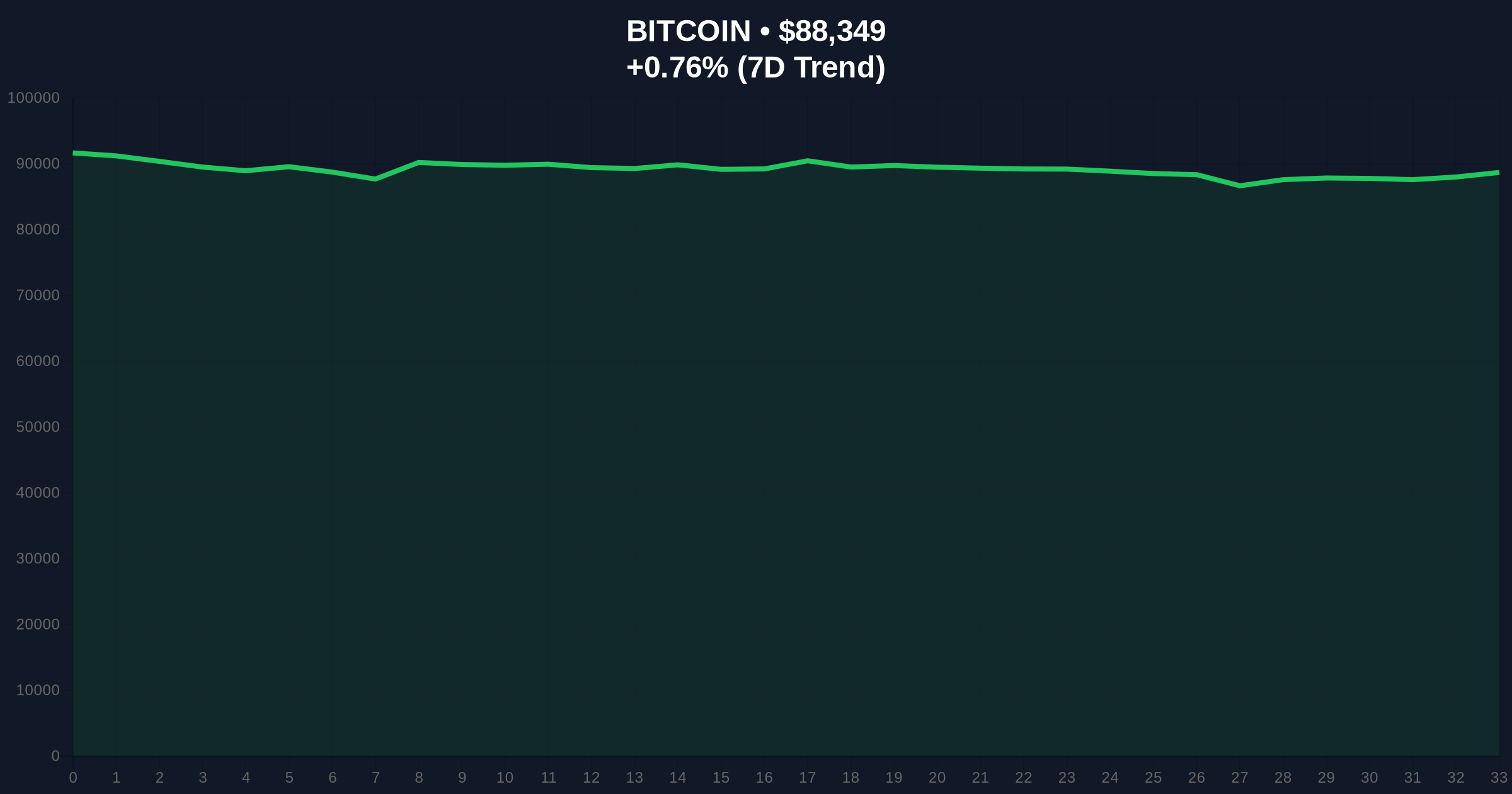
Polymarket deployed new prediction markets on January 27, 2026. According to CoinDesk reporting, these markets link directly to Volmex's proprietary volatility indexes. The BTCV and ETHV indexes measure 30-day implied volatility. Users can now speculate on whether these indexes will reach predetermined thresholds.
Market structure suggests this creates synthetic volatility exposure. Payouts occur if indexes hit target levels by year-end. This represents the first decentralized prediction market for crypto volatility derivatives. The launch coincides with heightened market uncertainty. Consequently, it provides alternative hedging mechanisms beyond traditional options.
Historically, volatility products emerge during market inflection points. The 2021 bull run saw similar derivative innovation. In contrast, current conditions feature extreme fear. The Crypto Fear & Greed Index sits at 29/100. This creates perfect conditions for volatility trading.
, regulatory uncertainty persists globally. Recent developments include ASIC's warning about regulatory gaps. Additionally, Binance's margin pair delistings signal liquidity shifts. These factors amplify volatility demand.
Underlying this trend is Ethereum's evolving ecosystem. The stablecoin market cap decline echoes 2021 liquidity patterns. Meanwhile, US Bitcoin ETF inflows show institutional interest returning. Polymarket's launch capitalizes on these cross-currents.
Volmex's indexes use options pricing models from major exchanges. They calculate 30-day implied volatility mathematically. This differs from realized volatility measurements. The indexes incorporate forward-looking expectations.
Price action reveals critical levels. Bitcoin currently trades at $88,350. The 200-day moving average provides support at $85,000. A break below would trigger volatility spikes. Ethereum shows similar patterns. Its Fibonacci 0.618 retracement level sits at $4,200.
Market structure suggests these levels create natural Fair Value Gaps. Liquidity clusters around these zones. Consequently, volatility markets will likely see increased activity near these thresholds. The 30-day measurement period aligns with monthly options expiries. This creates natural hedging opportunities.
| Metric | Value | Implication |
|---|---|---|
| Crypto Fear & Greed Index | 29/100 (Fear) | High volatility environment |
| Bitcoin Current Price | $88,350 | Testing key support levels |
| Bitcoin 24h Trend | +0.76% | Minor rebound amid fear |
| Market Prediction Period | Through Dec 31, 2026 | 11-month volatility exposure |
| Volatility Index Type | 30-Day Implied | Forward-looking measurement |
This launch matters for market structure. It provides decentralized volatility exposure. Traditionally, this required centralized derivatives platforms. Now, prediction markets offer alternative access. This could fragment liquidity across venues.
, it creates new hedging tools. Institutions can hedge volatility risk without traditional options. Retail traders gain sophisticated exposure. The 11-month timeframe allows strategic positioning. Market analysts note this aligns with election cycles and macro events.
On-chain data indicates growing derivative activity. Ethereum's post-merge issuance changes volatility dynamics. The upcoming Pectra upgrade introduces new variables. Polymarket's products capture these structural shifts.
"Prediction markets for volatility represent logical evolution. They democratize access to sophisticated metrics. The 30-day implied volatility index provides cleaner exposure than realized volatility products. This launch signals maturation in crypto derivatives."— CoinMarketBuzz Intelligence Desk
Two primary scenarios emerge from current market structure. Both depend on key technical levels.
The 12-month outlook depends on macro conditions. Federal Reserve policy remains . According to FederalReserve.gov statements, rate decisions in 2026 will influence crypto volatility. Institutional adoption continues growing. The 5-year horizon shows prediction markets gaining market share. They could capture 15-20% of crypto derivatives volume by 2030.

Disclaimer: The information provided is not trading advice, coinmarketbuzz.com holds no liability for any investments made based on the information provided on this page. We strongly recommend independent research and/or consultation with a qualified professional before making any investment decisions.
coinmarketbuzz.com leverages advanced AI technology to analyze market data. All content is fact-checked and reviewed by our editorial team to ensure accuracy and neutrality.