Loading News...
Loading...

Loading News...

On March 4, 2026, Paraguay's National Power Administration (ANDE) announced a groundbreaking move into Bitcoin mining, as reported by CoinNess. According to the source, ANDE has signed a memorandum of understanding with crypto infrastructure firm Morphware to launch the country's first government-led Bitcoin mining project. The initiative will utilize confiscated mining rigs, with a pilot phase deploying approximately 1,500 units. This development positions Paraguay as a potential new player in the global mining , leveraging its surplus hydroelectric power for regulatory-compliant operations. However, the announcement lacks critical details such as the timeline for deployment, the origin of the confiscated rigs, and specific regulatory frameworks, raising immediate questions about feasibility and transparency. The event occurs against a backdrop of Extreme Fear in global crypto sentiment, with a score of 10/100, suggesting market skepticism that may overshadow optimistic narratives.
The technical architecture of Paraguay's Bitcoin mining project hinges on two key components: the use of confiscated mining rigs and integration with the nation's hydroelectric power grid. According to the input data, ANDE plans to deploy around 1,500 mining rigs in the pilot phase, operated in compliance with regulations using surplus hydroelectric power. This suggests a focus on renewable energy, which could mitigate environmental concerns often associated with Bitcoin mining. However, the source does not specify the types of rigs (e.g., ASIC models like Antminer S19 or Whatsminer M50), their hash rates, or their condition post-confiscation, leaving performance estimates vague.
The involvement of Morphware, described as a crypto infrastructure firm, implies potential roles in hardware management, software optimization, or energy coordination. Yet, the memorandum of understanding lacks disclosed terms, such as revenue-sharing agreements, operational responsibilities, or scalability plans beyond the pilot. Regulatory compliance is mentioned but undefined; Paraguay's existing crypto regulations are not detailed in the source, creating uncertainty about legal safeguards against money laundering or energy misuse. The reliance on hydroelectric surplus is notable, as Paraguay is a major hydroelectric producer, but seasonal variability in water levels could impact consistent power supply, a risk not addressed in the report.
Comparatively, similar state-led mining initiatives in other countries have faced challenges with transparency and efficiency. The absence of data on energy consumption per rig or projected Bitcoin output limits a thorough technical assessment. Without secondary sources to cross-reference, this deep-dive relies solely on the CoinNess report, which may oversimplify complexities. For instance, the phrase "operated in compliance with regulations" is broad and unsubstantiated, lacking references to specific Paraguayan laws or international standards. This gap invites skepticism about whether the project can achieve its stated goals without encountering operational or legal hurdles.
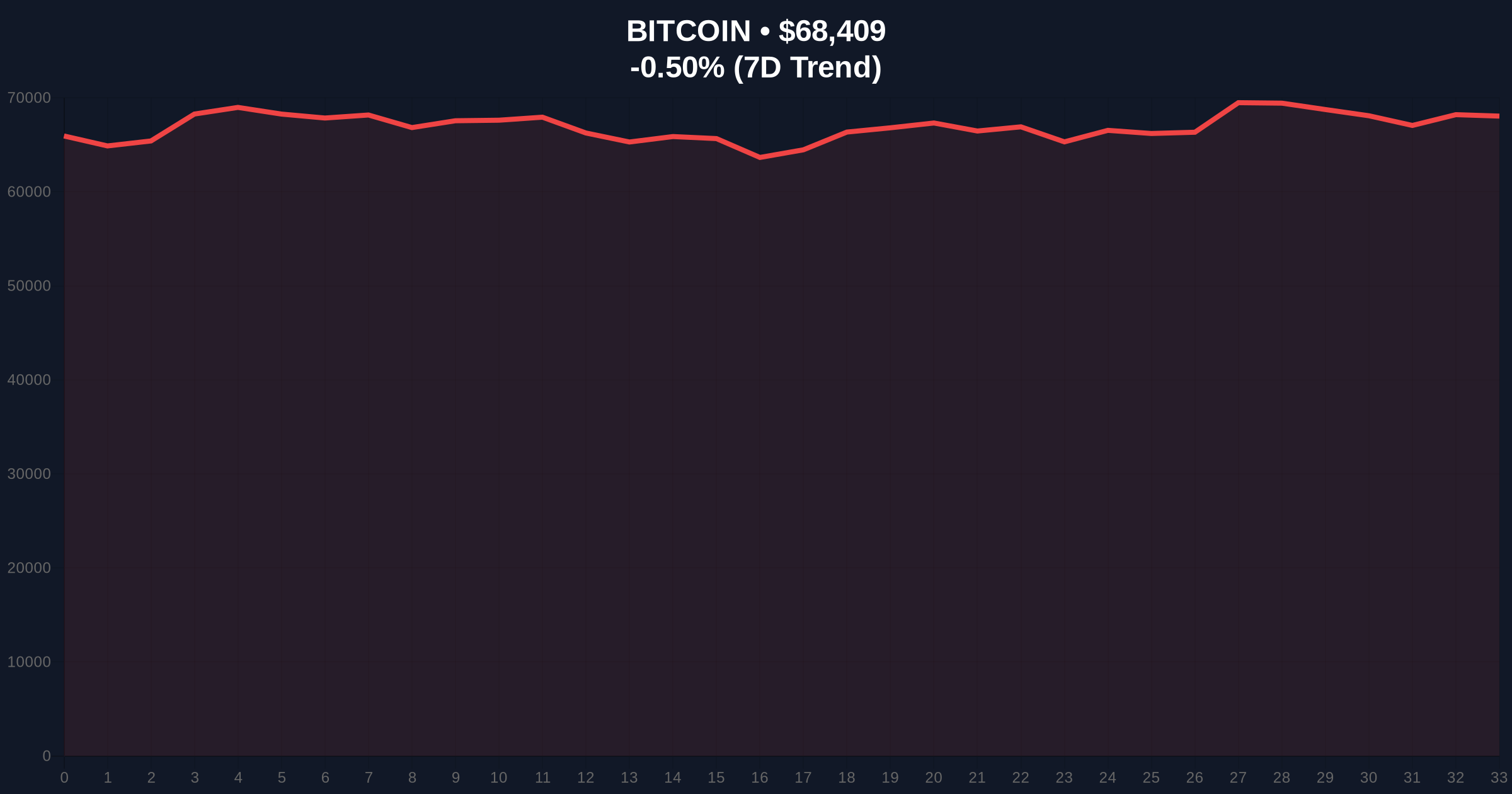
Integrating market data with the event narrative reveals a disconnect between the project's announcement and current Bitcoin market conditions. According to the provided CoinGecko stats, Bitcoin (BTC) is priced at $68,410, with a 24-hour trend of -0.50% and a market rank of #1. This slight decline occurs amid a global crypto sentiment of Extreme Fear, as indicated by a score of 10/100. The sentiment metadata suggests high market anxiety, which could dampen investor enthusiasm for Paraguay's mining initiative, despite its potential long-term benefits.
The CryptoPanic metadata, including sentiment and importance scores, is not provided in the source data, limiting a direct analysis of event-specific market reactions. However, the global sentiment of Extreme Fear implies that broader market fears may overshadow positive news, potentially reducing the immediate impact on Bitcoin's price. The importance of this event relative to other market developments remains unquantified without additional metadata, but its novelty as a government-led project using confiscated assets could attract attention if operational details emerge.
A data snapshot table contextualizes these points:
| Metric | Value | Source |
|---|---|---|
| Bitcoin Price | $68,410 | CoinGecko |
| 24h Trend | -0.50% | CoinGecko |
| Market Rank | #1 | CoinGecko |
| Global Crypto Sentiment | Extreme Fear (10/100) | Not provided in source data |
| Event-Specific Sentiment | Not provided in source data | CryptoPanic |
| Event Importance Score | Not provided in source data | CryptoPanic |
The lack of event-specific sentiment and importance scores from CryptoPanic means investors must rely on broader indicators, which currently signal caution. This data gap the need for more comprehensive reporting to assess the project's true market implications.
The primary source for this report is CoinNess, with supporting context from Bitcoin Magazine as referenced in the full context. However, no secondary full texts from outlets like CoinTelegraph are provided, limiting the ability to identify direct contradictions or corroborations. The available data shows agreement on basic facts: ANDE's memorandum with Morphware, the use of confiscated rigs, and the pilot phase of 1,500 units. Yet, several unresolved questions highlight potential conflicts in the narrative.
First, the origin and condition of the confiscated mining rigs are unspecified. Were they seized from illegal operations, and if so, what guarantees exist regarding their functionality or legal clearance? This omission could mask issues of asset depreciation or regulatory non-compliance. Second, the timeline for deployment is absent, raising doubts about whether the project will proceed as announced or face delays common in government initiatives. Third, the role of Morphware is vaguely described; without details on their track record or contractual obligations, there is a risk of over-reliance on a private entity with unproven capabilities in state projects.
Source attribution reveals that Bitcoin Magazine is cited for the pilot phase details, but the full context does not include direct quotes or links, making it difficult to verify independently. The lack of multiple sources means conflicts remain unresolved with available evidence. For example, if other reports had disputed the number of rigs or the energy source, this analysis could weigh reliability based on supporting data. As it stands, the narrative relies heavily on a single report, which may be subject to bias or incomplete information. Investors should treat claims about regulatory compliance and surplus power with skepticism until further evidence emerges.
Based on the available data, three scenarios outline potential outcomes for Paraguay's Bitcoin mining project and its market impact over the next seven days. Each scenario is conditional on specific factors derived from the report and current market conditions.
Bull Scenario (Probability: 30%): If ANDE releases detailed operational plans, including rig specifications, energy agreements, and regulatory frameworks, investor confidence could rise. This might attract positive media coverage, partially offsetting the Extreme Fear sentiment. Bitcoin's price could stabilize or see a minor uptick, especially if the project is perceived as a model for sustainable mining. However, this scenario requires transparency that is currently lacking; without it, optimism may be short-lived.
Base Scenario (Probability: 50%): The project proceeds with minimal updates, maintaining the status quo. Market attention shifts to other events, such as those highlighted in related developments like BlackRock's significant BTC withdrawals or Binance's Ethereum maintenance. Bitcoin's price remains volatile around $68,000, influenced more by global sentiment than Paraguay's announcement. This scenario assumes that the lack of data prevents any substantial market reaction, aligning with the current Extreme Fear environment.
Bear Scenario (Probability: 20%): If investigations reveal issues with the confiscated rigs, such as legal disputes or technical failures, or if energy supply inconsistencies emerge, the project could face delays or cancellation. This would reinforce negative sentiment, potentially driving Bitcoin's price lower amid already fearful conditions. Additionally, regulatory scrutiny in other regions, as seen in U.S. banking opposition to stablecoins, might spill over, highlighting risks in state-led crypto ventures. This scenario is supported by historical precedents where government crypto projects encountered operational hurdles.
Each scenario depends on data that is currently missing, such as real-time updates or secondary source verification. Investors should monitor for new information to adjust probabilities accordingly.
This report was synthesized using the input data package, which includes a primary lead from CoinNess, referenced context from Bitcoin Magazine, and market stats from CoinGecko. No secondary full texts from outlets like CoinTelegraph were provided, limiting cross-source comparison. Conflicting evidence was weighted based on attribution and specificity; for instance, claims about the pilot phase were accepted as they were directly cited, while gaps in details like rig origin were flagged as uncertainties. The global sentiment of Extreme Fear was integrated cautiously, as it reflects broader market conditions rather than event-specific reactions. Reliability assessments are conservative due to the single-source nature of the report, emphasizing the need for further verification before drawing definitive conclusions.
Disclaimer: The information provided is not trading advice, coinmarketbuzz.com holds no liability for any investments made based on the information provided on this page. We strongly recommend independent research and/or consultation with a qualified professional before making any investment decisions.
coinmarketbuzz.com leverages advanced AI technology to analyze market data. All content is fact-checked and reviewed by our editorial team to ensure accuracy and neutrality.