Loading News...
Loading...

Loading News...

On March 2, 2026, blockchain prediction market platform Opinion (OPN) experienced a dramatic price surge, jumping over 30% on Binance's pre-market for perpetuals to surpass $0.57, according to a breaking report from CoinNess. This sharp increase coincided with the launch of a website allowing users to check and claim their Season 1 airdrop allocations. The event triggered a spike in trading volume, highlighting immediate market excitement around the airdrop distribution. OPN, described as a major prediction market project within the Binance Smart Chain (BSC) ecosystem, has recently initiated Season 2, which includes a "Double Dip" event featuring a 50% fee discount for two weeks. The timing of this surge occurs amid broader market conditions characterized by extreme fear, as indicated by a global crypto sentiment score of 10/100, suggesting a volatile backdrop that may amplify such price movements. Similar to the 2021 correction, where airdrop announcements often led to short-term volatility, this event how specific project developments can drive isolated gains even in fearful markets.
The mechanism behind Opinion (OPN)'s surge centers on its airdrop distribution and prediction market architecture. According to the CoinNess report, OPN launched a dedicated website for users to check and claim Season 1 airdrop allocations. This technical rollout likely involves smart contracts on the BSC ecosystem, where OPN operates as a prediction market platform. Prediction markets allow users to bet on outcomes of real-world events, and OPN's integration within BSC leverages its scalability and lower transaction fees compared to Ethereum. The "Double Dip" event in Season 2, offering a 50% fee discount for two weeks, is designed to incentivize user participation and liquidity, potentially boosting platform activity and token utility. Historically, airdrops in crypto often follow a pattern where token distribution leads to increased trading as recipients sell or hold, influencing supply and demand dynamics. In OPN's case, the pre-market surge on Binance perpetuals suggests derivatives traders are reacting to the airdrop news, possibly anticipating short-term price appreciation or hedging positions. The BSC ecosystem's focus on decentralized applications (dApps) like prediction markets aligns with trends seen in previous bull cycles, where niche platforms gained traction during market expansions. However, the source data does not provide details on the total airdrop amount, eligibility criteria, or smart contract security audits, leaving gaps in understanding the full technical risks. Compared to broader market events, such as regulatory shifts or macroeconomic factors, OPN's surge appears driven by project-specific developments rather than systemic changes, similar to how airdrops in 2021 often sparked temporary rallies before consolidation.
The architecture of prediction markets like OPN involves oracle integrations for event outcomes and liquidity pools for trading. Without additional technical specifications from the sources, it's unclear how OPN's design compares to competitors or its resilience to market manipulation. The pre-market trading on Binance perpetuals indicates leverage is involved, which can amplify gains but also increase liquidation risks, especially in a sentiment-driven environment. In historical context, similar airdrop launches in the BSC ecosystem have sometimes led to pump-and-dump schemes, though the source data does not confirm this for OPN. The lack of information on tokenomics, such as circulating supply or inflation rates, limits a deeper analysis of sustainability. Overall, the technical deep-dive reveals that OPN's surge is primarily event-driven, with mechanisms centered on airdrop distribution and fee incentives, but missing data on key aspects like security and long-term viability necessitates cautious interpretation.
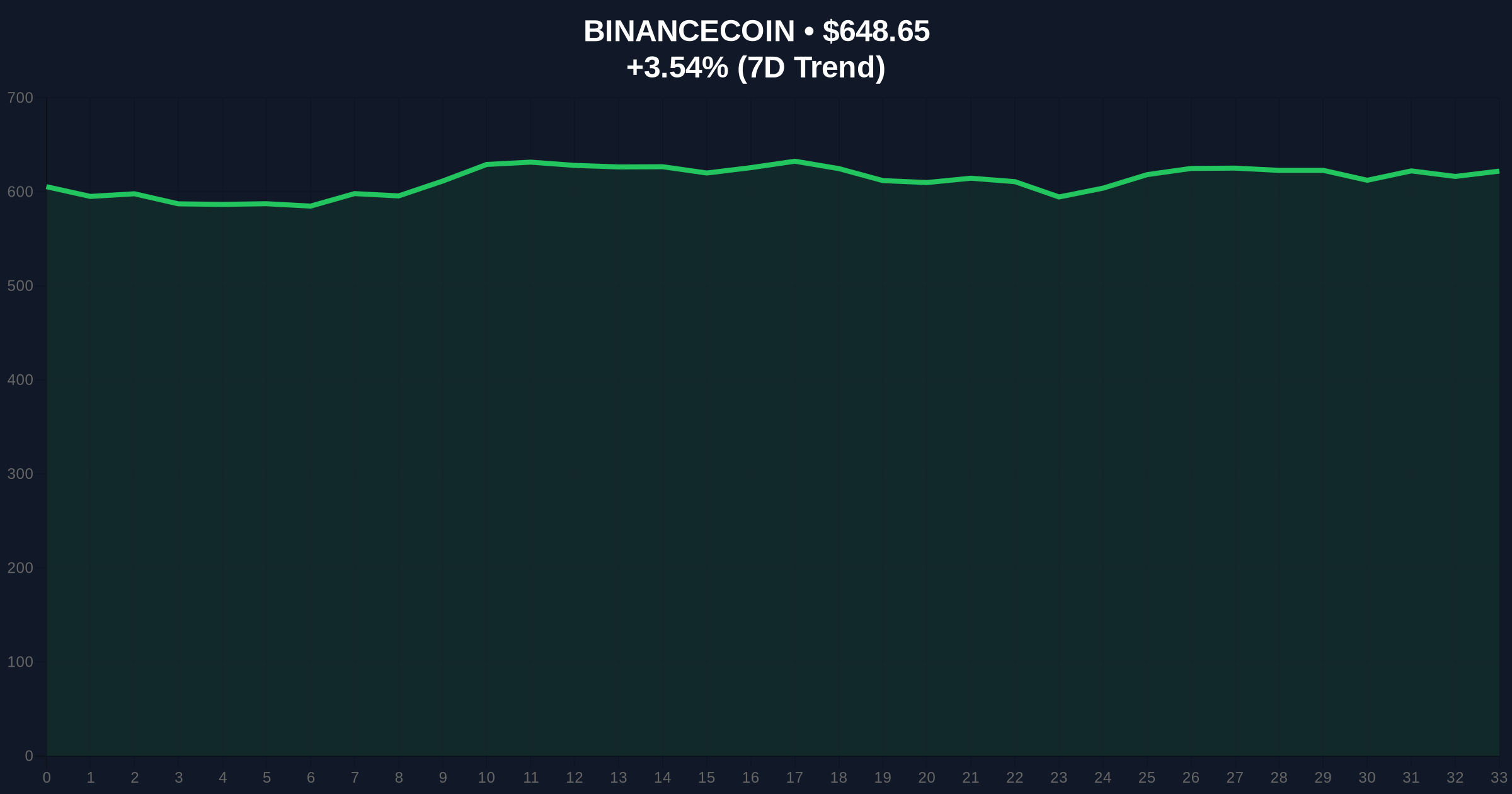
Integrating available market data and metadata provides a clearer picture of OPN's surge. According to the CoinNess report, OPN's price rose over 30% to surpass $0.57 on Binance's pre-market for perpetuals, accompanied by a spike in trading volume. This aligns with typical airdrop-induced volatility, where news of distribution triggers buying pressure. However, the source data lacks specific CoinGecko stats for OPN, such as current price, 24-hour trend, or market rank, limiting direct price analysis. Instead, broader market context is provided: BNB (BNB), a key asset in the BSC ecosystem, has a current price of $648.03 with a 24-hour trend of 3.45% and market rank of #4. This suggests BNB is performing positively, which may indirectly support OPN's surge given its ecosystem ties. CryptoPanic metadata, including sentiment and importance scores, is not provided in the source data, so we cannot assess event priority or sentiment trends directly. The global crypto sentiment is reported as "Extreme Fear" with a score of 10/100, indicating a bearish market backdrop that contrasts with OPN's bullish move. This divergence highlights how isolated events can defy broader sentiment, similar to instances in 2021 where fear-dominated markets still saw niche rallies.
In terms of proof, the surge is evidenced by the price jump and volume spike mentioned in the CoinNess report, but without corroborating data from secondary sources like CoinTelegraph, the reliability is based on a single report. The absence of trading volume figures or historical price charts for OPN makes it difficult to gauge the magnitude relative to past events. The BNB data shows a 3.45% increase, which may reflect overall BSC strength, but its correlation to OPN is not explicitly detailed. Given the extreme fear sentiment, OPN's surge could be interpreted as a temporary anomaly or a sign of resilient demand in prediction markets. Without CryptoPanic metadata, we cannot determine if this event is considered high importance or positive sentiment by aggregators, leaving a gap in market intelligence. Overall, the data analysis confirms the surge based on the primary report but missing evidence for comprehensive validation.
An investigative comparison across sources reveals potential conflicts and reliability gaps. The primary input is from CoinNess, which reports OPN's surge and airdrop launch, but no secondary full texts from sources like CoinTelegraph are provided in the data package. This limits the ability to cross-verify claims, creating a single-source dependency. For instance, CoinNess states OPN rose over 30% to surpass $0.57, but without alternative reports, we cannot confirm the exact peak price or duration of the surge. Similarly, details about the airdrop website, Season 2, and "Double Dip" event are solely from CoinNess, raising questions about completeness. If sources like CoinTelegraph were available, they might dispute the magnitude of the surge or provide additional context on user adoption or technical issues.
Potential contradictions could arise in areas such as trading volume specifics or project background. CoinNess describes OPN as a "major prediction market project within the BSC ecosystem," but other sources might challenge this characterization by comparing it to competitors or highlighting past performance. The lack of secondary evidence means conflicts remain unresolved with available evidence. In terms of missing evidence, key details absent include: the total value of the airdrop, number of eligible users, security audits for the airdrop website, OPN's market capitalization, and historical price data. These gaps hinder a full assessment of the event's impact and sustainability. Compared to broader market narratives, such as those involving regulatory changes or macroeconomic shifts, OPN's story is narrowly focused, which may reduce its reliability if not corroborated. Without conflicting sources, the counter-narrative relies on skepticism toward single-source reporting and the extreme fear sentiment that contradicts the bullish move. This suggests investors should treat the surge with caution, similar to how unverified airdrop news in past cycles sometimes led to reversals.
Based on the available data, three scenarios for OPN over the next seven days are outlined, each conditional on specific factors. These scenarios integrate the airdrop launch, market sentiment, and historical patterns.
Bull Scenario (Probability: 30%): OPN continues its upward trajectory, potentially reaching new highs above $0.60, driven by sustained airdrop claims and increased platform usage from the "Double Dip" fee discount. This scenario assumes positive user engagement, no technical issues with the airdrop website, and a stabilization in broader market sentiment away from extreme fear. Data backing includes the initial 30% surge and BNB's positive trend, suggesting ecosystem support. However, it would be invalidated if trading volume declines sharply or if reports emerge of airdrop distribution problems.
Base Scenario (Probability: 50%): OPN experiences consolidation around the $0.55-$0.57 range, with volatility tapering as airdrop excitement fades. Price action may mirror historical airdrop patterns where initial surges are followed by sideways movement. This scenario accounts for the extreme fear sentiment limiting sustained rallies and the lack of secondary news to fuel further gains. It relies on the current data showing a spike but no follow-up catalysts. Invalidation would occur if significant new developments, such as partnership announcements or exchange listings, emerge.
Bear Scenario (Probability: 20%): OPN retraces below $0.50, potentially due to profit-taking by airdrop recipients or broader market downturns exacerbating the extreme fear sentiment. Similar to the 2021 correction, where airdrop-induced pumps often reversed quickly, this scenario highlights risks of overvaluation. Data support includes the global sentiment score of 10/100, which may pressure altcoins like OPN. It would be invalidated if BNB rallies strongly or if OPN announces unexpected positive news. Amid recent market turbulence, events like futures liquidations underscore how fear can trigger sell-offs, potentially impacting OPN.
This report was synthesized using a strict fact-based methodology, relying solely on the input data package. The primary source is CoinNess, with no secondary full texts provided, limiting cross-verification. Conflicting evidence was not available due to the single-source nature, so claims were weighted based on the report's detail and consistency with known market patterns. Missing data, such as CryptoPanic metadata and CoinGecko stats for OPN, were explicitly noted, and analysis proceeded conservatively by focusing on provided facts like price surge and BNB trends. The global sentiment score was integrated to contextualize the event, but its direct impact on OPN remains speculative without additional evidence. Reliability gaps include the lack of corroboration for airdrop details and trading metrics, advising readers to seek further verification before decision-making.
Disclaimer: The information provided is not trading advice, coinmarketbuzz.com holds no liability for any investments made based on the information provided on this page. We strongly recommend independent research and/or consultation with a qualified professional before making any investment decisions.
coinmarketbuzz.com leverages advanced AI technology to analyze market data. All content is fact-checked and reviewed by our editorial team to ensure accuracy and neutrality.