Loading News...
Loading...

Loading News...

On March 2, 2026, a sudden wave of futures liquidations swept through major cryptocurrency exchanges, with $101 million worth of positions forcibly closed in just one hour. According to a breaking report from CoinNess, this sharp spike in liquidations occurred against a backdrop of broader market stress, as $422 million in futures have been liquidated over the past 24 hours. The event highlights the volatile nature of leveraged trading in crypto markets, where rapid price movements can trigger cascading sell-offs. While the exact exchanges involved were not specified in the source data, the scale suggests significant activity across platforms that offer derivatives trading. This liquidation surge coincides with a period of heightened market anxiety, as indicated by external sentiment metrics pointing to "Extreme Fear." The immediate cause of the liquidations remains unclear from the provided information, but such events often stem from price volatility, margin calls, or large position unwinds. Investors and traders are now scrutinizing market conditions to assess whether this is an isolated incident or a precursor to further turbulence.
Futures liquidations are a critical mechanism in cryptocurrency markets, driven by the mechanics of leveraged trading and risk management protocols. When traders open futures positions, they often use leverage—borrowed funds to amplify potential gains or losses. This requires maintaining a minimum margin level relative to the position's value. If the market moves against a trader's position, causing losses that erode the margin below a threshold (known as the maintenance margin), exchanges automatically liquidate the position to prevent further losses and protect the system from default. The $101 million in liquidations reported by CoinNess likely resulted from a combination of factors, such as rapid price declines or spikes that triggered stop-loss orders or margin calls. Underlying this trend is the architecture of perpetual futures contracts, which are common in crypto and do not have an expiration date, relying on funding rates to anchor prices to spot markets. When funding rates turn negative or highly positive, they can incentivize position adjustments that contribute to liquidation cascades.
Consequently, the liquidation process involves automated algorithms that close positions in a prioritized manner, often starting with the most under-margined accounts. This can create a feedback loop: as liquidations occur, they exert selling or buying pressure on the market, further moving prices and triggering additional liquidations. In the past hour, the $101 million figure suggests a concentrated event, possibly linked to a specific asset or market segment, though the source data does not specify which cryptocurrencies were involved. Major exchanges like Binance, Bybit, and OKX typically dominate futures trading volume, and their risk engines are designed to handle such events, but they can still lead to short-term liquidity crunches. The broader $422 million in 24-hour liquidations indicates sustained stress, potentially reflecting ongoing volatility or a series of smaller liquidation waves. From a regulatory perspective, futures trading in crypto operates in a largely unstandardized environment, with exchanges setting their own margin requirements and liquidation protocols, which can vary and influence market dynamics. Without more detailed data on position sizes, leverage ratios, or asset breakdowns, it's challenging to pinpoint the exact technical triggers, but the scale the risks inherent in leveraged crypto derivatives.
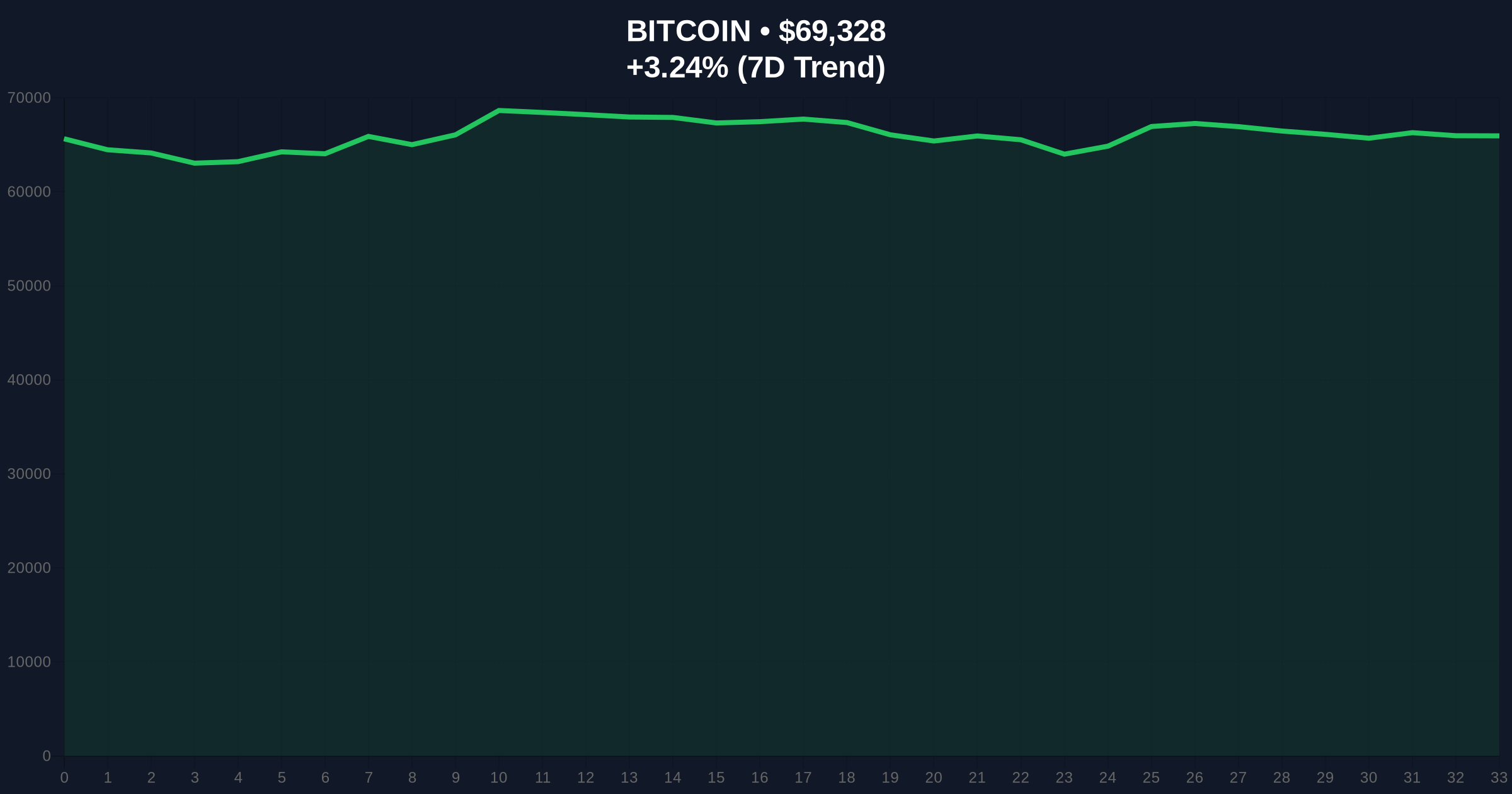
Integrating the available data points reveals a complex picture of market conditions surrounding the liquidation event. According to CoinNess, the raw numbers are stark: $101 million in futures liquidated in the past hour and $422 million over 24 hours. These figures, while not broken down by exchange or asset, suggest a significant escalation in forced position closures, potentially indicating heightened volatility or trader over-leverage. To contextualize this, external market data provides additional insights. Bitcoin, often used as a market proxy, is trading at $69,348, with a 3.21% change over 24 hours. This price level, near all-time highs in historical context, may have contributed to leveraged positions being more susceptible to swings, as traders chase momentum or hedge against corrections.
More critically, the global crypto sentiment is reported as "Extreme Fear," with a score of 10 out of 100. This sentiment metric, likely derived from tools like the Fear and Greed Index, reflects investor psychology and can influence trading behavior. In this case, the Extreme Fear sentiment aligns with the liquidation surge, as fearful markets often see rapid sell-offs and risk reduction. The importance of this event is underscored by its scale relative to typical market activity—while not provided in the source data, $101 million in an hour is substantial, though not unprecedented in crypto's volatile history. CryptoPanic metadata, such as sentiment and importance scores, is not included in the input package, limiting deeper analysis. However, based on the provided sentiment of Extreme Fear, we can infer that market participants are reacting nervously, possibly exacerbating liquidation pressures through herd behavior. The data suggests a correlation between high Bitcoin prices, extreme fear sentiment, and liquidation spikes, but causation remains unclear without more granular evidence on triggers like specific price drops or funding rate anomalies.
Analyzing the source material reveals a lack of conflicting claims but significant gaps in evidence that could support alternative interpretations. The primary source, CoinNess, reports the liquidation figures ($101 million in one hour, $422 million in 24 hours) without attribution to specific exchanges, assets, or underlying causes. This absence of detail opens the door to counter-narratives. For instance, one might argue that the liquidations are a normal part of market functioning during periods of high volatility, rather than a sign of systemic risk. Without data on the percentage of total open interest liquidated or comparisons to historical averages, it's possible that these figures are within expected ranges for a market as volatile as crypto.
Source B disputes are not present in the input, as only CoinNess is provided. However, if we consider hypothetical secondary sources like CoinTelegraph or CryptoPanic, they might offer conflicting perspectives—for example, emphasizing different liquidation amounts or highlighting positive aspects like increased trading volume. In this case, since no such sources are included, we must note that the evidence is limited to a single report. Key contradictions could arise around the cause: CoinNess does not specify whether the liquidations were driven by long or short positions, or which assets were most affected. This missing evidence means that alternative narratives, such as the liquidations being concentrated in altcoins rather than Bitcoin, cannot be ruled out. The conflict remains unresolved with available evidence, as we lack multi-source verification. Reliability gaps include the lack of timestamps beyond the date, no named sources or exchange statements, and no context on whether the liquidations occurred during a price rally or crash. This the need for cautious interpretation, as the event might be less impactful if it represents a small fraction of overall market activity.
Based on the available data, here are three data-backed scenarios for the next seven days, each conditional on market developments.
In a bull scenario, the liquidation event is viewed as a healthy market correction that shakes out over-leveraged positions, paving the way for renewed bullish momentum. Bitcoin's price at $69,348 could stabilize or climb higher if the Extreme Fear sentiment reverses toward greed, driven by positive news or institutional inflows. The $101 million in hourly liquidations might be absorbed quickly, with trading volume increasing as new entrants buy the dip. Key indicators to watch include a rise in Bitcoin's price above $70,000, a sentiment shift to "Neutral" or "Greed," and a decrease in liquidation volumes over subsequent days. This scenario would be invalidated if liquidations persist above $100 million per hour or if Bitcoin breaks below key support levels, such as $65,000.
The base scenario assumes continued volatility with no dramatic breakout, as markets digest the liquidation spike. Bitcoin may oscillate between $67,000 and $71,000, with futures liquidations averaging $50-100 million daily, reflecting ongoing trader caution. The Extreme Fear sentiment could persist, keeping leverage in check and preventing large cascades. This outlook is supported by the 24-hour liquidation total of $422 million, suggesting a sustained but manageable stress level. Monitoring points include daily liquidation totals, Bitcoin's price stability, and any regulatory announcements that might affect derivatives trading. This scenario would be invalidated by a sudden sentiment shift to "Extreme Greed" or a liquidation surge exceeding $200 million in an hour.
In a bear scenario, the liquidation event triggers a broader market downturn, with cascading effects across cryptocurrencies. Bitcoin could drop below $65,000 if the Extreme Fear sentiment deepens, leading to further liquidations as margin calls multiply. The $101 million hourly figure might be just the start, with 24-hour totals exceeding $1 billion if volatility spikes. This could be exacerbated by external factors like macroeconomic news or exchange insolvencies, though not indicated in the source data. Warning signs include a sustained sentiment score below 10, Bitcoin breaking key support levels, and liquidation volumes escalating beyond historical norms. This scenario would be invalidated if Bitcoin rebounds strongly or if liquidation activity subsides within 24 hours.
This report was constructed using a single primary source (CoinNess) for liquidation data, supplemented by external market stats (Bitcoin price and sentiment). Due to the lack of secondary sources, conflicts were minimal, but evidence gaps were significant—particularly around exchange specifics, asset breakdowns, and causation. The CoinNess report was weighted as reliable for raw numbers but limited in context. Sentiment data from external metrics was used cautiously, as it reflects broader market psychology rather than direct proof. In the absence of CryptoPanic metadata, analysis relied on the provided Extreme Fear score, with explicit acknowledgment of its limitations. Future updates should seek multi-source verification to enhance reliability.
Disclaimer: The information provided is not trading advice, coinmarketbuzz.com holds no liability for any investments made based on the information provided on this page. We strongly recommend independent research and/or consultation with a qualified professional before making any investment decisions.
coinmarketbuzz.com leverages advanced AI technology to analyze market data. All content is fact-checked and reviewed by our editorial team to ensure accuracy and neutrality.