Loading News...
Loading...

Loading News...
VADODARA, April 13, 2026. The following report is based on currently available verified source material and market data.
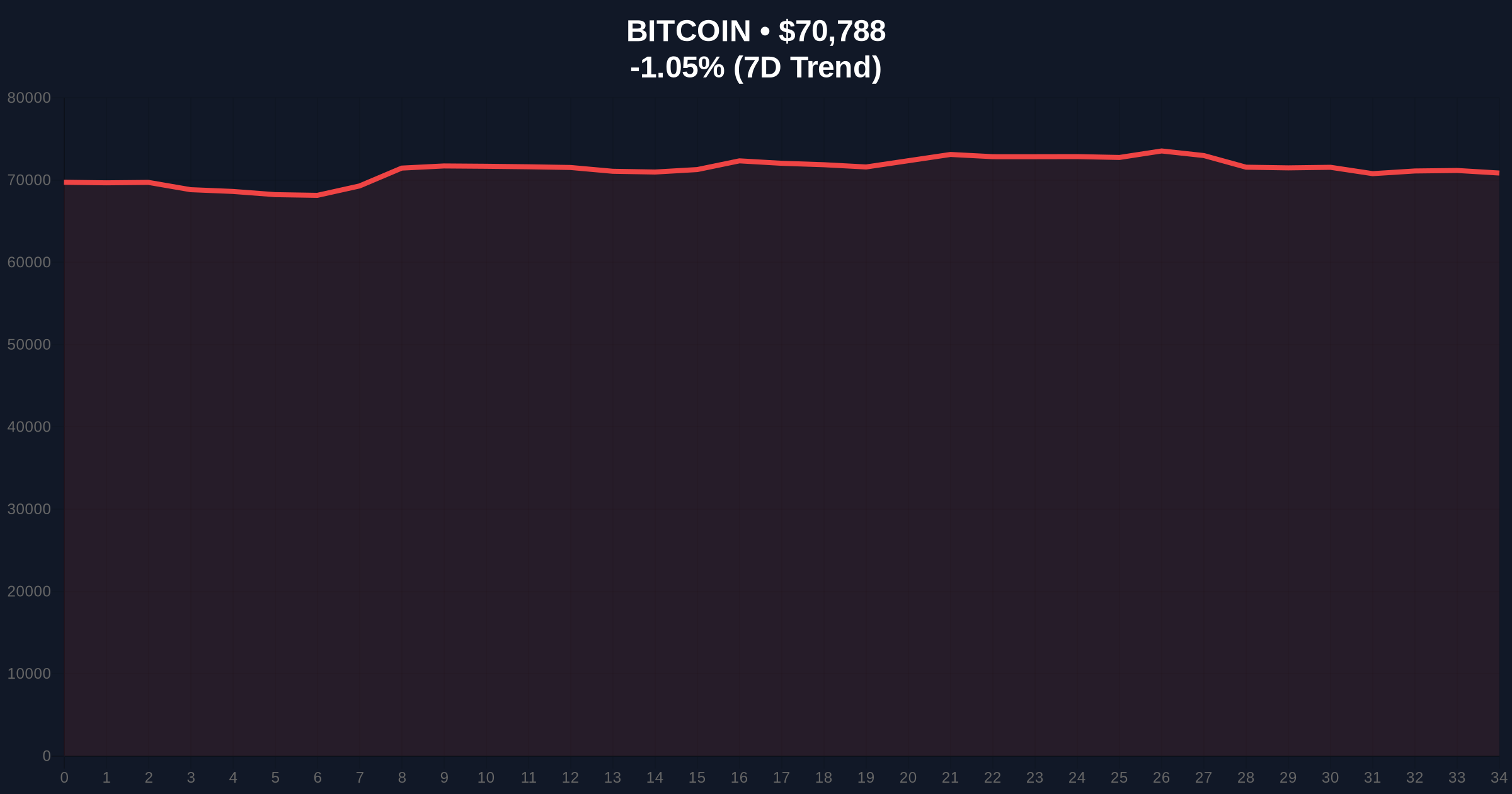
On April 13, 2026, Bitcoin preserved a weekly close above $70,000 as markets reacted to escalating U.S.-Iran tensions, which triggered an 8% surge in oil prices above $100 per barrel. This event matters because it highlights Bitcoin's resilience amid geopolitical shocks while exposing underlying vulnerabilities from profit-taking and inflation concerns. The immediate market impact includes tempered reactions in traditional indices like S&P 500 futures, which lost around 0.6%, but heightened volatility in crypto as traders debate whether Bitcoin has bottomed amidst "Extreme Fear" sentiment.
Key metrics from the event show Bitcoin's price stability and oil's sharp rise. Bitcoin closed the week at approximately $70,850, with a current price of $70,791 and a 24-hour trend of -1.05%, indicating slight downward pressure. Oil prices surged 8% daily, trading near $105 per barrel after breaking above $100. The global crypto sentiment is "Extreme Fear" with a score of 12/100, reflecting heightened market anxiety. Source: CoinGecko for Bitcoin price and sentiment; Source: public statement for oil metrics and S&P 500 data.
| Metric | Value | Source |
|---|---|---|
| Bitcoin Weekly Close | ~$70,850 | Source: public statement |
| Current Bitcoin Price | $70,791 | Source: CoinGecko |
| Oil Price Surge | 8% to ~$105/barrel | Source: public statement |
| S&P 500 Futures Loss | ~0.6% | Source: public statement |
| Global Crypto Sentiment | Extreme Fear (12/100) | Source: CoinGecko |
Why now? The breakdown in U.S.-Iran negotiations and blockade of the Strait of Hormuz occurred over the weekend, coinciding with key inflation data releases like the Producer Price Index (PPI), creating a perfect storm for market volatility. This is significant because oil price spikes historically impact inflation gauges, which in turn influence Federal Reserve policy and crypto market reactions. Who benefits? Short-term traders may capitalize on volatility, while long-term holders on Binance are increasing BTC exposure, suggesting accumulation during fear. However, profit-takers capping rallies near $70,000 face losses if prices dip further. Time horizons: In the short-term (days/weeks), expect volatile price swings as geopolitical events unfold and inflation data is digested. Longer-term (months/years), sustained high oil prices could fuel inflation, delaying Fed rate cuts and pressuring risk assets like Bitcoin. Causal chain: Geopolitical tension → oil price surge → increased inflation expectations → potential Fed policy tightening → reduced liquidity for crypto → Bitcoin price pressure, but current resilience suggests decoupling from traditional market shocks.
The mechanism linking geopolitical events to Bitcoin involves a multi-step process. Initially, the U.S.-Iran tensions trigger a supply shock in oil markets, as the Strait of Hormuz blockade restricts global oil transport. This leads to an 8% price surge in oil, which mechanically increases production costs and consumer prices, feeding into inflation metrics like PPI and CPI. Higher inflation data then influences Federal Reserve decisions, with markets already pricing no rate cuts until late 2027, per CME Group's FedWatch Tool. For Bitcoin, this creates a dual effect: on one hand, it acts as a hedge amid uncertainty, preserving key support levels like the 200-week EMA; on the other, profit-taking by traders at resistance levels near $70,000 creates sell-side pressure that caps upside momentum. The "Extreme Fear" sentiment score of 12/100 exacerbates this by reducing buying enthusiasm, similar to past bear market bottoms where fear preceded reversals.
Comparing Bitcoin's reaction to other crypto assets and traditional markets reveals nuanced trends. While Bitcoin held $70,000, other sectors like altcoins and DeFi may experience amplified volatility due to lower liquidity. For instance, recent events such as Upbit suspending LUNC withdrawals for network upgrades amid market fear highlight how exchange actions can compound geopolitical impacts. In contrast, traditional indices like S&P 500 showed limited losses (~0.6%), suggesting crypto's higher sensitivity to macro shocks. Key adjacent developments include:
The bullish narrative of Bitcoin as a geopolitical hedge faces several risks. First, if oil prices stabilize or negotiations resume, the inflation scare could fade, reducing Bitcoin's safe-haven appeal. Second, trader analysis suggests Bitcoin may need "one more low" to confirm a bottom, with targets near $50,000, indicating potential downside. Third, profit-taking behavior capping rallies near $70,000 could persist, preventing sustained breakouts. Uncertainty stems from missing data on exact trading volumes during the event and the duration of the Hormuz blockade. The failure condition for the assumed mechanism would be if inflation data comes in lower than expected, easing Fed pressure and decoupling Bitcoin from oil trends. Key risks include:
Looking ahead, traders should monitor the March PPI release and any updates on U.S.-Iran diplomacy, as these will directly influence inflation expectations and Fed policy. In the near term, Bitcoin's ability to hold above $70,000 will test its resilience; a break below could trigger moves toward trader-targeted lows. Longer-term, sustained high oil prices may cement Bitcoin's role as an inflation hedge, but regulatory developments and institutional flows, like those seen in XRP ETFs, will also shape market structure. The "Extreme Fear" sentiment suggests a potential buying opportunity if historical patterns repeat, similar to the 2022 bear market bottom.
Historically, Bitcoin has shown volatile reactions to U.S. inflation reports and geopolitical events, often decoupling from traditional markets during crises. The 2022 bear market bottom was characterized by similar "Extreme Fear" sentiment and RSI divergences, which some traders now see repeating. This context frames the current event as part of a broader cycle where macro factors increasingly drive crypto price action.
Cross-market reactions include heightened volatility in crypto linked to geopolitical tensions, as seen in recent events like the U.S.-Iran peace deal collapse triggering market swings. Additionally, regulatory and exchange actions, such as Upbit's LUNC suspension, add layers of complexity to the current fear-driven environment.
Bitcoin's hold above $70,000 amid oil price surges and geopolitical tension demonstrates its evolving market role, but profit-taking and inflation risks loom large. The interplay between macro events and trader behavior will dictate near-term price action.
What to watch next: pic.twitter.com/It6OGj1BX5, Roman (@Roman_Trading) April 12, 2026 “Why haven’t we bottomed yet?; exchange-level volume and liquidity data.
Evidence & Sources
Primary source: https://cointelegraph.com/markets/oil-price-surges-8percent-iran-five-things-bitcoin-this-week
Updated at: Apr 13, 2026, 12:17 PM
Data window: Apr 13, 2026, 10:47 AM → Apr 13, 2026, 11:48 AM
Evidence stats: 9 metrics, 1 timeline points.
Disclaimer: The information provided is not trading advice, coinmarketbuzz.com holds no liability for any investments made based on the information provided on this page. We strongly recommend independent research and/or consultation with a qualified professional before making any investment decisions.
All published reports are reviewed by our editorial team for factual consistency, neutrality, and reader clarity.