Loading News...
Loading...

Loading News...

VADODARA, April 6, 2026. The following report is based on currently available verified source material and market data.
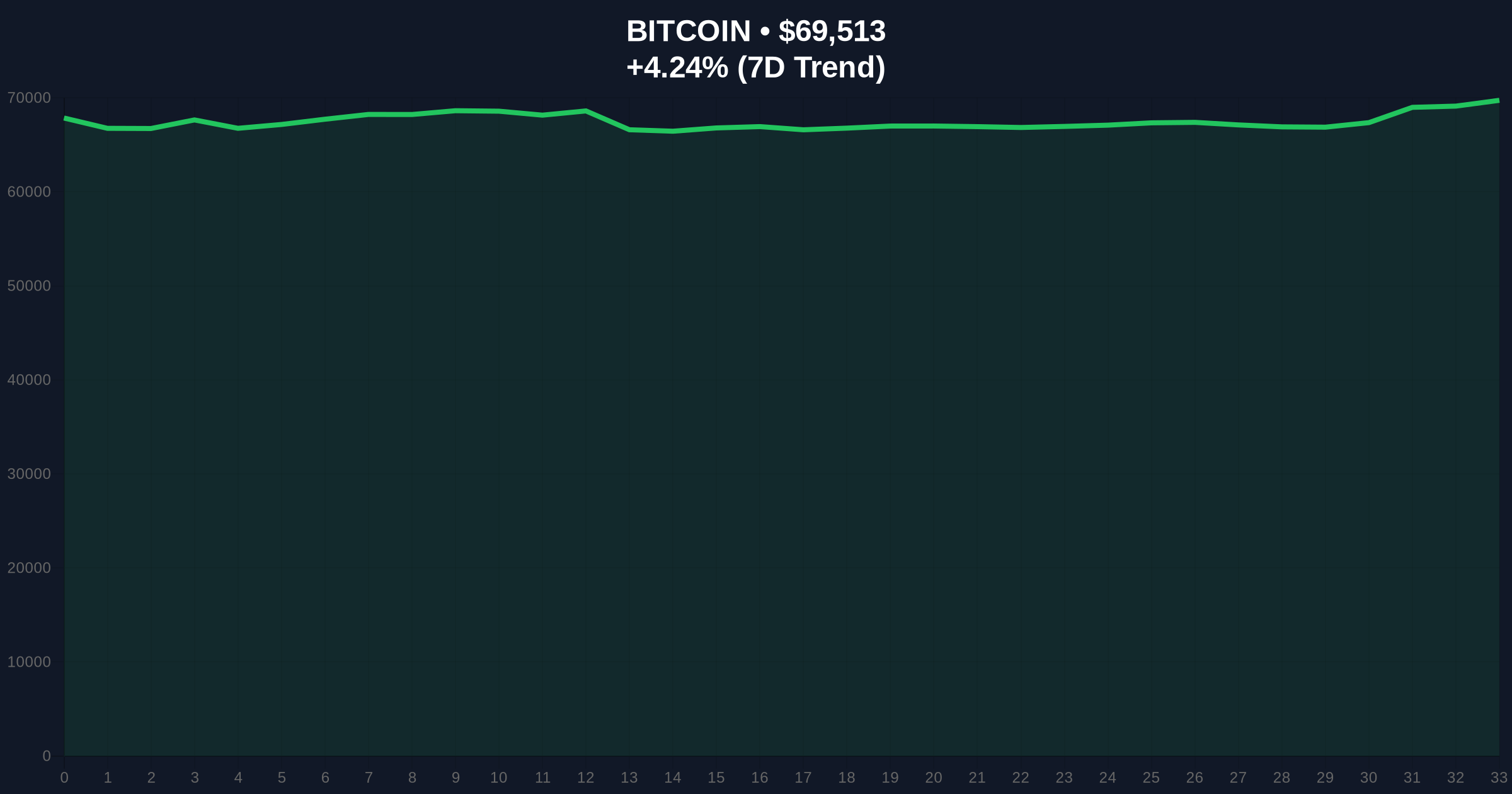
Michael Saylor's firm, Strategy, purchased 4,871 Bitcoin between April 1 and April 5, 2026, spending approximately $329.9 million at an average price of $67,718 per BTC. This acquisition brings the company's total holdings to 766,970 BTC, valued at about $58.02 billion with an average cost of $75,644 per coin. The move occurs as Bitcoin trades at $69,504 with a 4.22% 24-hour gain, while global crypto sentiment registers "Extreme Fear" at a score of 13/100, highlighting a divergence between institutional accumulation and retail market anxiety.
The purchase represents a significant addition to Strategy's Bitcoin portfolio, reinforcing its position as one of the largest corporate holders. Key metrics from the transaction include a total spend of $329.9 million for 4,871 BTC, acquired at an average price of $67,718. This brings Strategy's cumulative holdings to 766,970 BTC, with an overall average acquisition cost of $75,644 per coin. Notably, the current Bitcoin price of $69,504 exceeds both the recent purchase price and the long-term average cost, suggesting unrealized gains on the new acquisition but potential paper losses on older holdings. Source: public statement. The timeline for the purchase is specified as between April 1 and April 5, 2026, though exact daily breakdowns are not provided in source data.
| Metric | Value | Source |
|---|---|---|
| Bitcoin Purchased | 4,871 BTC | Public statement |
| Total Spend | $329.9 million | Public statement |
| Average Purchase Price | $67,718 | Public statement |
| Total Holdings | 766,970 BTC | Public statement |
| Current Bitcoin Price | $69,504 | CoinGecko |
| 24h Trend | +4.22% | CoinGecko |
Why now? The purchase coincides with a period of "Extreme Fear" in crypto markets, as indicated by a sentiment score of 13/100, suggesting Strategy is accumulating during retail pessimism. This timing aligns with historical patterns where institutional buyers enter during downturns, potentially signaling a contrarian bet on Bitcoin's long-term value. Who benefits? Michael Saylor's Strategy stands to gain if Bitcoin appreciates, while the move may provide psychological support to other institutional investors. Retail traders, however, face mixed implications: the accumulation could stabilize prices, but it also concentrates Bitcoin ownership, potentially reducing market liquidity for smaller participants. Time horizons: In the short-term, the purchase may offer modest price support and reduce selling pressure, as seen in the 4.22% 24-hour gain. Long-term, it reinforces Bitcoin's narrative as a corporate treasury asset, but depends on broader adoption and regulatory clarity. Causal chain: Strategy's $330 million buy order → absorbs available sell-side liquidity → reduces immediate selling pressure → provides upward momentum → encourages other institutions to follow suit → reinforces Bitcoin's store-of-value thesis amid volatility.
The purchase mechanism involves Strategy executing large buy orders over a five-day period, likely through over-the-counter (OTC) desks or exchanges to minimize market impact. By spending $329.9 million at an average price of $67,718, the firm acquired Bitcoin below the current price of $69,504, indicating efficient execution. This accumulation strategy reduces circulating supply, as 4,871 BTC are moved from liquid markets to a long-term holding portfolio. The move mechanically supports prices by creating demand that outstrips available sell orders, particularly in a thin market characterized by "Extreme Fear" sentiment. Internally, Strategy's approach reflects a dollar-cost averaging tactic, spreading purchases across time to mitigate volatility, though the exact daily breakdown is not provided in source data.
Strategy's accumulation contrasts with broader market trends, where altcoins and other crypto assets experience extreme volatility. For instance, unrelated developments show TRU surging 98% and ARIAIP plummeting 49% amid the same "Extreme Fear" sentiment, highlighting Bitcoin's relative stability as a preferred institutional asset. Compared to other corporate Bitcoin holders, Strategy's purchase reinforces its lead, but raises questions about concentration risk in the ecosystem.
The bullish narrative assumes continued institutional adoption and Bitcoin's long-term appreciation, but several risks could invalidate this view. First, Strategy's average cost of $75,644 per coin remains above the current price of $69,504, indicating paper losses on older holdings that could pressure the firm if Bitcoin declines further. Second, the "Extreme Fear" sentiment may persist, leading to broader market sell-offs that overwhelm institutional buying. Third, regulatory changes or macroeconomic shifts could undermine Bitcoin's store-of-value thesis, rendering accumulation strategies ineffective.
In the near term, traders should monitor whether other institutions emulate Strategy's move, which could signal a broader accumulation phase. If Bitcoin holds above $67,718, it may validate the purchase as a support level, but failure to maintain gains could indicate weakening demand. Longer-term, the acquisition reinforces Bitcoin's role in corporate treasuries, but also highlights the growing divide between institutional and retail market participants. Regulatory developments, such as potential ETF approvals or tax changes, will influence whether similar purchases continue.
Michael Saylor's Strategy has been a prominent Bitcoin accumulator since 2020, adopting the cryptocurrency as a primary treasury reserve asset. The firm's previous purchases have often coincided with market downturns, positioning it as a contrarian investor. This latest acquisition extends that strategy, though the average cost of $75,644 reflects higher entry points in prior cycles. The move occurs amid ongoing debates about Bitcoin's volatility and suitability for corporate balance sheets, with proponents citing inflation hedging and critics pointing to regulatory risks.
While Strategy's purchase focuses on Bitcoin, other crypto market segments show divergent trends. For example, the crypto market has seen extreme volatility with TRU surging 98% and ARIAIP plummeting 49% amid "Extreme Fear" sentiment, indicating that altcoin movements are decoupled from Bitcoin's institutional flows. Additionally, events like XRP Tokyo 2026, which involves Ripple, a16z, SBI, and Rakuten converging in Japan, highlight regulatory and partnership developments in other blockchain sectors. These contrasts underscore Bitcoin's unique position as an institutional favorite, even as broader crypto markets experience turbulence.
Michael Saylor's Strategy has reinforced its Bitcoin accumulation strategy with a $330 million purchase, buying during a period of "Extreme Fear" sentiment to add 4,871 BTC to its holdings. The move provides short-term price support and institutional confidence, but risks include concentration, paper losses on older acquisitions, and dependency on broader market adoption. As Bitcoin trades above the purchase price, the transaction appears tactically sound, but its long-term success hinges on macroeconomic and regulatory factors beyond Strategy's control.
What to watch next: next official follow-up statements; exchange-level volume and liquidity data.
Evidence & Sources
Primary source: https://coinpedia.org/crypto-live-news/michael-saylors-strategy-buys-4871-bitcoin-for-330m
Updated at: Apr 06, 2026, 02:48 PM
Data window: Apr 06, 2026, 02:15 PM → Apr 06, 2026, 02:48 PM
Evidence stats: 8 metrics, 0 timeline points.
Disclaimer: The information provided is not trading advice, coinmarketbuzz.com holds no liability for any investments made based on the information provided on this page. We strongly recommend independent research and/or consultation with a qualified professional before making any investment decisions.
All published reports are reviewed by our editorial team for factual consistency, neutrality, and reader clarity.