Loading News...
Loading...

Loading News...
VADODARA, April 18, 2026. The following report is based on currently available verified source material and market data.
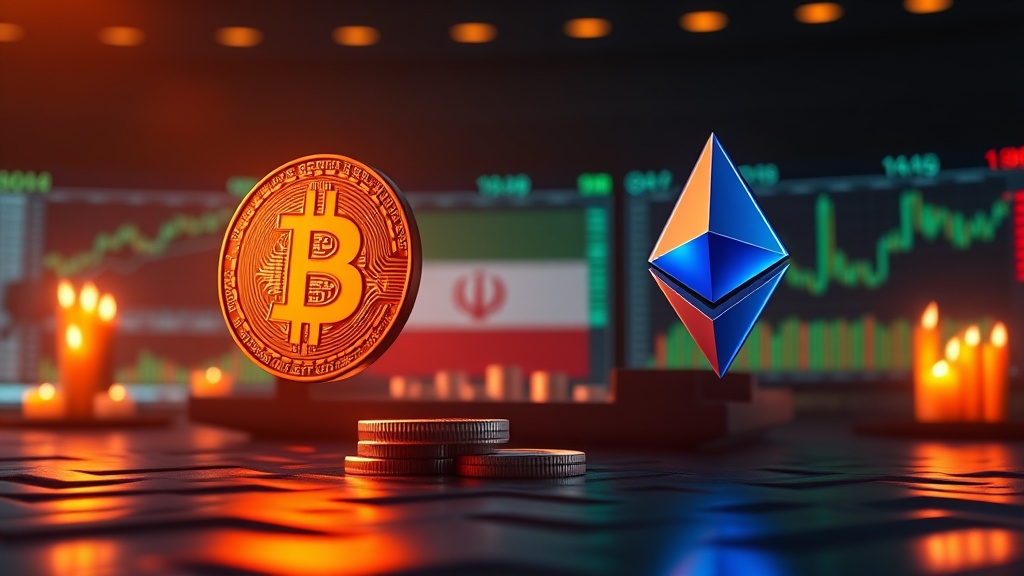
Iran Claims Control Over Strait of Hormuz, Crypto Markets Show Fear Amid Geopolitical Tensions developed into a market-moving story within the reported window. The initial source indicates immediate relevance for crypto sentiment, while fuller validation is still tied to cited datasets and official statements.
The announcement directly links geopolitical risk to crypto market conditions. Key metrics include Bitcoin's price at $76,898, reflecting a 2.42% increase over 24 hours, and the global crypto sentiment score of 26/100, categorized as "Fear." Source: CoinGecko. The event timeline centers on the Iranian military's statement, with no specific volume or market cap data provided for crypto reactions. Not provided in source data.
| Metric | Value | Source |
|---|---|---|
| Bitcoin Price | $76,898 | CoinGecko |
| 24-Hour Change | +2.42% | CoinGecko |
| Global Crypto Sentiment | Fear (26/100) | CoinGecko |
Why now? This announcement comes amid ongoing U.S.-Iran tensions, potentially escalating into a broader conflict that disrupts oil flows and global trade. In crypto markets, such geopolitical shocks often trigger volatility as investors reassess risk. Who benefits? Short-term traders may capitalize on price swings, while long-term holders face uncertainty. Conversely, institutions might hedge with stablecoins or gold. Time horizons: Short-term (days/weeks) could see increased crypto volatility and safe-haven flows into Bitcoin, while long-term (months/years) depends on whether tensions de-escalate or lead to sustained market stress. Causal chain: Iranian control claim → perceived geopolitical risk → investor fear → risk-off sentiment → potential crypto sell-offs or flight to perceived stores of value like Bitcoin.
Geopolitical events like this work through market psychology and macro linkages. The Strait of Hormuz handles about 20% of global oil trade, so disruptions can spike oil prices, fueling inflation fears and central bank responses. For crypto, this creates a dual effect: initially, fear may drive sell-offs as investors seek liquidity, but if traditional markets tumble, Bitcoin sometimes acts as a digital gold alternative, attracting capital. The mechanism involves news triggering algorithmic trading, whale movements adjusting portfolios, and retail sentiment shifting based on headlines, all amplified by thin liquidity in off-hours.
Similar geopolitical shocks have historically impacted crypto. For instance, the 2020 U.S.-Iran tensions saw Bitcoin briefly surge as a hedge, while traditional assets wobbled. Current market conditions differ with higher institutional adoption, potentially dampening extreme swings. Related developments include:
The bearish scenario questions the market impact's sustainability. If tensions ease quickly, crypto could revert to prior trends, making fear-driven moves temporary. Uncertainty stems from missing data on trading volume, institutional flows, and direct causal links between the announcement and price action. Failure conditions include:
Near-term, traders should monitor oil prices and traditional market reactions for cues. If the situation escalates, expect increased crypto volatility and potential regulatory scrutiny as governments assess financial stability. For investors, this the importance of diversification and risk management in geopolitically sensitive portfolios.
The Strait of Hormuz has long been a flashpoint in U.S.-Iran relations, with previous incidents affecting global energy markets. Crypto's role as a risk asset or hedge in such contexts has evolved, with mixed historical performance during crises.
Contextually relevant articles include coverage of prior Hormuz tensions impacting crypto markets, providing historical parallels to assess current reactions.
Iran's control claim over the Strait of Hormuz introduces geopolitical risk into crypto markets, reflected in fear sentiment and Bitcoin's price movement. While short-term volatility is likely, long-term effects depend on broader conflict dynamics and market resilience.
What to watch next: Iran military says it has restored control over Strait of Hormuz An Iranian military spokesperson announced today that Iran has restored its previous level of control over the Strait of Hormuz, citing what it descri...; An Iranian military spokesperson announced today that Iran has restored its previous level of control over the Strait of Hormuz, citing what it described as repeated U.S..
Evidence & Sources
Primary source: https://coinness.com/news/1154905
Updated at: Apr 18, 2026, 10:39 AM
Data window: Apr 18, 2026, 10:16 AM → Apr 18, 2026, 10:18 AM
Evidence stats: 2 metrics, 2 timeline points.
Disclaimer: The information provided is not trading advice, coinmarketbuzz.com holds no liability for any investments made based on the information provided on this page. We strongly recommend independent research and/or consultation with a qualified professional before making any investment decisions.
All published reports are reviewed by our editorial team for factual consistency, neutrality, and reader clarity.