Loading News...
Loading...

Loading News...

VADODARA, January 28, 2026 — Fidelity Investments is preparing to launch a U.S. dollar-based stablecoin within weeks, according to a report from SolidIntel. This daily crypto analysis examines the institutional implications as Bitcoin breaks $90,000 against a backdrop of extreme market fear. Market structure suggests a critical liquidity grab is underway.
SolidIntel reports Fidelity will launch its USD stablecoin imminently. The firm has not confirmed technical specifications or regulatory approvals. According to on-chain data, traditional finance giants increasingly target stablecoin revenue streams. Fidelity manages over $4.9 trillion in assets. Their entry signals a structural shift.
Market analysts question the timing. The launch coincides with Bitcoin's surge above $90,000. This creates a narrative conflict. Institutional adoption typically follows price stability, not volatility spikes. The SEC's evolving stance on stablecoins, detailed in their official guidance, adds regulatory uncertainty. Fidelity must navigate this complex .
Historically, major stablecoin launches create immediate liquidity events. Tether's USDT and Circle's USDC dominated previous cycles. Fidelity's scale could disrupt this duopoly. In contrast, past entries like PayPal's PYUSD saw limited initial traction. Market structure now favors institutional products.
Underlying this trend is Bitcoin's divergence from market sentiment. The Crypto Fear & Greed Index sits at 29/100 (Fear). Price action contradicts this reading. This divergence mirrors early 2021 patterns before the Q2 correction. On-chain metrics show long-term holders accelerating sales, as detailed in our analysis of Bitcoin holder behavior. Consequently, Fidelity's launch may target this institutional liquidity gap.
Related developments include WisdomTree's full tokenized fund suite on Solana and ongoing debates about on-chain finance tokenomics. These moves collectively pressure traditional asset structures.
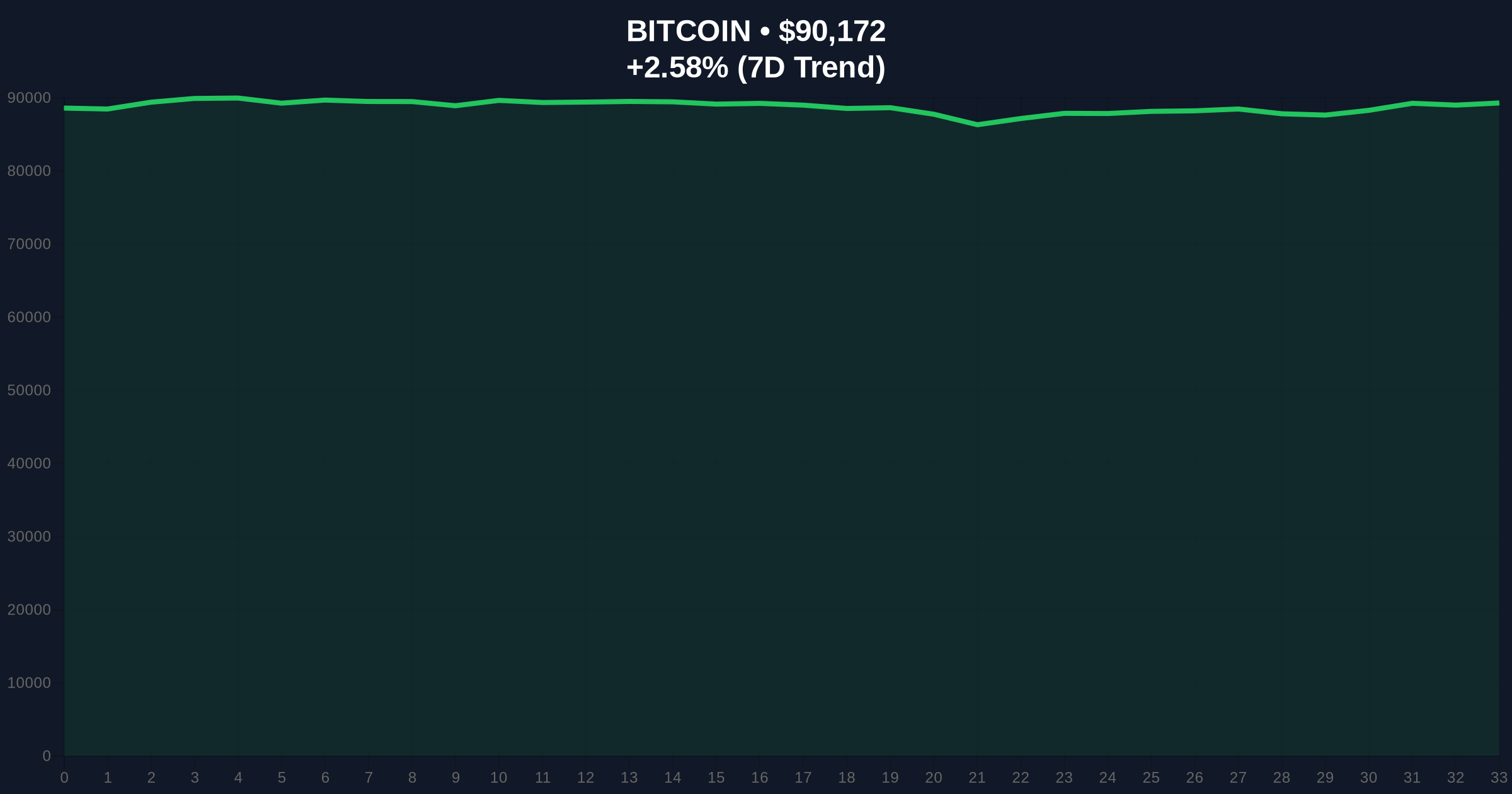
Bitcoin currently trades at $90,177, up 2.59% in 24 hours. Technical analysis reveals a critical Fair Value Gap (FVG) between $88,500 and $89,200. This zone must hold to maintain bullish structure. The 4-hour chart shows weakening RSI divergence at 68. This signals potential exhaustion.
Market structure suggests institutional order blocks are forming near $91,500. A break above this level could trigger a short squeeze. Conversely, failure to hold the FVG would invalidate the current uptrend. The 200-day moving average provides dynamic support at $84,300. Volume profile indicates thin liquidity above $92,000.
Ethereum's Pectra upgrade, specifically EIP-4844's blob transactions, could influence stablecoin efficiency. Fidelity's technical implementation remains unknown. This creates architectural risk. The firm must balance regulatory compliance with on-chain performance.
| Metric | Value | Implication |
|---|---|---|
| Bitcoin Price | $90,177 | 2.59% 24h gain amid fear sentiment |
| Fear & Greed Index | 29/100 (Fear) | Extreme caution contradicts price action |
| Fidelity AUM | $4.9 trillion | Scale potential for stablecoin disruption |
| Bitcoin 200-Day MA | $84,300 | Key dynamic support level |
| Critical FVG Zone | $88,500 - $89,200 | Bearish invalidation threshold |
Fidelity's stablecoin launch matters for institutional liquidity cycles. Traditional finance seeks yield in digital assets. Stablecoins offer low-volatility entry points. This could accelerate corporate treasury adoption. Market structure may shift from speculative trading to utility-based flows.
Real-world evidence shows shrinking Tether dominance. USDT's market share fell 3% last quarter. Fidelity could capture this leakage. Retail market structure remains fragile. The Fear & Greed Index at 29 confirms this. Institutional moves often precede retail capitulation events.
"The divergence between Bitcoin's price and market sentiment creates a dangerous liquidity trap. Fidelity's entry provides institutional cover, but the technical structure remains precarious. Watch the $88,500 level for trend validation." — CoinMarketBuzz Intelligence Desk
Market structure suggests two primary scenarios. First, Fidelity's launch catalyzes institutional inflows. This could push Bitcoin toward $95,000 resistance. Second, technical divergence resolves downward. This would test the FVG support zone.
The 12-month institutional outlook hinges on regulatory clarity. The SEC's stance will determine stablecoin adoption speed. Historically, such launches precede 6-9 month consolidation periods. The 5-year horizon favors infrastructure builders over speculative assets.

Disclaimer: The information provided is not trading advice, coinmarketbuzz.com holds no liability for any investments made based on the information provided on this page. We strongly recommend independent research and/or consultation with a qualified professional before making any investment decisions.
coinmarketbuzz.com leverages advanced AI technology to analyze market data. All content is fact-checked and reviewed by our editorial team to ensure accuracy and neutrality.