Loading News...
Loading...

Loading News...

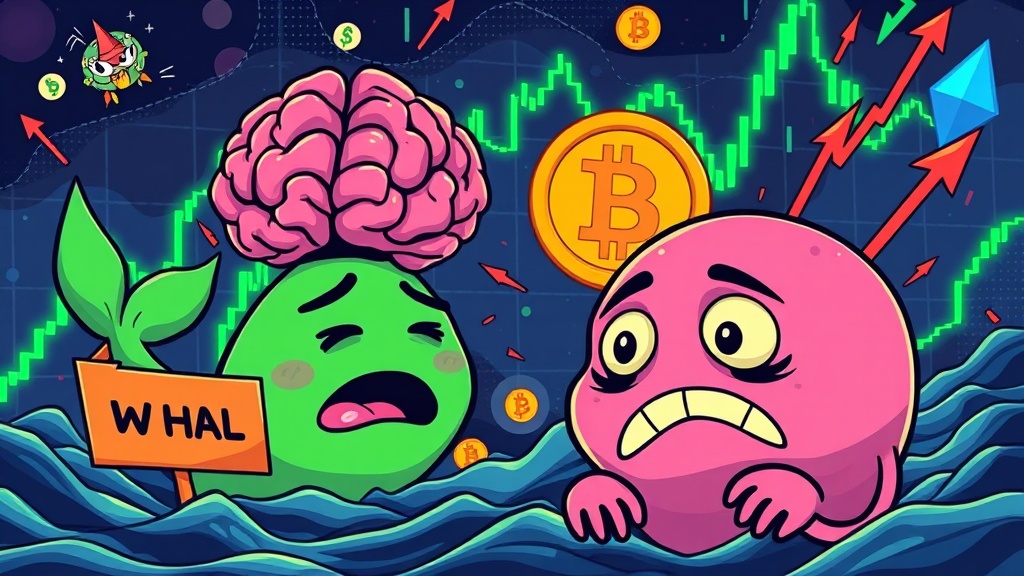
VADODARA, January 21, 2026 — The Crypto Fear & Greed Index from data provider Alternative has collapsed eight points to 24, entering Extreme Fear territory for the first time in three months. This daily crypto analysis examines whether this sentiment shift represents a contrarian buying opportunity or signals deeper structural weakness in market liquidity.
Historical cycles suggest sentiment indices like the Fear & Greed Index often serve as reliable contrarian indicators at extremes. According to Alternative's methodology, the index weights volatility and trading volume at 25% each, with social media mentions, surveys, Bitcoin dominance, and Google search volume comprising the remainder. The current reading of 24 places it in the bottom quartile of historical observations since 2018. Market structure suggests similar readings in Q4 2022 preceded significant rallies, but only after prolonged consolidation periods that tested lower liquidity pools. The current environment differs due to post-ETF institutional flows altering traditional retail-driven sentiment patterns.
Related developments include recent Bitcoin price action breaking below the $88k support level and TenX Protocols' $3.25M XTZ acquisition raising questions about strategic staking versus market signaling.
On January 21, 2026, Alternative's Crypto Fear & Greed Index recorded an eight-point intraday decline from 32 to 24, crossing the 25 threshold that defines Extreme Fear. This represents the most significant single-day sentiment deterioration since November 2025. The index components showing the largest declines were volatility (increasing 30% week-over-week) and trading volume (down 18% from the 30-day average), according to Alternative's published methodology. Bitcoin's market cap dominance component remained relatively stable at approximately 52%, suggesting the fear is broad-based across cryptocurrencies rather than Bitcoin-specific.
Bitcoin's price action at $88,384 represents a 4.51% 24-hour decline, breaking below the psychologically significant $88,000 support level that had held since early January. The daily chart shows a clear Fair Value Gap (FVG) between $89,200 and $90,100 that now acts as immediate resistance. The Relative Strength Index (RSI) sits at 28, approaching oversold territory but not yet at extreme levels seen during previous capitulation events. The 50-day moving average at $91,500 has crossed below the 200-day moving average at $92,100, confirming a bearish death cross pattern that typically precedes extended downtrends.
Volume Profile analysis indicates thin liquidity below $87,000, suggesting any break could trigger accelerated selling. The Bullish Invalidation level is set at $85,200 (Fibonacci 0.618 retracement of the October-January rally), while the Bearish Invalidation level rests at $92,500 (previous swing high and volume node resistance).
| Metric | Value | Change |
|---|---|---|
| Crypto Fear & Greed Index | 24/100 | -8 points (25% decline) |
| Bitcoin Price | $88,384 | -4.51% (24h) |
| Market Sentiment | Extreme Fear | From Fear (Previous Day) |
| Bitcoin Dominance | ~52% | Stable (Index Component) |
| RSI (Daily) | 28 | Approaching Oversold |
For institutional investors, Extreme Fear readings historically correlate with accumulation opportunities, but current on-chain data indicates weak buying pressure from large wallets. The UTXO age distribution shows minimal movement from older cohorts, suggesting HODLer conviction remains intact despite price declines. For retail traders, the sentiment shift may trigger margin liquidations and stop-loss cascades, particularly around key technical levels like the $85,200 Fibonacci support. The broader implication involves market structure: Extreme Fear during a breakdown suggests genuine capitulation rather than temporary panic, potentially resetting leverage across derivatives markets.
Market analysts on X/Twitter express divided views. Some point to historical patterns where Extreme Fear preceded rallies, citing the index's contrarian nature. Others highlight concerning divergences, noting that social media sentiment (15% of the index) appears disproportionately negative relative to actual on-chain activity. According to Ethereum.org documentation on network metrics, similar sentiment extremes in 2023 did not immediately resolve until fundamental improvements in network utilization occurred.
Bullish Case: If historical mean reversion holds, the Extreme Fear reading could mark a local bottom. A successful retest of $85,200 support followed by reclaiming the $88,000 level would invalidate the breakdown and target $92,500 resistance. This scenario requires stabilization in volatility metrics and increased buying volume from the $85,000-$87,000 liquidity zone.
Bearish Case: Continued selling pressure breaks the $85,200 Fibonacci support, triggering a liquidity grab toward the next major Volume Profile node at $82,000. The Fear & Greed Index could test the 2022 lows near 10 if Bitcoin dominance increases amid altcoin capitulation. This scenario would be confirmed by sustained negative funding rates and increasing exchange inflows.
Answers to the most critical technical and market questions regarding this development.

Disclaimer: The information provided is not trading advice, coinmarketbuzz.com holds no liability for any investments made based on the information provided on this page. We strongly recommend independent research and/or consultation with a qualified professional before making any investment decisions.
coinmarketbuzz.com leverages advanced AI technology to analyze market data. All content is fact-checked and reviewed by our editorial team to ensure accuracy and neutrality.