Loading News...
Loading...

Loading News...

VADODARA, April 2, 2026. The following report is based on currently available verified source material and market data.
Coinbase CEO Urges Collective Action on Bitcoin's Quantum Resistance Amid Market Fear developed into a market-moving story within the reported window. The initial source indicates immediate relevance for crypto sentiment, while fuller validation is still tied to cited datasets and official statements.
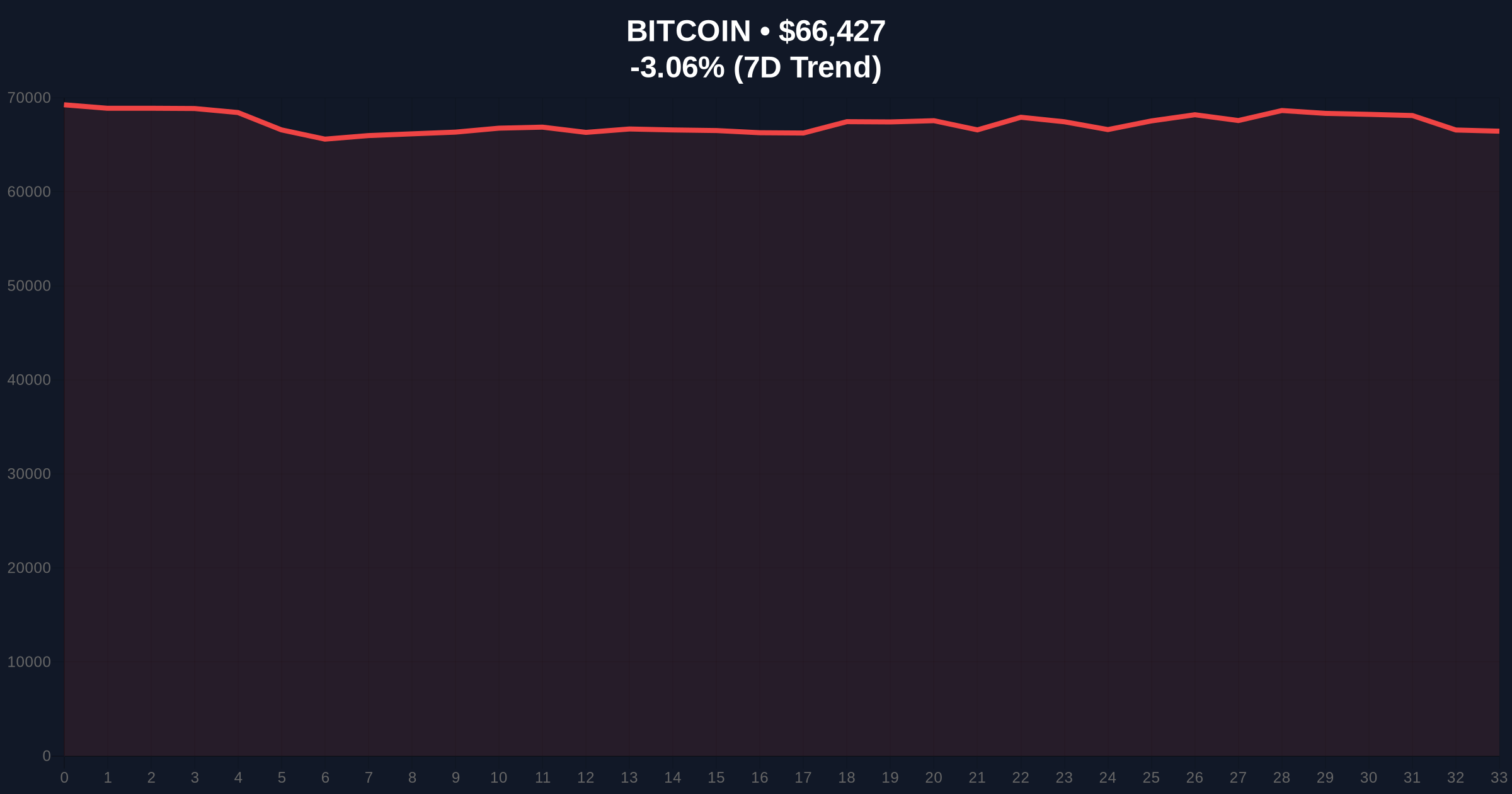
On April 2, 2026, Coinbase CEO Brian Armstrong declared that making Bitcoin quantum-resistant is an urgent problem requiring collective industry action, following earlier remarks from Coinbase Chief Strategy Officer Philip Martin. This call comes as Bitcoin trades at $66,416, down 3.08% in 24 hours amid extreme market fear, highlighting the tension between long-term technological threats and immediate market pressures. The push for quantum resistance a critical vulnerability in Bitcoin's cryptographic foundation that could undermine its entire value proposition if not addressed proactively.
The urgency of Armstrong's call is framed by current market conditions and the technical challenge at hand. According to CoinGecko data, Bitcoin's price stands at $66,416 with a 24-hour decline of 3.08%, while global crypto sentiment registers as "Extreme Fear" with a score of 12/100. These metrics reflect short-term volatility, but the quantum computing threat represents a longer-term existential risk. Source: CoinGecko. The timeline indicates Armstrong's comments follow Martin's earlier statement that it's time to begin addressing quantum computing challenges, emphasizing the need for accelerated implementation of quantum-resistant cryptography.
| Metric | Value | Source |
|---|---|---|
| Bitcoin Price | $66,416 | CoinGecko |
| 24h Trend | -3.08% | CoinGecko |
| Market Sentiment | Extreme Fear (12/100) | CoinGecko |
| Market Rank | #1 | CoinGecko |
This development matters for four key reasons. First, why now? The timing coincides with growing awareness of quantum computing advancements and Bitcoin's maturation as a global asset, making systemic risks more pressing. Second, who benefits? The entire cryptocurrency ecosystem stands to gain from enhanced security, while developers, institutions, and long-term holders would benefit from preserved asset integrity; conversely, failure to act could disadvantage all participants. Third, time horizons: short-term impacts include increased discussion and potential developer focus shifts, while long-term implications involve fundamental protocol changes that could affect Bitcoin's viability. Fourth, the causal chain: quantum computing breakthroughs → ability to break Bitcoin's encryption → potential theft of funds from non-upgraded wallets → loss of trust and value → proactive industry collaboration needed to implement quantum-resistant cryptography and maintain network security.
Quantum resistance in Bitcoin operates through cryptographic mechanisms that must be upgraded to withstand attacks from quantum computers. Currently, Bitcoin uses elliptic curve cryptography (ECC) for digital signatures, which quantum computers could theoretically break using Shor's algorithm, allowing private keys to be derived from public addresses. The solution involves transitioning to post-quantum cryptographic algorithms, such as lattice-based or hash-based signatures, which are believed to be secure against quantum attacks. This requires a hard fork or soft fork consensus upgrade, where network participants must agree on new protocol rules. Martin highlighted the critical need for consensus on handling wallets that aren't upgraded before quantum computers emerge, as those funds could become vulnerable. The process involves not just technical implementation but also coordination across miners, nodes, exchanges, and wallet providers to ensure a smooth transition without disrupting the network.
Bitcoin's quantum resistance efforts align with broader trends in cryptocurrency and technology. Other blockchain projects, like Ethereum, are also exploring quantum-resistant upgrades, though Bitcoin's decentralized nature makes consensus more challenging. In contrast, recent market developments show institutional activity despite fear, such as BlackRock's deposits to Coinbase Prime and Metaplanet's Bitcoin treasury acquisitions, indicating that long-term confidence persists alongside short-term volatility. Key industry comparisons include:
Several risks and uncertainties could undermine the push for quantum resistance. The bearish scenario includes potential delays or failures in achieving industry consensus, leading to fragmented upgrades and security gaps. Key counterpoints and failure conditions are:
Failure conditions include lack of coordination, insufficient testing, or emergence of quantum computers before upgrades are deployed, which could lead to fund losses and eroded trust.
Practically, near-term implications involve increased research, developer meetings, and potential Bitcoin Improvement Proposals (BIPs) focused on quantum resistance. Exchanges like Coinbase may begin preparing infrastructure for upgraded wallets, while miners might need to update software. In the longer term, successful implementation could enhance Bitcoin's security narrative, potentially attracting more institutional adoption, whereas failure could expose systemic risks. Traders should monitor developer forums and consensus signals for upgrade timelines.
Bitcoin's cryptographic foundation has historically relied on ECC, which has been secure against classical computers but is theoretically vulnerable to quantum attacks. The concept of quantum resistance has gained traction as quantum computing advances, with researchers proposing various post-quantum algorithms. Coinbase's involvement signals a shift from theoretical discussion to practical action, given its role as a major exchange and custodian. This context frames Armstrong's call as part of a broader effort to future-proof the network against emerging technological threats.
Cross-market reactions and related events provide additional context. Amid recent regulatory scrutiny, such as the DOJ sting on wash trading, security upgrades like quantum resistance could help bolster market integrity. Institutional moves, including BlackRock's deposits to Coinbase Prime and Metaplanet's Bitcoin acquisitions, show that despite extreme fear sentiment, large players are engaging with crypto, potentially supporting long-term development efforts. These developments highlight a dual focus on immediate market dynamics and foundational security improvements.
Brian Armstrong's call for collective action on Bitcoin's quantum resistance a critical juncture for the cryptocurrency. While current market conditions show extreme fear and price declines, the long-term threat of quantum computing necessitates proactive industry collaboration. Success depends on achieving consensus, implementing robust cryptographic upgrades, and addressing vulnerabilities in unupgraded wallets. This effort reflects Bitcoin's evolution from a niche experiment to a global asset requiring enterprise-level security planning.
Evidence & Sources
Primary source: https://coinness.com/news/1153424
Updated at: Apr 02, 2026, 02:28 PM
Data window: Apr 02, 2026, 01:16 PM → Apr 02, 2026, 01:21 PM
Evidence stats: 2 metrics, 1 timeline points.
Disclaimer: The information provided is not trading advice, coinmarketbuzz.com holds no liability for any investments made based on the information provided on this page. We strongly recommend independent research and/or consultation with a qualified professional before making any investment decisions.
All published reports are reviewed by our editorial team for factual consistency, neutrality, and reader clarity.