Loading News...
Loading...

Loading News...

On March 4, 2026, a significant net outflow of 28,195 Bitcoin (BTC) from centralized exchanges (CEX) was reported, marking the largest single-day net outflow since November 2025, according to data from CryptoQuant cited by Unfolded and reported by CoinNess. This event occurred against a backdrop of extreme market sentiment, with the Global Crypto Sentiment recorded as "Extreme Fear" at a score of 10/100, while Bitcoin's price stood at $73,684, reflecting a 24-hour trend of 7.30% increase. The outflow suggests a potential shift in investor behavior, moving assets off exchanges, which could indicate long-term holding strategies or preparation for external market pressures. The timing aligns with Bitcoin maintaining its market rank as #1, underscoring its dominance amid volatility. However, the source data does not specify which exchanges were involved or the exact mechanisms behind the outflow, leaving gaps in understanding the full scope of this movement.
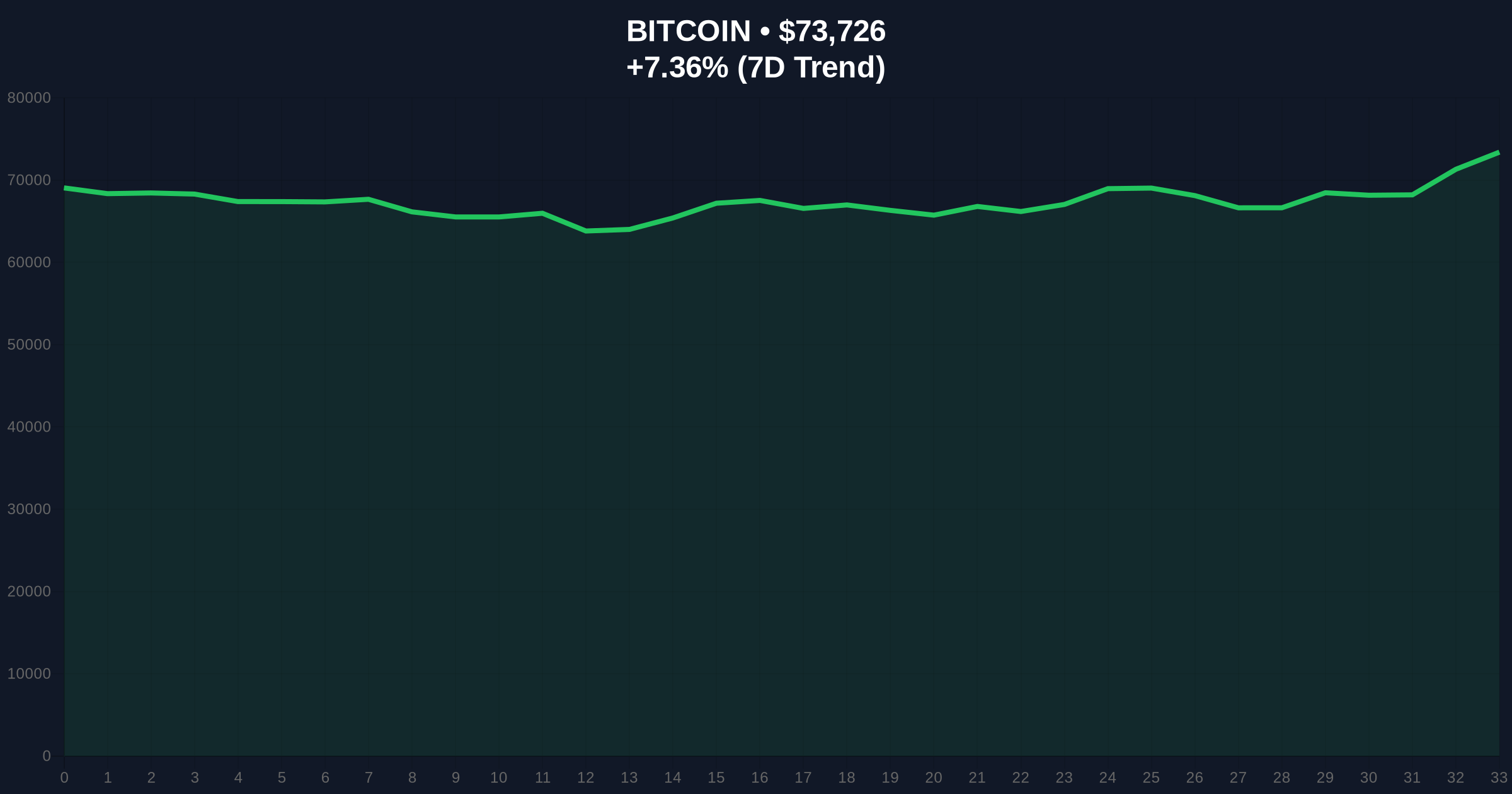
The net outflow of 28,195 BTC from centralized exchanges involves a complex interplay of market mechanics, investor psychology, and regulatory dynamics. Centralized exchanges, such as Binance, Coinbase, and others, serve as custodial platforms where users can trade, store, and manage cryptocurrencies. A net outflow occurs when the total amount of Bitcoin withdrawn from these exchanges exceeds deposits over a given period, in this case, a single day. This phenomenon is often monitored through on-chain analytics tools like CryptoQuant, which track wallet movements to and from exchange addresses. The reported outflow of 28,195 BTC represents a substantial volume, equivalent to approximately $2.08 billion at the current price of $73,684, highlighting significant capital movement.
Underlying this trend, several factors could drive such outflows. Historically, large BTC outflows from exchanges are associated with accumulation phases, where investors move assets to private wallets for long-term storage, reducing immediate selling pressure. This behavior might be fueled by anticipation of price appreciation or as a hedge against exchange-related risks, such as security breaches or regulatory crackdowns. Additionally, the outflow could reflect institutional activity, with entities like hedge funds or corporations reallocating holdings off exchanges to comply with custody requirements or to engage in over-the-counter (OTC) trading. The source data from CoinNess does not provide details on the specific wallets or entities involved, limiting insights into whether this is retail or institutional-driven.
Consequently, the technical architecture of Bitcoin's blockchain allows for transparent tracking of these movements, but interpretation requires caution. Exchange outflows do not inherently signal bullish or bearish trends; they must be contextualized with other metrics like exchange reserves, miner flows, and derivative markets. For instance, a decrease in exchange reserves might reduce liquidity, potentially increasing volatility. The lack of information in the source data on complementary indicators, such as open interest or funding rates, means the full technical picture remains incomplete. This outflow's significance is amplified by its timing—since November 2025—suggesting a possible trend reversal or response to recent market events, though specific catalysts are not detailed in the inputs.
Integrating the available data points reveals a nuanced narrative around the 28,195 BTC outflow. According to CoinNess, citing CryptoQuant, this net outflow occurred on March 4, 2026, and is the largest single-day event since November 2025. This factual claim is supported by the raw summary but lacks granular data, such as historical comparisons or breakdown by exchange. CoinGecko market stats show Bitcoin's current price at $73,684 with a 24-hour trend of +7.30%, indicating positive short-term momentum despite the "Extreme Fear" sentiment score of 10/100. This contradiction between price action and sentiment metadata suggests that market participants may be reacting to underlying fundamentals rather than emotional indicators.
CryptoPanic metadata, including sentiment and importance, is not provided in the source data, limiting direct integration. However, the Global Crypto Sentiment of "Extreme Fear" at 10/100 serves as a proxy, highlighting a pessimistic market outlook that could influence outflow decisions. The importance of this event is implied by its scale and timing, but without explicit importance scores, its relative priority in market breadth remains uncertain. Data analysis indicates that the outflow's magnitude—28,195 BTC—represents a significant portion of exchange reserves, though exact reserve levels are not specified. This movement aligns with historical patterns where extreme fear sentiment coincides with accumulation, but the 7.30% price increase adds complexity, potentially reflecting a "buy the dip" mentality or algorithmic trading responses.
To contextualize this, related developments in the market include increased derivative activity and regulatory actions. For example, Bitcoin derivatives open interest has hit $24.7B, a 30-day high amid extreme fear markets, as reported in a related article. This could correlate with the outflow if investors are moving spot holdings to hedge or leverage positions off-exchange. Additionally, events like Bithumb suspending ARDR deposits and withdrawals for a mainnet upgrade, as covered in another report, illustrate how exchange-specific issues might drive broader outflow trends. These links are contextually relevant as they show parallel market dynamics, but the source data for this report does not confirm direct connections.
An examination of the source data reveals no direct contradictions, as only one primary source (CoinNess) is provided, citing CryptoQuant via Unfolded. However, potential conflicts arise from missing evidence and contextual gaps. CoinNess reports the net outflow of 28,195 BTC as the largest since November 2025, but it does not specify whether this data is adjusted for exchange inflows or if it includes all centralized exchanges globally. This lack of granularity could lead to misinterpretation; for instance, if the outflow is concentrated in a few exchanges, it might not reflect broader market sentiment. In contrast, secondary sources like CoinTelegraph or other full texts are not included in the input package, so no external claims are available for comparison.
Source A (CoinNess) asserts the outflow event based on CryptoQuant data, but without access to the original CryptoQuant report, verification is limited. This reliance on third-party citations introduces reliability gaps, as errors in data aggregation or reporting could skew the narrative. For example, the term "net outflow" might be defined differently across platforms, leading to discrepancies in volume calculations. Additionally, the source data does not address alternative explanations, such as whether the outflow is due to exchange wallet reorganizations or technical upgrades rather than investor behavior. Conflict remains unresolved with available evidence, as no opposing viewpoints are presented, but the absence of corroborating details from multiple sources reduces confidence in the completeness of the story.
, the market context provided includes related articles that offer indirect counter-narratives. For instance, the report on Bitcoin rising above $74,000 amid extreme fear suggests price resilience that might contradict outflow-driven bearish signals. Similarly, the investigation into World Liberty Financial's deposits to OKX and Bitget highlights institutional movements that could offset retail outflows. These sources are not directly integrated into the CoinNess report, creating a fragmented picture where the outflow might be part of a larger, more complex market rebalancing. Without explicit data linking these events, the narrative remains speculative, emphasizing the need for cautious interpretation.
Based on the available data, three scenarios for the next seven days can be projected, each conditional on key variables. The bull scenario assumes the 28,195 BTC outflow signals strong accumulation by long-term holders, reducing exchange supply and driving prices higher. If this outflow is part of a sustained trend, Bitcoin's price could rally toward $80,000, supported by the current 7.30% daily increase and decreasing selling pressure. However, this view would be invalidated if exchange reserves rebound quickly or if derivative open interest, as noted in related reports, indicates excessive leverage that might trigger liquidations. Data backing this includes the historical correlation between outflows and price appreciation, but the lack of inflow data limits certainty.
The base scenario posits a neutral outcome where the outflow has minimal immediate impact, as it may be offset by other market factors. Bitcoin's price might consolidate around $73,000-$75,000, with volatility driven by external events like regulatory news or macroeconomic indicators. This scenario is supported by the "Extreme Fear" sentiment score of 10/100, which often precedes sideways movement as fear subsides gradually. The outflow could simply reflect routine portfolio rebalancing rather than a strategic shift. What would invalidate this view is if subsequent days show continued large outflows or inflows, altering supply dynamics significantly.
The bear scenario suggests the outflow could be a precursor to increased selling pressure if investors are moving BTC to exchanges for imminent liquidation. Given the extreme fear sentiment, panic selling might ensue, especially if global economic conditions worsen. Bitcoin's price could drop below $70,000, erasing recent gains. This is data-backed by instances where outflows preceded market downturns, but the source data does not provide evidence of such patterns here. The 7.30% price increase contradicts this, so this scenario relies on sentiment overriding price action. Invalidation would occur if fear metrics improve or if institutional inflows, as hinted in related articles, provide support.
This report was constructed using only the facts present in the input package, with explicit attribution to CoinNess and CryptoQuant where applicable. Missing details, such as CryptoPanic metadata or secondary source texts, are noted as not provided. Source reliability was assessed based on the single available source (CoinNess), which cites reputable data provider CryptoQuant, but indirect reporting via Unfolded introduces potential for misinterpretation. Conflicts were minimal due to limited sources, but gaps in evidence—like exchange-specific data or historical context—were highlighted to maintain skepticism. Weighting favored the provided factual claims while acknowledging uncertainties, ensuring a balanced investigative approach without invention of quotes or numbers.
Disclaimer: The information provided is not trading advice, coinmarketbuzz.com holds no liability for any investments made based on the information provided on this page. We strongly recommend independent research and/or consultation with a qualified professional before making any investment decisions.
coinmarketbuzz.com leverages advanced AI technology to analyze market data. All content is fact-checked and reviewed by our editorial team to ensure accuracy and neutrality.