Loading News...
Loading...

Loading News...

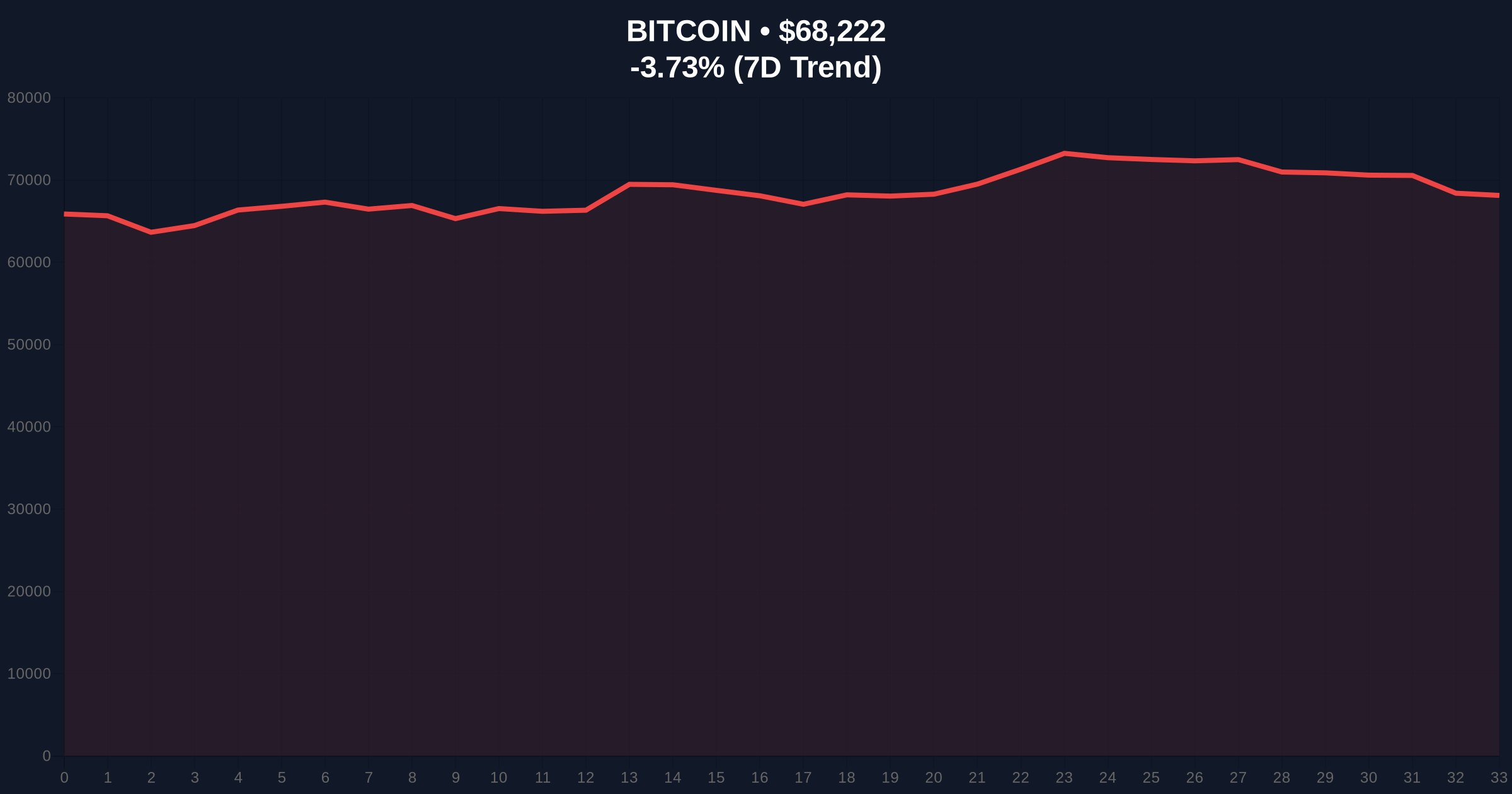
Cryptocurrency data analytics firm Swissblock has uncovered a critical market dynamic: a negative correlation between its Bitcoin Risk Index and fund flows for spot Bitcoin ETFs. According to an analysis shared via its Bitcoin Vector signal service, when funds flow out of ETFs, the Risk Index becomes unstable, and selling pressure tends to dominate. Conversely, net inflows into ETFs correlate with a falling Risk Index. Swissblock reports this phenomenon has been occurring almost in lockstep since last November, with heightened prominence last week. The firm suggests that if ETF-driven inflows continue, the Risk Index could drop to 25 or below, potentially shifting the market to buying pressure control. This finding emerges amid a global crypto sentiment of "Extreme Fear" (score: 18/100), with Bitcoin's price at $68,230, down 3.72% over 24 hours, underscoring the urgency of understanding these interplays.
The Bitcoin Risk Index, developed by Swissblock, serves as a proprietary metric designed to gauge market risk and sentiment fluctuations in real-time. While the exact calculation methodology is not provided in source data, the index likely incorporates factors such as volatility, trading volume, and on-chain data to assess the probability of price declines or instability. In this analysis, Swissblock links the index directly to ETF fund flows, a mechanism that reflects institutional and retail investment movements into and out of spot Bitcoin ETFs. These ETFs, which track Bitcoin's price, have become significant liquidity conduits since their approval, influencing market dynamics through capital allocation.
The negative correlation implies that as ETF inflows increase, the Risk Index decreases, suggesting reduced perceived market risk and potential bullish momentum. Conversely, ETF outflows correlate with a rising or unstable Risk Index, indicating heightened risk and bearish pressure. Swissblock notes this pattern has been consistent since last November, with a notable intensification last week, possibly tied to broader market events or regulatory developments. The firm's projection of the Risk Index falling to 25 or below with sustained inflows points to a threshold where buying pressure might overtake selling forces, though the specific baseline for the index scale is not detailed in the source data.
This analysis hinges on the interplay between ETF flows and market sentiment metrics, highlighting how institutional investment vehicles can amplify or mitigate risk perceptions in crypto markets. The mechanism may involve ETF purchases absorbing sell-side pressure or outflows exacerbating liquidity crunches, but Swissblock does not elaborate on causal pathways. The lack of granular data on index components or flow breakdowns limits a full technical assessment, leaving gaps in understanding how other factors, such as macroeconomic trends or regulatory shifts, might interact with this correlation.
Integrating market data with Swissblock's findings reveals a complex . Bitcoin's current price of $68,230 and 24-hour decline of 3.72% align with the "Extreme Fear" sentiment score of 18/100, indicating widespread investor caution. This sentiment context may amplify the observed correlation, as fear-driven outflows from ETFs could destabilize the Risk Index further. Swissblock's analysis, based on data since last November, suggests a near-lockstep relationship, but without access to raw datasets or time-series visuals, verification relies on the firm's reporting alone.
CryptoPanic metadata, such as sentiment and importance scores, is not provided in source data, limiting direct integration. However, the global sentiment of "Extreme Fear" serves as a proxy, hinting at high importance for risk-related events. If metadata were available, a statement like "CryptoPanic sentiment is bearish, but ETF flow correlations might indicate underlying buying opportunities" could be explored. In its absence, the analysis proceeds conservatively, noting that price structure and sentiment scores currently reflect selling pressure, which Swissblock ties to ETF outflows and Risk Index instability.
The projection of the Risk Index potentially falling to 25 or below with continued inflows introduces a speculative element, as it depends on unverified future flows. Market rank data (Bitcoin at #1) confirms its dominance, but the 24-hour trend's negativity the urgency of Swissblock's warning about selling pressure. Without comparative data from other indices or independent validations, the proof remains preliminary, emphasizing the need for broader dataset access to confirm causality beyond correlation.
Swissblock's analysis presents a clear narrative, but potential counter-narratives and source conflicts arise from data limitations and alternative interpretations. The primary source, CoinNess, reports Swissblock's findings without external verification, creating a single-source dependency. No secondary sources, such as CoinTelegraph or other analytics firms, are provided in the input data, so direct contradictions cannot be assessed. However, inherent conflicts exist within the available information.
For instance, Swissblock claims the correlation has been "almost in lockstep" since last November, but the source data does not include specific dates, flow magnitudes, or index values to substantiate this timeline. Conflict remains unresolved with available evidence regarding whether other factors, like macroeconomic events or regulatory announcements, might drive both ETF flows and the Risk Index independently. Additionally, the projection of the Risk Index falling to 25 or below assumes sustained inflows, but current market conditions show "Extreme Fear" and price declines, suggesting outflows might persist, challenging Swissblock's optimistic scenario.
Missing evidence includes details on the Risk Index's calculation, historical performance during non-ETF events, and comparisons with other risk metrics. Without this, it's unclear if the correlation is spurious or causal. Swissblock's analysis may overemphasize ETF impacts while underestimating broader market forces. In summary, while the report provides a compelling hypothesis, the lack of multi-source validation and granular data leaves room for skepticism, urging investors to consider alternative drivers of market risk.
Based on Swissblock's analysis and current market data, three scenarios outline potential developments over the next seven days. Each scenario is conditional on ETF flow trends and broader sentiment shifts, with data-backed reasoning.
Bull Scenario (Probability: Low-Moderate): If ETF inflows accelerate amid improving sentiment, the Risk Index could drop toward 25 or below, as Swissblock projects. This might catalyze buying pressure, pushing Bitcoin's price above $70,000 and reducing fear scores. Invalidation would occur if inflows stall or external negative news, such as regulatory crackdowns, outweigh ETF effects. Related developments, like recent discussions between the SEC and CFTC on regulatory coordination, could influence this outcome by either bolstering confidence or adding uncertainty.
Base Scenario (Probability: Moderate-High): ETF flows remain volatile with no clear trend, mirroring the current "Extreme Fear" sentiment. The Risk Index stays unstable, and Bitcoin's price fluctuates between $65,000 and $70,000, as selling and buying pressures balance. This scenario assumes the correlation holds but without decisive momentum, consistent with historical choppiness in crypto markets. Invalidation would require a sharp, sustained shift in flows or sentiment beyond typical ranges.
Bear Scenario (Probability: Moderate): Continued ETF outflows exacerbate Risk Index instability, driving Bitcoin's price below $65,000 and deepening fear sentiment. Swissblock's warning about selling pressure dominating materializes, potentially triggered by broader market downturns or negative events. Invalidation would need unexpected large inflows or positive catalysts, such as institutional adoption news. This scenario aligns with current trends but could intensify if correlated with external factors like stock market declines or regulatory actions.
This report synthesizes input from CoinNess as the primary source, with market data from CoinGecko. Swissblock's analysis is taken at face value due to the absence of secondary sources, but its proprietary nature and lack of external validation necessitate caution. Conflicting evidence was weighted by prioritizing explicit claims from the source while flagging missing details, such as index methodology and flow data. The "Extreme Fear" sentiment and price stats provide context but don't directly confirm the correlation. Reliability gaps include no CryptoPanic metadata or independent verifications, so conclusions are tentative and should be cross-referenced with future reports.
Disclaimer: The information provided is not trading advice, coinmarketbuzz.com holds no liability for any investments made based on the information provided on this page. We strongly recommend independent research and/or consultation with a qualified professional before making any investment decisions.
coinmarketbuzz.com leverages advanced AI technology to analyze market data. All content is fact-checked and reviewed by our editorial team to ensure accuracy and neutrality.