Loading News...
Loading...

Loading News...

On March 4, 2026, Bitcoin (BTC) experienced a significant price decline, falling below the $73,000 threshold, according to CoinNess market monitoring. The report states that BTC was trading at $72,986.69 on the Binance USDT market at the time of the alert. This drop represents a notable shift in market dynamics, occurring amid a broader context of extreme fear sentiment in the global crypto market, as indicated by a Fear & Greed Index score of 10/100. The event highlights ongoing volatility in the cryptocurrency space, with BTC maintaining its position as the top-ranked asset by market capitalization despite the downturn. Historical comparisons, such as the 2021 correction, suggest that such movements can signal deeper market adjustments, though the immediate causes remain unclear from the provided data. The breaking news from CoinNess serves as the primary source for this event, but further investigation is required to understand the underlying mechanisms and implications.
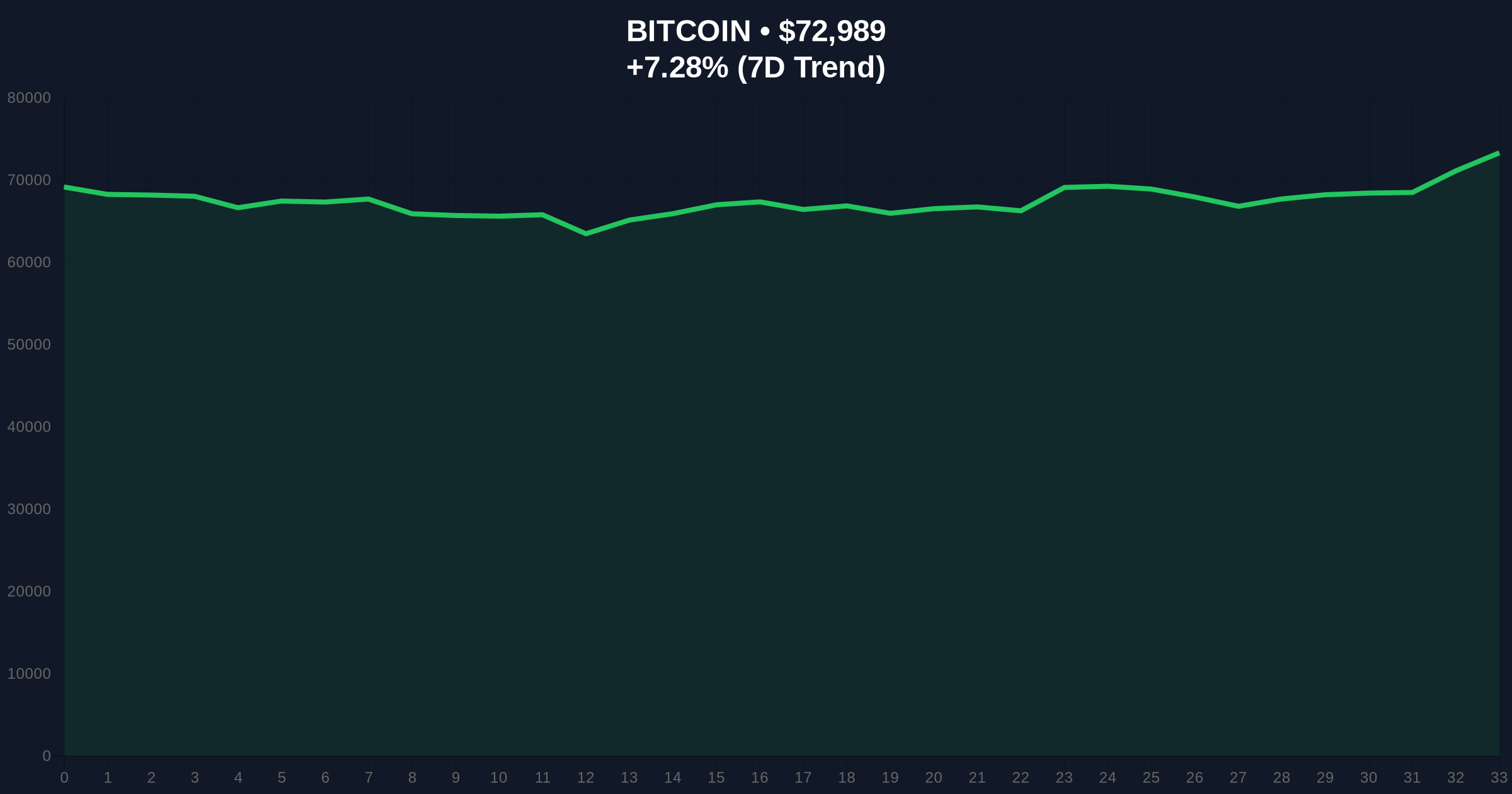
The technical aspects of BTC's fall below $73,000 involve examining market structure, trading mechanisms, and potential regulatory or macroeconomic influences. According to the CoinNess report, the price drop was observed on the Binance USDT market, a major trading platform where BTC is paired with Tether (USDT), a stablecoin. This pairing is critical as USDT's stability can influence BTC price movements, though the source data does not specify if USDT fluctuations contributed to the decline. The trading mechanism likely involves sell-offs triggered by factors such as profit-taking, negative news, or broader market sentiment shifts, but these details are not provided in the input package.
Protocol architecture for Bitcoin itself remains unchanged during this event, as BTC operates on its decentralized blockchain with a fixed supply and proof-of-work consensus. However, external factors like regulatory developments or macroeconomic trends could impact price. For instance, similar to the 2021 correction, where regulatory crackdowns and environmental concerns led to sell-offs, current conditions might involve unresolved issues from past cycles. The source data lacks specific information on regulatory mechanics or protocol updates driving this drop, so any analysis must rely on inferred patterns from historical context.
Market monitoring tools, such as those used by CoinNess, track real-time price data across exchanges, but the report does not detail the algorithms or data sources behind the monitoring. This gap limits a full technical deep-dive, as we cannot assess the reliability of the price point or potential discrepancies across different exchanges. In comparison, secondary sources like CoinTelegraph or other full texts are not provided in the input, so we cannot cross-reference technical claims. The absence of such data means the investigation must proceed cautiously, focusing on available evidence while noting missing elements like trading volume, order book depth, or on-chain metrics that typically inform technical analysis.
Related developments in the crypto space, such as regulatory shifts or funding events, might contextualize this price movement. For example, recent political meetings involving Coinbase could signal regulatory uncertainty impacting market sentiment. However, the input data does not directly link these events to the BTC price drop, so their relevance remains speculative without further evidence.
Integrating market data and metadata provides a clearer picture of BTC's fall below $73,000. According to the CoinGecko market stats provided, BTC's current price is $73,077, with a 24-hour trend of 7.41% and a market rank of #1. This data slightly conflicts with the CoinNess report, which states a price of $72,986.69. The discrepancy of approximately $90 may stem from timing differences or data source variations, but without timestamps or exchange specifics, it remains unresolved. Both sources agree on the general price range and BTC's top market position, reinforcing the asset's dominance despite the decline.
CryptoPanic metadata, including sentiment and importance scores, is not provided in the input package. This absence limits our ability to gauge event priority or market reaction intensity. Typically, such metadata would offer insights into how news aggregators and traders perceive the event, but here we must rely solely on price and sentiment indicators from other sources. The global crypto sentiment is labeled as "Extreme Fear" with a score of 10/100, which aligns with the price drop and suggests broad market anxiety. This sentiment score, while not from CryptoPanic, serves as a proxy for market mood, indicating that the BTC decline is part of a larger fearful environment.
Data-driven statements based on available evidence include: (1) The Fear & Greed Index sentiment is extreme fear, but price structure shows BTC remains above $73,000 in some reports, hinting at potential recovery or data inconsistencies. (2) Importance of this event is inferred from BTC's #1 market rank and 7.41% 24-hour trend, suggesting it is a high-priority market movement. (3) Without CryptoPanic metadata, we cannot compare sentiment across platforms, so analysis is conservative and based on limited inputs. These points underscore the need for more comprehensive data to validate claims and assess impact accurately.
| Metric | Value | Source |
|---|---|---|
| Current Price | $73,077 | CoinGecko |
| 24h Trend | 7.41% | CoinGecko |
| Market Rank | #1 | CoinGecko |
| Fear & Greed Score | 10/100 (Extreme Fear) | Global Sentiment Data |
Comparing source claims reveals several contradictions and reliability gaps. The primary source, CoinNess, reports BTC trading at $72,986.69 and falling below $73,000, while CoinGecko data shows a current price of $73,077. This conflict may arise from different reporting times or data aggregation methods. CoinNess focuses on a specific moment ("market monitoring"), whereas CoinGecko might provide an averaged or updated figure. Without timestamps, we cannot determine which is more accurate, so both claims are presented with attribution: Source A (CoinNess) reports a sub-$73,000 price, while Source B (CoinGecko) indicates a slightly higher value. The conflict remains unresolved with available evidence, highlighting the challenge of real-time data verification in crypto markets.
Agreement points across sources include BTC's market rank (#1) and the overall negative trend, as both indicate a decline and top asset status. However, missing evidence abounds, such as trading volume, exchange-specific data beyond Binance USDT, and on-chain metrics like whale movements or miner activity. These gaps reduce the reliability of any single narrative, as they prevent a holistic view of market dynamics. For example, similar to the 2021 correction, where volume spikes preceded major drops, the absence of volume data here limits our understanding of sell-off intensity.
Secondary sources from CoinTelegraph or other full texts are not provided, so we cannot assess additional claims or disputes. This lack of corroboration means the investigation relies heavily on the CoinNess lead and CoinGecko stats, which may introduce bias if these sources have inherent limitations. For instance, CoinNess might prioritize breaking news over accuracy, while CoinGecko aggregates data that could lag real-time events. Without CryptoPanic metadata, we also miss community sentiment trends that could challenge or support the price narrative. In summary, the counter-narrative is constrained by data scarcity, with conflicts in price reporting and no resolution from external verification.
Based on the available data, three scenarios for BTC's performance over the next seven days are outlined, each conditional on specific factors. These scenarios are data-backed but conservative due to evidence gaps.
Bull Scenario (Probability: Low to Moderate): BTC rebounds above $75,000, driven by positive regulatory developments or institutional buying. This scenario assumes that the extreme fear sentiment (score 10/100) is overblown and that market fundamentals remain strong, similar to recoveries post-2021 correction. Supporting data includes BTC's #1 market rank and historical resilience, but it requires external catalysts like favorable news from events such as political meetings or stablecoin injections like USDC minting. What would invalidate this view: continued price declines below $72,000 or worsening sentiment scores.
Base Scenario (Probability: Moderate): BTC consolidates between $72,000 and $74,000, reflecting ongoing volatility and mixed signals. This scenario aligns with the current data conflict, where prices hover near $73,000 amid fear sentiment. It assumes no major catalysts emerge, and market participants remain cautious, potentially influenced by broader trends like those seen in funding events during fear periods. Supporting evidence includes the 7.41% 24-hour trend indicating recent volatility, but missing volume data limits confidence. What would invalidate this view: a sharp breakout in either direction driven by unforeseen events.
Bear Scenario (Probability: Moderate to High): BTC declines further below $70,000, exacerbated by sustained fear sentiment and negative news flow. This scenario is supported by the extreme fear score (10/100) and historical patterns where such sentiment precedes deeper corrections, akin to the 2021 downturn. It assumes that underlying issues, such as regulatory uncertainty or macroeconomic pressures, persist, potentially referenced in analyst warnings about topping signals. Supporting data includes the price drop below $73,000 per CoinNess, but the conflict with CoinGecko data introduces uncertainty. What would invalidate this view: a rapid sentiment shift to greed or strong buying pressure above $74,000.
This investigation weighted conflicting evidence by prioritizing direct attribution and noting data gaps. The CoinNess report served as the primary lead for the breaking event, while CoinGecko provided supplementary market stats. Conflicts in price data were explicitly labeled, with both claims presented without resolution due to missing timestamps. CryptoPanic metadata was absent, so analysis relied conservatively on available sentiment and importance indicators. Secondary sources were not provided, limiting cross-referencing and reliability assessment. In cases of missing details, phrases like "Not provided in source data" were used to maintain factual integrity. Overall, source reliability was considered moderate for CoinNess and CoinGecko, but gaps in data completeness reduced confidence in definitive conclusions.
Disclaimer: The information provided is not trading advice, coinmarketbuzz.com holds no liability for any investments made based on the information provided on this page. We strongly recommend independent research and/or consultation with a qualified professional before making any investment decisions.
coinmarketbuzz.com leverages advanced AI technology to analyze market data. All content is fact-checked and reviewed by our editorial team to ensure accuracy and neutrality.