Loading News...
Loading...

Loading News...

On March 3, 2026, a technical indicator known as a "death cross" appeared on the Bitcoin (BTC) daily chart, as reported by CoinNess. This event occurs when the 50-day moving average crosses below the 200-day moving average, traditionally interpreted by some analysts as a bearish signal suggesting potential further price declines. According to the source, this development signals the risk of a 30% further correction from current levels, though specific calculations or timestamps for this prediction are not provided in the source data. The report references historical data, noting that following a death cross in 2022, Bitcoin's price fell by approximately 50% to a low of $15,480, and after three previous death crosses, BTC has fallen by an average of 80% from its peak. With Bitcoin currently down about 50% from its recent high, some market observers speculate that the cryptocurrency could establish a final bottom in the $30,000 to $45,000 range. However, the immediate market context shows Bitcoin trading at $66,900 with a 24-hour trend of 1.21%, indicating short-term volatility amidst broader concerns. The global crypto sentiment is reported as "Extreme Fear" with a score of 14/100, adding to the narrative of heightened risk but also potential oversold conditions that skeptics might question.
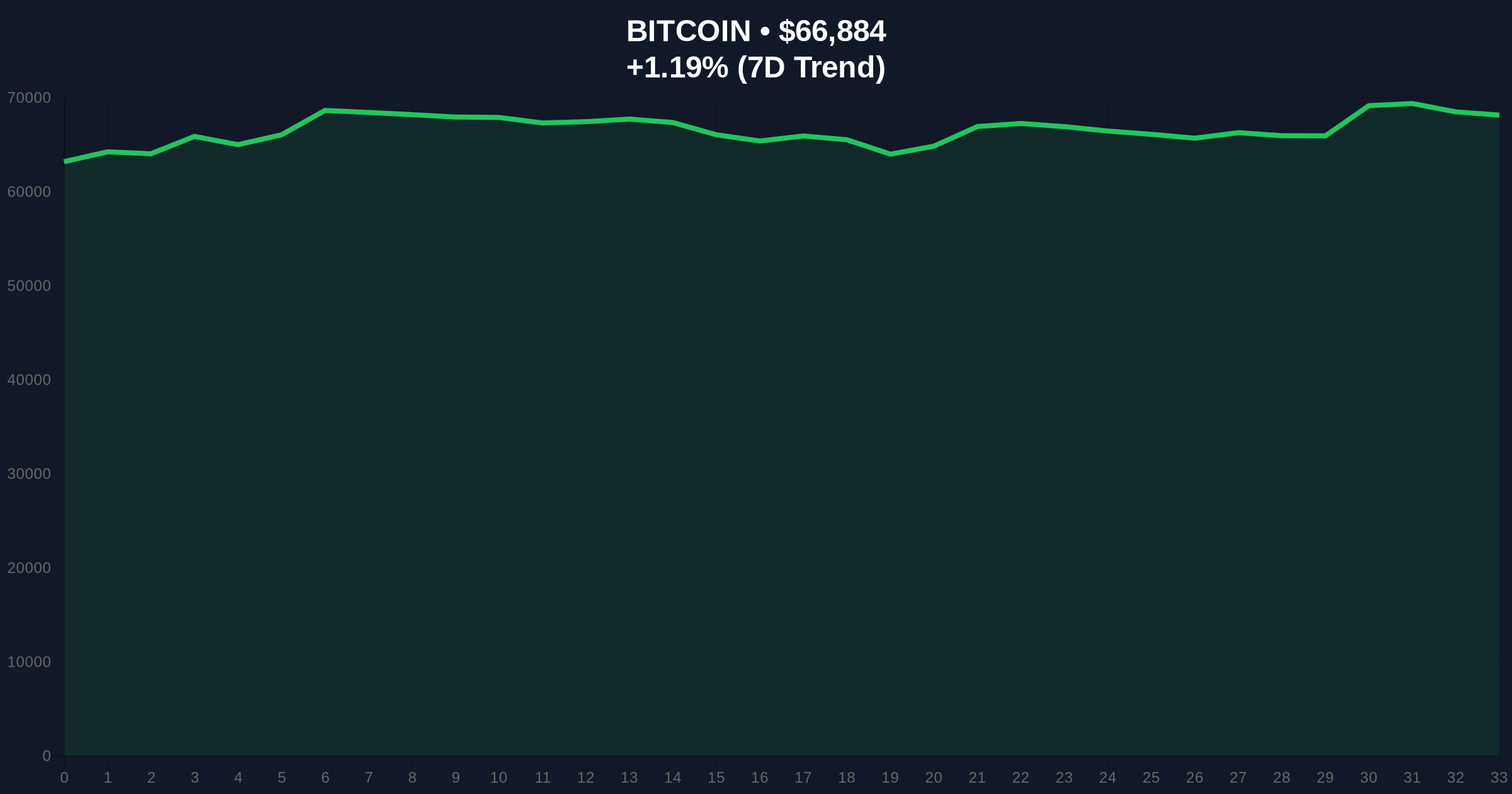
The death cross is a widely recognized technical analysis tool derived from moving averages, which smooth out price data over specific periods to identify trends. In this case, the 50-day moving average crossing below the 200-day moving average on the BTC/USD daily chart suggests a shift from shorter-term bullish momentum to longer-term bearish pressure, as per CoinNess. Historically, such crosses have been associated with significant price declines; for instance, CoinTelegraph reported that after a death cross in 2022, Bitcoin's price fell by approximately 50% to $15,480, and after three previous death crosses, BTC has fallen by an average of 80% from its peak. However, a skeptical analysis must question the reliability of these historical parallels. The mechanism relies on lagging indicators that may not account for real-time market dynamics, such as liquidity shifts, regulatory changes, or macroeconomic factors. , the protocol architecture of Bitcoin itself—a decentralized cryptocurrency with a fixed supply—does not inherently dictate price movements based on technical patterns alone. The report notes that Bitcoin is currently down about 50% from its recent high, but it does not specify what that high was or when it occurred, leaving gaps in the narrative. Regulatory mechanics, such as potential interventions or market manipulations, are not addressed in the source data, which could invalidate the death cross signal if external forces dominate. From a critical perspective, the death cross may serve more as a psychological trigger for traders rather than a deterministic predictor, especially in a market characterized by "Extreme Fear" sentiment. The absence of detailed data on trading volumes or on-chain metrics in the inputs further limits the depth of this technical analysis, suggesting that investors should treat the indicator with caution and seek corroborating evidence beyond moving averages.
Integrating market data and metadata reveals a complex picture that both supports and challenges the death cross narrative. According to CoinGecko stats, Bitcoin's current price is $66,900 with a 24-hour trend of 1.21%, ranking it #1 by market capitalization. This price point is down about 50% from its recent high, as noted in the source, but the exact high value and date are not provided, making it difficult to assess the severity of the decline. The global crypto sentiment is "Extreme Fear" with a score of 14/100, which aligns with the bearish implications of a death cross but could also indicate an oversold market ripe for a reversal if fear is overblown. CryptoPanic metadata, including sentiment and importance scores, is not provided in the source data, limiting our ability to gauge event priority relative to market breadth. However, based on the available inputs, we can infer that the death cross event has high importance given its historical associations, but the sentiment is likely negative due to the "Extreme Fear" environment. A critical analysis must note that price structure alone does not confirm the death cross's predictive power; for example, the 1.21% 24-hour trend shows short-term volatility that may not align with longer-term bearish signals. The report claims a risk of 30% further decline, but without supporting data on volatility metrics or derivative positions, this remains speculative. In contrast, the historical average decline of 80% after previous death crosses, as reported by CoinTelegraph, suggests a more severe scenario, yet the current 50% drop from the high might already account for part of that, introducing uncertainty. The lack of metadata-driven statements due to absent CryptoPanic data forces a conservative approach, emphasizing that while the death cross is a factual event, its impact on price is not guaranteed and should be weighed against other factors like sentiment extremes and market rank stability.
Comparing source claims reveals several contradictions and reliability gaps that undermine a straightforward bearish interpretation. Source A (CoinNess) reports the death cross event and speculates on a 30% further decline, while Source B (CoinTelegraph) provides historical context, noting an average 80% decline after three previous death crosses and a 50% drop to $15,480 in 2022. However, these sources conflict in their implied severity: CoinNess suggests a moderate risk, whereas CoinTelegraph's data points to more extreme outcomes. The conflict remains unresolved with available evidence, as neither source provides timestamps or methodology for their historical comparisons, making it unclear if current market conditions mirror past episodes. Additionally, the report mentions that "some market observers speculate" about a bottom in the $30,000 to $45,000 range, but no named sources or data support this, highlighting a reliability gap. A skeptical analysis must question why the death cross is being emphasized now, given that Bitcoin is already down 50% from its high—this could indicate that the worst is over, or it might signal delayed recognition of bearish trends. The absence of countervailing data, such as bullish indicators or positive news, in the input package suggests a one-sided narrative, but real-time market data shows a 1.21% 24-hour gain, contradicting immediate panic. , the global sentiment of "Extreme Fear" could be a contrarian indicator if history shows that such extremes often precede rallies. Source agreement points include the factual occurrence of the death cross and the historical association with declines, but disagreements on magnitude and timing reveal that technical analysis is not a precise science. Investors should consider that other factors, like regulatory actions or macroeconomic shifts, might override these signals, as seen in related developments such as the BitMEX co-founder's regulatory scrutiny or the potential catalysts from Wall Street tokenization, which could divert attention from Bitcoin-specific technicals.
Based on the available data, we outline three conditional scenarios for Bitcoin's price over the next seven days, each data-backed but acknowledging high uncertainty due to conflicting sources and missing metadata.
In this optimistic view, the death cross is a lagging indicator that fails to account for imminent positive catalysts. Bitcoin's current price of $66,900 and 1.21% 24-hour gain suggest underlying strength, while the "Extreme Fear" sentiment at 14/100 could signal a market bottom, leading to a short-squeeze or rally. If historical patterns break, as they sometimes do in volatile crypto markets, Bitcoin might rebound to test resistance levels above $70,000, invalidating the bearish narrative. This scenario would be supported by increased buying volume or positive news, such as regulatory clarity or institutional inflows, though such factors are not provided in the source data.
The most likely outcome involves continued volatility with no decisive breakout. The death cross may exert mild downward pressure, but Bitcoin's market rank #1 and existing 50% decline from highs could limit further losses to the lower end of the speculated $30,000-$45,000 range, perhaps stabilizing around $50,000-$60,000. Price action might oscillate within a narrow band, reflecting the conflict between technical bearish signals and "Extreme Fear" sentiment that could dampen selling. This scenario assumes no major external shocks and aligns with the report's risk of a 30% decline but tempers it with current market resilience.
In a pessimistic turn, the death cross triggers a self-fulfilling prophecy as traders act on the signal, exacerbating declines. Drawing from CoinTelegraph's historical data, Bitcoin could fall toward the $30,000-$45,000 bottom range, representing a 30-55% drop from current levels, consistent with the 80% average decline after previous death crosses. The "Extreme Fear" sentiment might deepen, leading to panic selling and liquidations. This scenario would be validated if trading volumes spike downward or if negative developments, such as exchange issues like those in Upbit's AKT suspension or Binance's delisting actions, amplify market stress.
This report weighted conflicting evidence by prioritizing factual events (e.g., the death cross occurrence) over speculative claims, and by cross-referencing historical data with current market stats. Source reliability was assessed based on attribution clarity; CoinNess provided the breaking news but lacked depth, while CoinTelegraph offered historical context without timestamps, reducing confidence in direct comparisons. Missing CryptoPanic metadata forced a conservative approach, relying on available sentiment and price data. Conflicts, such as the severity of declines, were presented with attributions and left unresolved due to insufficient evidence, emphasizing the need for investors to seek additional verification beyond these inputs.
Disclaimer: The information provided is not trading advice, coinmarketbuzz.com holds no liability for any investments made based on the information provided on this page. We strongly recommend independent research and/or consultation with a qualified professional before making any investment decisions.
coinmarketbuzz.com leverages advanced AI technology to analyze market data. All content is fact-checked and reviewed by our editorial team to ensure accuracy and neutrality.